
Your commercial property is a significant investment, and choosing the right team to enhance its value can feel overwhelming. The fear of hiring an unreliable company, facing unexpected project delays, or watching your budget spiral is a valid concern for any property manager. Simply searching for commercial landscape contractors near me in the Bay Area yields a long list of options, but it doesn’t tell you who has the proven experience to deliver high-quality, durable results. Finding a true partner for your project requires more than a quick search; it requires a proven vetting process.
That’s where this guide comes in. With decades of experience serving the Bay Area, we understand what separates a reputable contractor from the rest. We will walk you through the essential steps for vetting and selecting a team you can depend on. You will learn the key qualifications every commercial contractor must have, the critical questions to ask, and how to confidently choose a partner who will build your project for durability, function, and lasting value. Let’s ensure your investment is in safe, capable hands.
Key Takeaways
- Start your project with a clearly defined scope by outlining your specific goals, from improving curb appeal to solving complex drainage issues.
- Discover the five non-negotiable qualities every reputable commercial contractor must have to ensure a high-quality, long-lasting result.
- Learn a structured vetting process to move beyond a simple search for “commercial landscape contractors near me” and build a shortlist of truly qualified partners.
- Understand how professional hardscaping forms the durable backbone of your property, improving visitor flow, function, and overall value.
First Steps: Defining Your Commercial Landscaping Project Scope
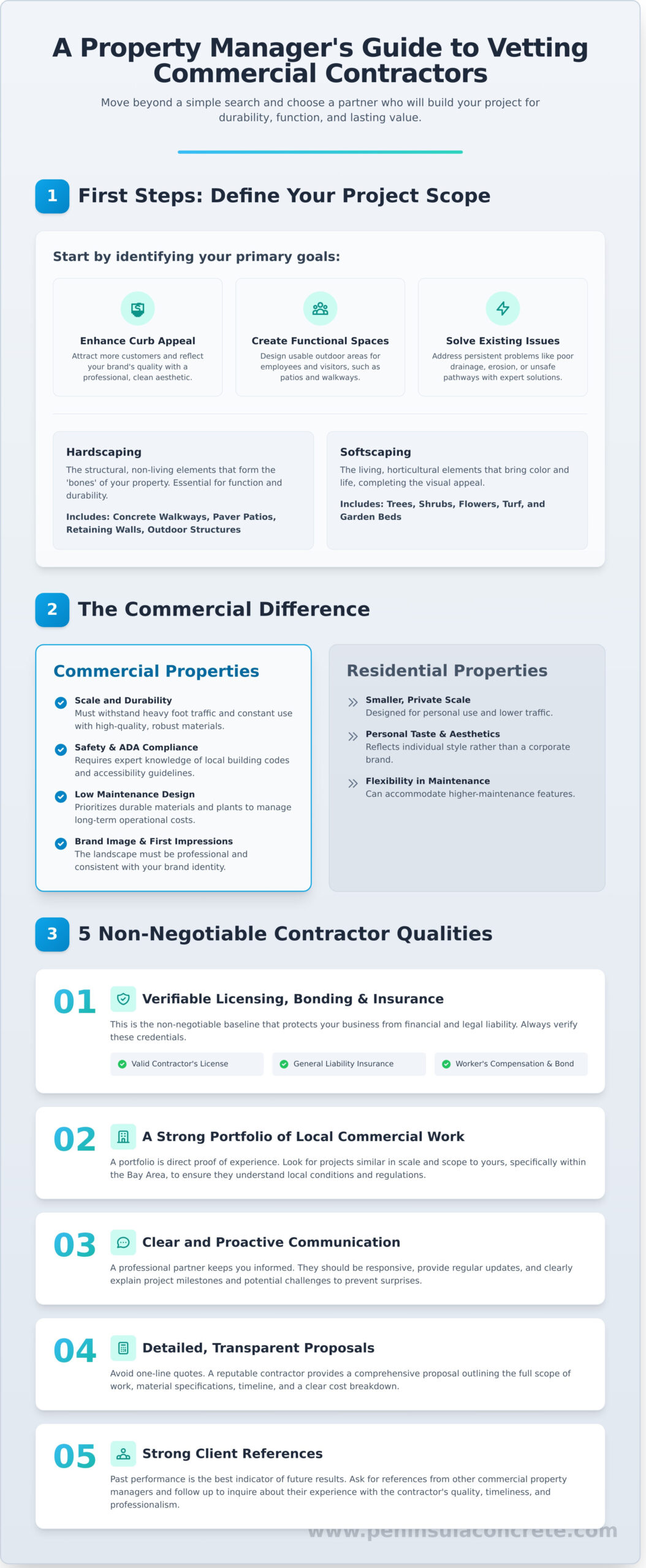
Before you begin your search for commercial landscape contractors near me, the most critical step is to define the scope of your project. A well-defined plan not only ensures you find the right team but also sets the foundation for a successful, long-lasting investment. Start by outlining your primary goals. Are you looking to enhance curb appeal to attract more customers, create a functional outdoor seating area for employees, or solve persistent drainage and erosion issues on your property? A clear objective is your roadmap.
Understanding your goals is essential because commercial landscaping projects carry demands that are fundamentally different from residential jobs. The design, materials, and long-term strategy must all align with the needs of a business, where durability and return on investment are paramount.
Key Differences Between Commercial and Residential Landscaping
A professional commercial landscape must perform under pressure. Unlike a private backyard, it needs to be durable, safe, and a direct reflection of your company’s standards. Key considerations include:
- Scale and Durability: Materials for walkways, patios, and retaining walls must be high-quality and built to withstand heavy foot traffic, vehicle access, and constant use.
- Safety and Compliance: A commercial contractor must be an expert in local building codes and ADA (Americans with Disabilities Act) guidelines to ensure your property is safe and accessible for everyone.
- Maintenance: Designs should prioritize durable, low-maintenance plants and materials to keep long-term operational costs predictable and manageable.
- Brand Image: Your landscape is the first impression customers have of your business. It should be clean, professional, and consistent with your brand identity.
Hardscaping vs. Softscaping: Identifying Your Primary Need
The broad field of Landscape architecture is often broken down into two core components: hardscaping and softscaping. Identifying which is more critical to your project will help you find the right specialist.
Hardscaping refers to the non-living, structural elements that form the ‘bones’ of your landscape. This includes concrete walkways, paver patios, retaining walls, and outdoor structures. For large-scale projects or properties with grading issues, a hardscape specialist is often required to build a solid, functional foundation first.
Softscaping includes all the living, horticultural elements. This means the trees, shrubs, flowers, and turf that bring color and life to the property. While some contractors do both, knowing whether your primary goal is structural or planting-focused will refine your search for qualified commercial landscape contractors near me.
What to Look For: 5 Must-Have Qualities in a Commercial Contractor
Your search for “commercial landscape contractors near me” will yield many results, but the most critical decision for your project’s success is choosing the right partner. Vetting potential contractors requires going beyond a simple Google search to truly understand their capabilities. These five qualifications separate the true professionals from the amateurs and ensure your significant commercial investment is protected. Never skip this due diligence-it is the foundation of a high-quality, durable, and successful project.
Verifiable Licensing, Bonding, and Insurance
This is the absolute baseline for any contractor you consider. These credentials are non-negotiable and protect your business from significant financial and legal liability. Before signing any contract, verify the following:
- A Valid California Contractor’s License: Ask for their license number and confirm it is active and in good standing. The state offers an excellent guide on the importance of hiring a licensed contractor in California, which is an invaluable resource for property owners.
- Comprehensive Insurance: Ensure they carry both general liability insurance to cover potential property damage and worker’s compensation to protect you from liability if one of their employees is injured on your site.
- Contractor’s Bond: A bond provides a level of financial protection, ensuring you can be compensated if the contractor fails to complete the job or meet their legal obligations.
A Strong Portfolio of Local Commercial Work
A portfolio is direct proof of a contractor’s experience and quality of work. Don’t just look for pretty pictures; look for evidence of relevant expertise. Ask to see examples of projects similar in scale and scope to yours, such as work on office parks, retail centers, apartment complexes, or HOAs. A strong portfolio demonstrates their ability to handle commercial-grade materials, adhere to stricter standards, and manage complex logistics. Pay close attention to the quality of the finish to gauge their true capabilities.
Deep Knowledge of Bay Area Codes and Conditions
A local contractor brings invaluable knowledge that an out-of-area company simply won’t have. They understand the specific permit requirements for each city and county, preventing costly delays and bureaucratic headaches. More importantly, they are intimately familiar with the region’s unique challenges, from its diverse soil types and drainage issues to its many microclimates. This expertise is crucial for ensuring the long-term durability and success of your landscape. Our family has worked in the Bay Area since 1979, building a deep understanding of what it takes to build lasting quality here.
The Vetting Process: A Step-by-Step Guide to Finding Your Contractor
Once you have a list of potential candidates, the real work begins. A structured vetting process is the most reliable way to compare contractors objectively, moving from a wide search to a shortlist of truly qualified professionals. This phase is about asking the right questions, verifying claims, and ensuring a partner is the right fit for your property’s specific needs. Investing time here is the single best way to prevent budget overruns, project delays, and costly headaches down the road.
Where to Search for Reputable Local Contractors
Your initial online search for commercial landscape contractors near me is just the starting point. To build a list of high-quality candidates, you need to dig deeper. A proven reputation is built on consistent, high-quality work in the local community.
- Ask for Referrals: Reach out to other property managers, business owners, or facility directors in your network. A direct recommendation from a trusted peer is invaluable.
- Check Professional Organizations: Platforms like the Better Business Bureau (BBB) and your local Chamber of Commerce can provide lists of established, accountable businesses.
- Analyze Online Reviews: Look past simple star ratings. Prioritize detailed testimonials that describe the contractor’s communication style, problem-solving skills, and the long-term quality of their work.
- See Their Work Firsthand: Ask a potential contractor for a list of local commercial properties they service. Driving by to see the quality and health of their landscapes provides undeniable proof of their capabilities.
Key Questions to Ask During the Initial Consultation
The initial consultation is your opportunity to gauge a contractor’s professionalism, processes, and expertise. Their answers will reveal how they operate and what you can expect if you choose to work with them. Be prepared to ask direct questions to get the clarity you need.
- Who will be my single point of contact for day-to-day communication and project updates?
- What is your standard procedure for handling project changes or unexpected issues like weather delays or material shortages?
- Can you provide a detailed, itemized bid? A professional proposal should explain how the plan achieves your goals and aligns with the core principles of landscape design, not just a single lump-sum price.
- What is your projected timeline from project start to completion, and what are the key milestones?
How to Properly Check References
Never skip the reference check. A reputable contractor will be proud of their work and happy to provide you with a list of satisfied clients. This step confirms that their performance matches their promises. When you call, ask specific questions that go beyond a simple “yes” or “no.”
- Request at least three recent references from commercial clients with properties similar to yours.
- Ask the reference about the contractor’s communication, timeliness, and adherence to the agreed-upon budget.
- Inquire about the crew’s professionalism and the cleanliness of the job site.
- End with the most important question: “Would you hire this contractor again for a future project?” The answer to this is often the most telling.
Understanding Commercial Hardscaping Services and Their Value
While plants and greenery bring life to a property, hardscaping is the backbone of a functional and impressive commercial landscape. These durable, non-living elements-from walkways to retaining walls-provide essential structure, define distinct spaces, and safely manage the flow of vehicle and foot traffic. When you partner with experienced commercial landscape contractors near me, the focus is always on materials and designs that deliver the best long-term value. A high-quality hardscape installation is a smart investment that reduces future maintenance costs and significantly increases your property’s curb appeal and usability.
Durable Walkways, Plazas, and Entryways
High-traffic areas demand materials that are both strong and attractive. Interlocking pavers offer unsurpassed strength and immense design flexibility, while poured and stamped concrete provides a durable, customizable, and cost-effective surface. Proper installation is critical to prevent future cracking, heaving, and dangerous trip hazards. Any professional contractor will also ensure that new installations are fully compliant with ADA accessibility standards, guaranteeing safe access for all visitors and employees.
Functional Retaining Walls and Drainage Systems
For properties with slopes or uneven terrain, retaining walls are essential for creating usable, level areas and preventing costly soil erosion. An expertly engineered wall protects your landscape and building foundation from shifting ground. These structures often work hand-in-hand with integrated drainage systems, which are critical for channeling water away from buildings and preventing moisture damage. Materials can range from versatile concrete blocks to classic natural stone, tailored to your property’s needs.
Creating Usable Outdoor Common Areas and Patios
An outdoor patio or common area can dramatically enhance your property, providing a valuable amenity for employees or customers. Hardscape surfaces are used to define functional spaces for seating, outdoor kitchens, or designated break areas. For environmentally conscious designs, permeable pavers are an excellent choice to help manage stormwater runoff on-site. These thoughtful additions make your property more inviting and valuable. See our commercial hardscaping projects.
Partner with the Bay Area’s Trusted Commercial Landscaping Experts
Finding the right contractor for your project begins with a clear project scope and a thorough vetting process. By focusing on essential qualities like proven experience, a strong local reputation, and a comprehensive portfolio, you can confidently select a partner who will bring your vision to life. Your search for the best commercial landscape contractors near me in the Bay Area doesn’t have to be overwhelming when you have a clear plan.
For over four decades, Peninsula Concrete Contractors has been that trusted partner. As a 2nd-generation, family-owned business with an A+ rating from the Better Business Bureau, we’ve built our reputation on reliability and exceptional results. Our commitment to “Quality Work Since 1979” ensures your project is in experienced hands. Ready to transform your commercial property? Start your project with a free estimate from our experienced team. We look forward to building a landscape that makes a lasting impression.
Frequently Asked Questions About Commercial Landscaping
What is the difference between a landscape architect and a landscape contractor?
A landscape architect is a licensed professional focused on the design and planning phase. They create detailed blueprints, select materials, and ensure the project meets aesthetic goals and local codes. A landscape contractor, like our experienced team, is responsible for the physical construction and installation. We bring the architect’s vision to life, managing the crew, materials, and equipment to build the project according to the approved plans, ensuring high-quality, durable results.
How much should I budget for a commercial landscaping project in the Bay Area?
In the Bay Area, commercial landscaping costs can range widely, from $25 to over $75 per square foot, depending on project complexity. Key factors influencing your budget include the choice of materials (e.g., concrete pavers vs. natural stone), site accessibility, the extent of site preparation needed, and the inclusion of features like irrigation or lighting. A detailed consultation is the best way to get an accurate, high-quality estimate for your specific property.
Do I need a permit for commercial hardscape work like patios or retaining walls?
Yes, most commercial hardscape projects require a permit from your local municipality. This is especially true for structures like retaining walls over a certain height (often 3-4 feet), large patios, and any work that alters property drainage. An experienced, reputable contractor will be familiar with local building codes and can manage the permitting process on your behalf. This ensures your project is completed safely, legally, and to the highest standard of quality.
How long does a typical commercial hardscape installation take?
The timeline for a commercial hardscape installation depends entirely on the project’s scale and complexity. A smaller project, like a simple walkway or patio, might take one to three weeks. A larger, multi-faceted installation with retaining walls and intricate paver designs could take several months to complete. Factors like weather, material availability, and the permit approval process will also impact the final timeline. We provide a clear project schedule before work begins.
Why is a local contractor better than a national chain for my project?
Choosing a local professional when searching for commercial landscape contractors near me offers significant advantages. A local, family-owned business has a vested interest in its community reputation and provides a higher level of personal accountability. We possess deep knowledge of Bay Area soil conditions, microclimates, and municipal regulations. This local expertise ensures your project is designed and built for long-term durability, unlike a one-size-fits-all approach from a national chain.
What are the most durable, low-maintenance materials for a commercial property?
For maximum durability and minimal upkeep, we consistently recommend high-quality concrete and interlocking pavers. Concrete is exceptionally strong and can be finished in various ways to suit any aesthetic. Interlocking pavers are unsurpassed in strength and flexibility, resisting cracks from ground movement and allowing for easy replacement of individual units if needed. Both options stand up to heavy foot traffic and the Bay Area’s weather, ensuring a long-lasting, high-quality investment for your property.