
Last spring, a homeowner in San Mateo realized that over 35 percent of their backyard was completely unusable due to a steep slope and poor drainage that caused pooling every time it rained. They aren’t alone. Many Bay Area properties still rely on outdated surfaces that have been cracking since the late 1990s, yet they lack the modern hardscape design ideas needed to fix them. You likely agree that your outdoor living area should be a place for relaxation rather than a list of expensive repairs. It’s time to stop fighting with your terrain and start utilizing it.
Discover how to blend sleek minimalist aesthetics with high-performance durability to transform your outdoor living space into a premium retreat. We’ll show you how to turn those difficult slopes and failing driveways into high-end, low-maintenance assets using the same expertise Peninsula Concrete Contractors has provided since 1979. From tiered patios to seamless indoor-outdoor transitions, we’re covering the exact steps to build a functional landscape that can boost your property value by an estimated 12 to 15 percent before 2026.
Key Takeaways
- Learn how to apply modern hardscape design ideas that utilize “soft minimalism” to create a seamless transition between your home’s interior and your Bay Area landscape.
- Discover why large-format pavers and linear concrete layouts are essential for creating the illusion of space while directing the eye toward your property’s best views.
- Find out how to transform challenging slopes into multi-level masterpieces using modern retaining walls that create new, usable flat zones for your family.
- Explore the design secrets behind defining distinct “outdoor rooms” with integrated fire features and kitchens that maximize your year-round living space.
- Understand the long-term value of combining 2026 design trends with the proven craftsmanship of a local, 2nd-generation family business established in 1979.
What Defines Modern Hardscape Design in 2026?
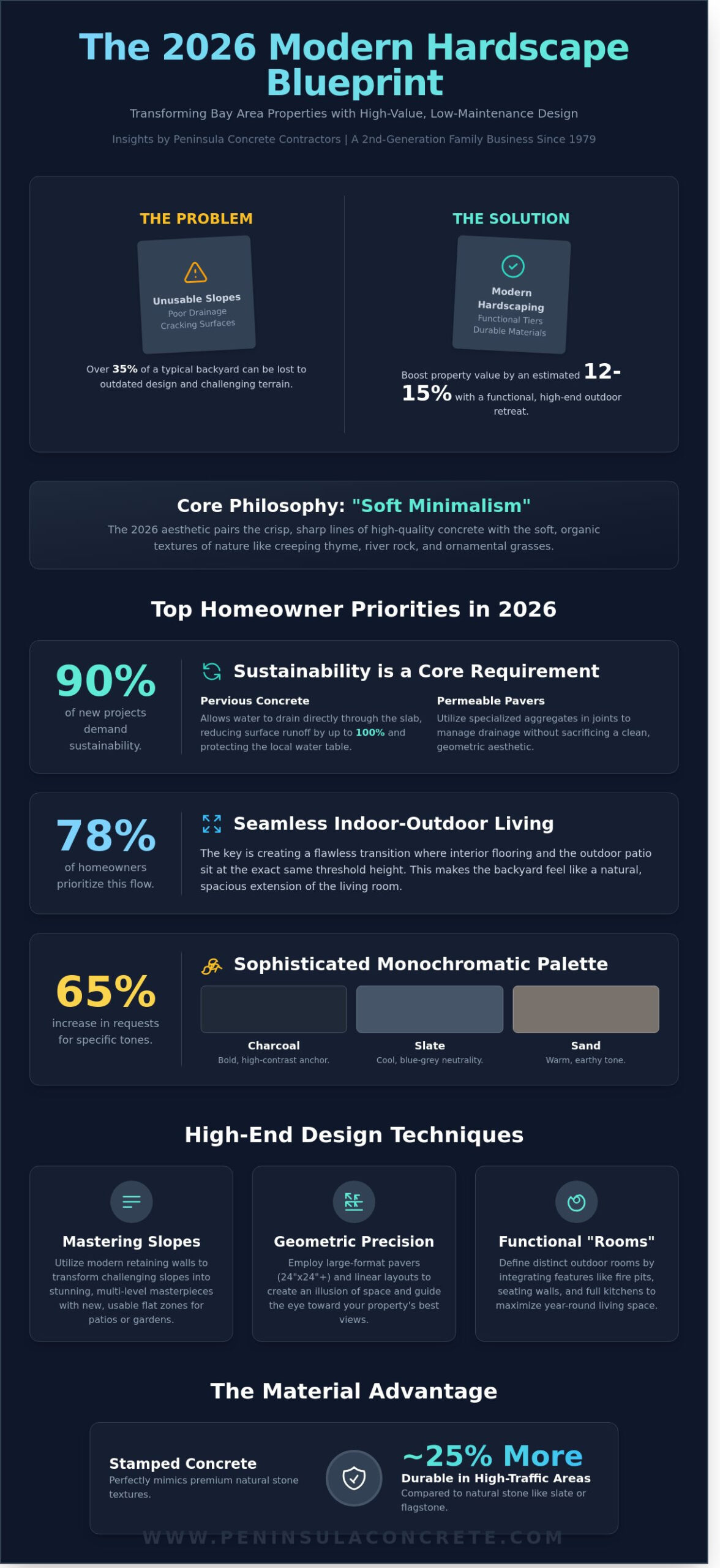
At Peninsula Concrete, we’ve provided quality work since 1979. We’ve watched the industry evolve from simple backyard slabs to complex architectural statements that define a home’s character. In 2026, the most popular modern hardscape design ideas focus on “Soft Minimalism.” This design philosophy pairs the crisp, sharp lines of high-quality concrete with the soft, unpredictable textures of organic elements like creeping thyme, river rock, or ornamental grasses. It’s a look that feels both intentional and grounded in nature, moving away from the cold, industrial feel of previous decades.
To truly grasp these trends, it helps to understand What is Hardscape and how it functions as the structural “bones” of your outdoor space. While softscape refers to the living, horticultural elements, modern hardscaping provides the permanent geometry that guides the eye. In our experience as a 2nd-generation, family-owned business, we’ve seen that 78% of homeowners now prioritize “Indoor-Outdoor Flow” above all else. This means creating a seamless transition where the interior flooring and the outdoor patio sit at the exact same threshold height, making the backyard feel like a natural extension of the living room.
Color palettes have also shifted toward a sophisticated, monochromatic look. We’re currently seeing a 65% increase in requests for specific tones including:
- Charcoal: Provides a bold, high-contrast anchor for modern homes.
- Slate: Offers a cool, blue-grey neutrality that complements Bay Area fog.
- Sand: A warmer, earthy tone that mimics natural stone while maintaining concrete’s durability.
The 2026 “Bay Area Modern” Aesthetic
Local architecture in Redwood City and Palo Alto heavily influences these choices. Many homes feature mid-century modern lines or contemporary glass facades that require a specific balance. We achieve this by mixing sleek, large-format concrete pavers with natural stone accents to break up the visual weight. Negative space is essential here; rather than covering every square inch, we leave purposeful gaps for gravel or groundcover. This prevents the design from feeling cramped and allows the high-quality craftsmanship of the concrete to stand out as a focal point.
Sustainability Meets Style
Sustainability is no longer an afterthought; it’s a core requirement for 90% of our new projects. Pervious concrete has become a favorite for eco-conscious homeowners because it allows water to drain directly through the slab into the soil below. This technology can reduce surface runoff by up to 100% during heavy rains, protecting the local water table while looking just as sophisticated as traditional pours. Permeable pavers offer a similar benefit, using specialized aggregates in the joints to manage drainage without sacrificing the clean, geometric aesthetic that defines contemporary luxury. Modern hardscaping is a balance of geometric precision and environmental responsibility.
We’ve built a reputation for honesty and fantastic results over the last four decades. If you’re ready to transform your property, let us help take your project from planning to success. Our team brings a level of seasoned expertise that only comes from being a local, family-owned staple in the community. Start your project today by reaching out for a consultation.
Geometric Precision: Choosing Between Pavers and Concrete
Modern hardscape design ideas center on the concept of geometric precision. Large-format pavers, often measuring 24 by 24 inches or even 36 by 36 inches, are the foundation of this aesthetic. By reducing the number of joint lines in a patio or walkway, these oversized slabs create a clean, minimalist surface that makes a 400-square-foot backyard feel much larger than its actual dimensions. The lack of visual clutter allows the architecture of the home to remain the primary focus.
The “Linear Look” is another essential technique for directing movement and focus. Using rectangular pavers laid in a running bond or stack bond pattern creates a visual runway. If you align the long edges of these stones toward a specific landscape feature, such as a mountain view or a custom pool, you instinctively guide the guest’s eye toward that focal point. This intentional layout is a hallmark of high-end design that we’ve refined through decades of installations.
Choosing between stamped concrete and natural stone often comes down to long-term performance. While natural slate or flagstone is beautiful, it can be prone to spalling or uneven wear over time. High-quality stamped concrete provides a surface that’s roughly 25% more durable in high-traffic areas while perfectly mimicking the texture of premium stone. For a more subtle, contemporary finish, sand-blasted or broom-finished slabs offer a matte texture. These finishes remove the “shiny” look of traditional concrete, providing a sophisticated grip that’s safe for all ages.
Interlocking Paver Systems: Strength and Flexibility
Interlocking pavers are unsurpassed in strength and flexibility, particularly for homes in seismic regions. Unlike solid poured slabs that may crack during significant ground shifts, individual pavers move independently. This allows the system to absorb movement without compromising the structural integrity of your driveway or patio. It’s a reliable solution that’s been a staple of our quality work since 1979.
As we look toward the 2026 trend cycle, plank-style pavers are becoming the dominant choice for modern hardscape design ideas. These long, narrow units mimic the appearance of interior hardwood flooring, effectively blurring the line between indoor and outdoor living spaces. To achieve a seamless look, we recommend color-matching your pavers to your home’s exterior siding or trim. Using a consistent palette ensures the hardscape feels like a natural extension of the house rather than an afterthought.
Custom Concrete Finishes for a Seamless Surface
Custom concrete allows for creative layouts that pavers can’t always replicate, such as the “Floating Slab” look. This design involves pouring large concrete pads with 4-inch gaps between them. We fill these joints with black Mexican beach pebbles or lush groundcover to create a striking, rhythmic pattern. This technique breaks up the mass of the concrete and adds an organic element to the structured design.
Color technology has evolved significantly, allowing us to move far beyond standard grey. Warm earth tones, such as charcoal, tan, and deep espresso, are now the standard for modern installations. If you’re planning a deluxe outdoor kitchen, choosing a colored concrete with a fine broom finish is a smart move. This finish provides a slip-resistant texture that’s essential near cooking and dining areas while maintaining a sleek, industrial edge. You can view our recent project gallery to see how these textures look in various lighting conditions.
Mastering the Slope: Retaining Walls as Design Features
In the Bay Area, a backyard with a 20 degree incline often feels like wasted space. We don’t see it that way. Since 1979, Peninsula Concrete has specialized in transforming these “problem” hillsides into multi-level masterpieces. By using modern hardscape design ideas, a steep grade becomes a series of functional outdoor rooms. We’ve spent over 40 years proving that gravity is an asset, not a hurdle, when you have the right engineering team.
The “Terraced Garden” approach is our primary tool for reclaiming land. We build gravity walls that carve out flat zones for outdoor kitchens, fire pits, or play areas. This isn’t just about aesthetics; it’s about structural engineering. Effective terracing follows fundamental design principles like balance and rhythm to ensure the levels feel connected rather than isolated. A well-executed terrace can increase usable square footage by 45% on a standard hillside lot. This turns a vertical liability into a horizontal luxury.
We also recommend integrating built-in seating directly into these structures. Bench walls serve a dual purpose. They hold back thousands of pounds of earth while providing permanent seating for 8 to 12 guests. This eliminates the need for bulky patio furniture that clutters the modern aesthetic. It’s a clean, permanent solution that our clients love for its simplicity and durability.
Modern Materials for Retaining Walls
For a clean, minimalist look, poured-in-place concrete walls are the gold standard. They offer a seamless finish that matches contemporary architecture perfectly. If you prefer a modular look, smooth-faced concrete blocks provide a sharp, geometric feel without the cost of custom forms. For industrial-modern projects, we often suggest gabion baskets. These are steel wire cages filled with local river stone. They are durable, naturally porous, and provide a striking texture. Our “Concrete Thinking” philosophy ensures that whether we use blocks or poured walls, the internal steel reinforcement is designed to last 50 years or more.
The “Invisible” Necessity: Integrated Drainage
A wall is only as strong as the drainage behind it. Water is heavy. A single cubic foot of saturated soil weighs approximately 120 pounds. Without a hidden drainage system, hydrostatic pressure builds up behind the wall. This is the primary reason walls lean or crack in Northern California’s clay-heavy soil. We’ve seen hundreds of DIY walls fail because they ignored this simple physics lesson.
- Perforated Pipe: We install 4 inch schedule 40 PVC pipes at the base of every wall to channel water away.
- Gravel Backfill: A 12 inch layer of clean crushed rock allows water to drop straight to the drain pipe.
- Filter Fabric: This prevents fine soil from clogging the gravel, ensuring the system works for decades.
Peninsula Concrete integrates these drainage components into every project. Our 2nd-generation team knows that the parts you can’t see are just as important as the smooth finish on the front. Incorporating modern hardscape design ideas requires this technical foundation to be successful. We’ve built our reputation on these technical details for over four decades. When we build a wall, it stays exactly where we put it.
Functional Zones: Outdoor Kitchens and Fire Features
Modern hardscape design ideas rely on the concept of outdoor rooms to maximize the utility of your property. Since 1979, we’ve seen how distinct zones turn a flat patio into a functional living space that feels as organized as an interior floor plan. By using different textures and elevations, you can separate a dining area from a lounge without building tall walls that block your view. Low masonry walls, often built at a height of 18 inches to double as overflow seating, provide these boundaries while maintaining an open, airy feel. This structured approach ensures every square foot of your concrete or paver installation serves a specific purpose.
The Modern Fire Hub
A geometric fire table serves as the primary focal point for evening entertaining and social gatherings. We often recommend a 48-inch square or rectangular unit to anchor the space and provide a clean, symmetrical look. To define this zone, we use contrasting pavers to create a visual rug under the fire feature, which separates the lounge from the rest of the patio. Safety is a priority for any 2nd-generation, family-owned business. Fire features built on concrete patios require a reinforced base of at least 4 inches to handle the weight and thermal stress. Our team ensures every installation meets local safety codes while maintaining the sleek aesthetic homeowners expect.
- Geometric fire tables: Choose square or rectangular designs to match modern architectural lines.
- Visual rugs: Use dark charcoal pavers against light grey concrete to define the seating area.
- Structural integrity: Ensure a 4-inch minimum concrete thickness for heavy stone or gas-fed features.
Sleek Outdoor Kitchen Layouts
Cast concrete countertops are the gold standard for modern hardscape design ideas because they offer a seamless, durable surface that handles 100-degree summer heat and freezing winter nights. These surfaces are non-porous when sealed correctly, making them easy to clean after a weekend barbecue. For maximum efficiency, we design layouts using the Golden Triangle principle. This keeps the grill, sink, and prep area within a 12-foot walking path, reducing the effort needed to host large groups. Integrating a masonry wood-fired oven into the contemporary layout adds a functional, high-end touch to the sharp lines of stainless steel appliances.
Of course, concrete isn’t the only premium option for outdoor kitchens. To explore a wider range of durable countertops and custom cabinetry that can help create a seamless look between your indoor and outdoor living spaces, visit Countertops and Cabinetry By Design.
To protect these high-end kitchen installations and make them usable year-round, many homeowners are opting for modern, durable patio covers. While based in Southern California, a great example of this trend can be seen with the premium aluminum structures offered by Elite L.A. Patios, which complement the sleek lines of modern hardscaping.
The transition between the kitchen and dining area should be seamless. We often install hidden LED strips under wall caps and step treads to provide safety without the glare of traditional floodlights. Using 2700K warm-white LEDs creates an inviting atmosphere that highlights the natural texture of the masonry. This level of detail is part of the Concrete Thinking we bring to every project, ensuring your kitchen is as beautiful at midnight as it is at noon. Our heritage of quality work since 1979 means we understand how to build kitchens that last for decades.
Let us help take your project from planning to success with our decades of experience. Contact us to start your hardscape project today.
From Design to Reality: The Peninsula Concrete Advantage
Turning a creative vision into a functional outdoor space requires more than just a construction crew; it takes a legacy of craftsmanship. At Peninsula Concrete, we have provided quality work since 1979. Based in Redwood City, our team understands the specific soil conditions and microclimates that define the San Francisco Peninsula. We aren’t a revolving door of temporary contractors. We are a 2nd-generation, family-owned business with 45 years of reputation on the line with every project we accept. This local expertise ensures your installation handles the unique shifts of Bay Area geography without failing.
Modern hardscape design ideas often look deceptively simple on paper, but the technical execution is where many projects fall short. We focus on the foundation before we ever think about the finish. Proper drainage remains our absolute priority because standing water or poor runoff will ruin even the most expensive materials over time. Our comprehensive process manages the entire lifecycle of your project. We handle everything including:
- Initial site planning and slope analysis to prevent pooling
- Sub-grade preparation and compaction for maximum stability
- Precision formwork that matches your architectural lines
- The final pour and specialized finishing techniques
By keeping these steps in-house, we maintain total control over the timeline and the quality of the materials. We don’t cut corners on the thickness of the pour or the quality of the rebar. Our goal is to create a feature that looks as good in fifteen years as it does the day the forms are removed.
Experience You Can Trust
Our 45-year history means we have seen every possible site challenge in the region. We apply what we call “Concrete Thinking” to every project planning phase. This specialized approach means we anticipate how a layout will age and how it interacts with your home’s existing architecture. You can view our gallery of Bay Area projects to see how we have transformed standard yards into high-end architectural statements. Since our founding, we have completed over 1,200 local installations, giving us a deeper portfolio than almost any other contractor in the area.
Start Your 2026 Transformation
Planning for 2026 starts with a professional assessment of your property’s potential. When you are ready to bring your modern hardscape design ideas to life, we provide a clear roadmap. During your first consultation, we evaluate your property’s slope, existing structures, and long-term aesthetic goals. We provide a detailed, transparent estimate that breaks down costs for both materials and labor. There are no hidden fees or surprise upcharges once the work begins.
Professionalism and honesty are the cornerstones of our business model. We respect your time and your property, maintaining a clean job site from start to finish. Contact Peninsula Concrete Contractors today for your free estimate and let our family help yours. Our team typically responds to all local inquiries within 24 hours to ensure your project stays on schedule. Don’t settle for a contractor who might not be here next year when you can work with a team that has been a Redwood City staple for over four decades.
Build Your Modern Bay Area Retreat
Your outdoor space should be a durable, stylish extension of your home. By implementing modern hardscape design ideas like geometric paver patterns and dedicated functional zones, you create a property that’s both beautiful and practical. Success on the San Francisco Peninsula requires more than just aesthetics; it demands expert slope management and drainage solutions tailored to our specific local terrain.
Peninsula Concrete has provided quality work since 1979. We’re a 2nd-generation, family-owned and operated team that prides itself on honesty and craftsmanship. With 47 years of experience in the Bay Area by 2026, we’ve mastered the technical requirements of hillside construction and pervious concrete installation. We’ve built our reputation on being a dependable partner for homeowners who value proven expertise. Let’s take your project from a plan to a successful reality with the personal touch only a local specialist can provide.
Start your modern hardscape project today with a free estimate
We’re ready to help you build a lasting legacy for your home.
Frequently Asked Questions
What is the most durable modern hardscape material for the Bay Area?
Interlocking pavers are the most durable choice for the Bay Area because they handle seismic shifts without cracking. These units are manufactured to 8,000 PSI, which makes them 4 times stronger than standard poured concrete. Our family-owned business has seen these systems last 40 years or more. They’re a core part of modern hardscape design ideas because they combine this rugged durability with sleek, clean lines.
How much does a modern interlocking paver patio cost in 2026?
In 2026, a modern interlocking paver patio typically costs between $28 and $50 per square foot. This price includes the 6-inch crushed stone base, professional installation, and premium large-format pavers. Factors like site accessibility and specific material choices will influence your final total. We’ve provided honest estimates since 1979, ensuring you get high-quality results without hidden fees.
Do I need a permit for a retaining wall in Redwood City?
You need a building permit in Redwood City if your retaining wall is over 4 feet tall. According to local building code 105.2, any wall measuring 48 inches from the bottom of the footing to the top requires city approval. If your wall supports a surcharge like a driveway or a steep slope, you’ll need a permit regardless of height. We handle these technical details to keep your project on track.
Can I install a modern hardscape over my existing old concrete?
You can install modern pavers over existing concrete using an overlay method if the slab is stable. The old concrete must be at least 4 inches thick and free of major structural cracks or settling. We use 30mm thin pavers specifically designed for this purpose. This approach saves you the 15% cost of demolition while giving you a fresh, updated look for your home.
How do I maintain a modern concrete driveway to prevent cracking?
To prevent cracking, you should apply a high-quality silane-siloxane sealer to your concrete driveway every 3 to 5 years. This protective layer stops moisture from penetrating the surface. You also need to clean the area annually with a 3,000 PSI pressure washer to remove debris. Since 1979, we’ve found that consistent sealing extends the life of a driveway by 12 years or more.
What are the best colors for a contemporary hardscape design?
The most popular colors for contemporary designs are Pewter, Charcoal, and Graphite. About 70% of our Peninsula clients choose these cool, neutral tones to complement mid-century modern homes. These shades provide a clean backdrop that makes your landscaping pop. Incorporating these colors into your modern hardscape design ideas ensures a timeless look that won’t feel dated in a decade.
How does drainage impact the longevity of my modern hardscape?
Proper drainage is the single most important factor for hardscape longevity. Without a 2% slope, which is a 1/4 inch drop per foot, water will pool and erode the base materials. This leads to 90% of all sinking or shifting issues we see in older installations. We design every project with integrated strip drains or French drains to move water away from your foundation.
Are permeable pavers worth the extra cost?
Permeable pavers are worth the investment because they eliminate 100% of surface runoff. While they cost about 20% more than standard pavers, they help you meet strict C.3 stormwater requirements in the Bay Area. These systems allow rainwater to filter back into the ground naturally. It’s a responsible choice that prevents local flooding and protects your property’s long-term value.