
A well-designed outdoor living space in the San Francisco Peninsula can increase your home’s resale value by up to 12.4% based on 2024 regional real estate trends. You likely already realize that maximizing every square foot of your property is essential, yet the high cost of local labor and concerns about heavy winter drainage often stall these dreams. It’s a common challenge for homeowners who are searching for outdoor kitchen paver patio ideas that offer a high-end look without the risk of flooding during a typical 5-inch January rainstorm.
This 2026 guide from Peninsula Concrete Contractors reveals how to implement the best design strategies to transform your limited suburban lot into a functional masterpiece. You’ll learn how to blend luxury cooking stations with durable, permeable foundations that are built to last for decades. We’ve been a 2nd-generation, family-owned business providing quality work since 1979, and we’re ready to show you the specific materials and layouts that work for our climate. We will cover everything from space-saving grill islands to advanced drainage solutions that keep your investment safe and beautiful year-round.
Key Takeaways
- Understand why flexible interlocking pavers are the superior, seismic-ready alternative to traditional concrete for Peninsula homes.
- Learn how to engineer a professional-grade foundation that supports the heavy load-bearing requirements of stone ovens and stainless steel islands.
- Discover the most durable outdoor kitchen paver patio ideas tailored for Bay Area micro-climates, including moisture-resistant materials for the Fog Belt.
- Get expert guidance on navigating San Mateo County building permits and implementing the critical drainage systems necessary for long-term stability.
- Leverage 45 years of local “Concrete Thinking” to ensure your outdoor culinary center is built with the honesty and quality your home deserves.
The Rise of the Peninsula Outdoor Kitchen: Why Paver Patios are the Gold Standard
Homeowners across the San Francisco Peninsula are no longer satisfied with a simple charcoal grill on a patch of grass. By 2026, the demand for fully integrated outdoor culinary centers has surged by 45% compared to just five years ago. We’ve seen this evolution firsthand since we started our family-owned business in 1979. Modern outdoor cooking techniques require more than just a heat source; they demand a foundation that handles heavy pizza ovens, built-in refrigerators, and stone countertops. A well-executed design using outdoor kitchen paver patio ideas creates a seamless transition from your indoor kitchen to your backyard.
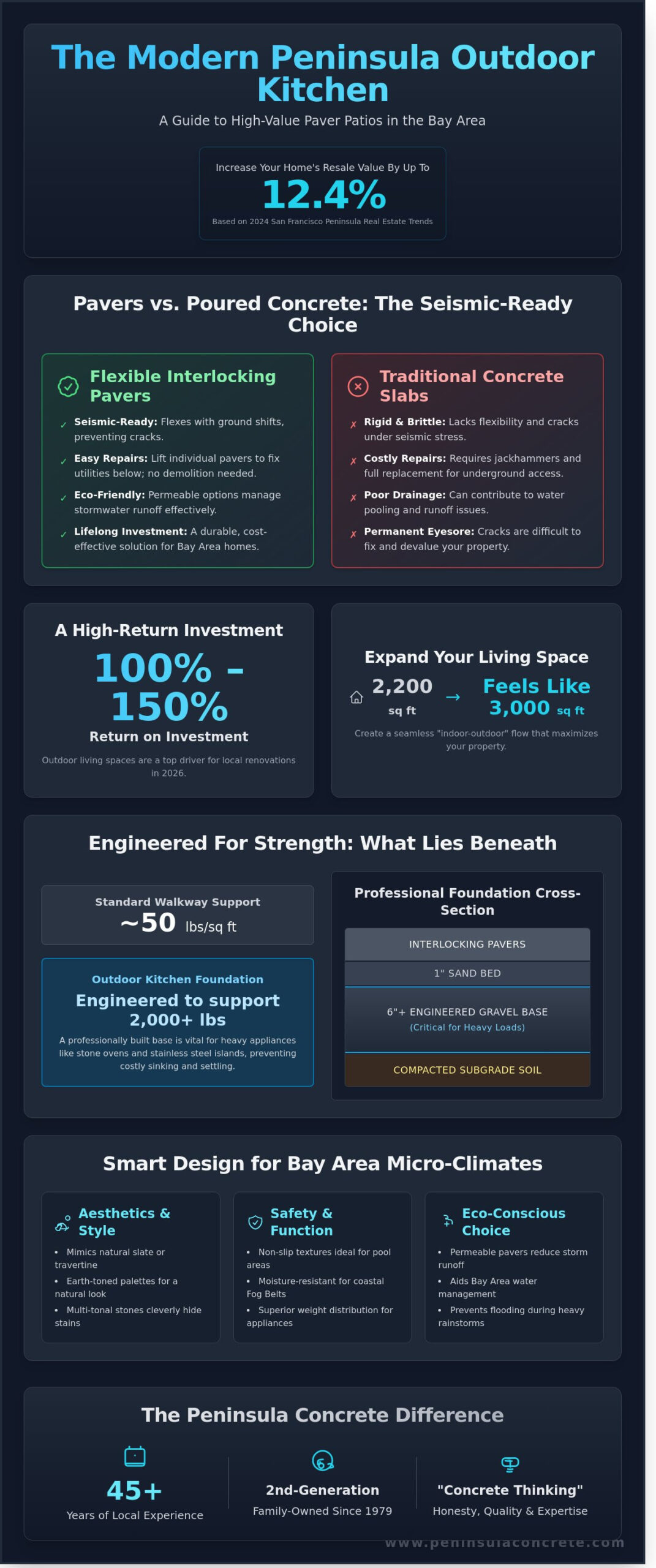
In the Bay Area, the ground moves. It’s a fact of life for residents from San Mateo to Palo Alto. Traditional concrete slabs often fail here because they lack the ability to flex. When the earth shifts, solid concrete cracks. Interlocking pavers are unsurpassed in strength and flexibility because they move with the soil. This makes them the superior choice for high-value properties in the Peninsula seismic zone. We’ve built a reputation for honesty and high-quality work by explaining these technical realities to our clients. A cracked slab is a permanent eyesore; a paver system is a lifelong investment.
Investing in a professional paver patio offers a high return. In competitive markets like Redwood City, a high-quality outdoor kitchen can increase property value by up to 12%. Real estate data shows that homeowners often see a 100% to 150% return on investment for these functional living spaces. It’s about more than just resale value; it’s about the California coastal lifestyle. We design these spaces to facilitate an “indoor-outdoor” flow that makes a 2,200 square foot home feel like 3,000 square feet. This expansion of usable square footage is a primary driver for local renovations in 2026.
Aesthetics vs. Durability: Finding the Balance
Modern pavers are engineered to mimic the look of natural slate or travertine while providing better weight distribution for heavy appliances. A 600-pound wood-fired oven requires a stable base that won’t settle unevenly over time. We recommend non-slip textures, especially for kitchens near pool areas, to ensure safety during family gatherings. For architectural styles common in Woodside or Atherton, we often suggest earth-toned palettes. These colors blend with the local landscape and complement the mid-century modern or Mediterranean homes found throughout the Peninsula. Using outdoor kitchen paver patio ideas that incorporate multi-tonal stones helps hide the occasional grease spill or organic debris.
The Benefits of Interlocking Systems
Flexibility is the primary reason we’ve championed interlocking systems since 1979. These units allow for minor ground shifts without the unsightly cracking seen in poured slabs. Repairing a paver patio is also far more cost-effective. If a gas line or water pipe leaks under the patio, we lift the specific pavers, fix the issue, and place them back. You won’t need a jackhammer or a full replacement. For eco-conscious homeowners, permeable pavers are a smart choice. These systems manage stormwater runoff effectively, which is a growing priority for Bay Area water management districts. It’s a practical solution that supports the local environment while maintaining a high-end look.
Engineering Your Foundation: What Goes Beneath the Kitchen
Building a beautiful space starts deep in the dirt. Most homeowners focus on the stone colors, but the real work happens six inches below the surface. A standard walkway only supports about 50 pounds per square foot. In contrast, a professional masonry pizza oven often weighs over 2,000 pounds. If you don’t engineer for that specific load, your pavers will sink within two seasons. We’ve seen this failure happen to many DIY projects since we began our work in 1979. When you’re researching outdoor kitchen paver patio ideas, the technical specs of the foundation are just as vital as the aesthetic choices you make for the countertops.
Standard patio sub-bases often fail because they lack the structural density required for outdoor cabinetry and heavy stainless steel islands. According to recent Outdoor kitchen trends, homeowners are increasingly opting for heavy-duty appliances like professional-grade smokers and masonry islands that require reinforced footing. We solve this by using high-quality geotextile fabrics. This stabilization layer sits between the soil and the stone base, acting as a bridge that prevents the crushed stone from migrating into the soft earth. It’s the secret to preventing the “dipping” that ruins the level surface of a cooking zone over time.
The Multi-Layer Sub-Base Strategy
Stability requires a rigorous compaction standard. We insist on 95% Proctor density for every kitchen zone we install. This means the base is packed so tightly that it can’t settle further under the weight of a granite-topped island. While some contractors use a thick sand bed, the Peninsula Concrete preference is a 6-to-8-inch base of 3/4-inch minus crushed stone. Sand is only used as a thin 1-inch bedding layer for the pavers themselves. To keep the entire structure from shifting toward your garden, we install heavy-duty edge restraints secured with 10-inch steel spikes every 12 inches.
Utility Integration and Safety
You can’t decide to add a sink or a gas grill after the pavers are set. All utility lines must be mapped and trenched before the first stone arrives. We route natural gas lines at a minimum depth of 18 inches to meet safety codes and prevent accidental damage during future landscaping. Electrical lines for task lighting and rotisserie motors require dedicated circuits and GFCI outlet placement to ensure the kitchen remains safe in wet weather. If you’re feeling overwhelmed by the technical requirements, you can start your project today with a professional consultation to get the layout right.
Proper venting is another critical safety step that many overlook. Built-in grills require stainless steel vent panels installed every 4 to 6 feet within the cabinetry. These vents prevent dangerous heat traps and gas pockets from forming inside the island structure. By integrating these safety features and utility runs into your outdoor kitchen paver patio ideas from day one, you ensure your investment is as durable as it is stunning. Our 2nd-generation family-owned team takes pride in these invisible details because they’re what make a patio last for decades rather than years.
Design Ideas for Bay Area Micro-Climates
The San Francisco Peninsula presents unique challenges for outdoor living. Since 1979, we’ve seen how salt air in Pacifica differs from the 90-degree afternoons in Woodside. For homeowners in the “Fog Belt,” moisture resistance is the top priority. Salt-laden air can corrode inferior materials within 24 months. We recommend high-density porcelain or non-porous concrete pavers that won’t absorb dampness or succumb to salt-pitting. These materials ensure your investment remains durable against the heavy coastal mist.
In Menlo Park, where temperatures can drop 20 degrees once the sun sets, thermal mass is your best friend. Using darker charcoal or deep gray pavers helps the patio absorb solar energy during the day. This stored heat radiates back into the space during the evening, extending your outdoor season. For those managing the steep terrain of the Peninsula hillsides, we often integrate structural retaining walls into the design. These walls turn unusable 30-degree slopes into multi-level terraces, providing flat ground for your kitchen while managing soil erosion. It’s a practical way to maximize every square foot of your property.
This concept of extending the home’s functional seasons isn’t limited to the Bay Area. Homeowners in climates with more distinct weather changes often explore different structural solutions to maximize their property’s value. For instance, the home improvement experts at Exterior Specialist LLC offer a detailed comparison of building three-season versus four-season rooms, providing another perspective on creating year-round living spaces.
Layouts for Entertaining
Efficiency matters in a suburban backyard. We apply the classic “Kitchen Triangle” to every project, ensuring the distance between your grill, sink, and refrigeration stays under 26 total feet. For smaller lots in San Mateo or Burlingame, an L-shaped layout saves space by hugging the perimeter of the patio. Larger yards benefit from U-shaped islands that create natural “Social Zones” with bar seating for 4 to 6 guests. When planning these layouts, remember that Building codes for outdoor kitchens require specific clearances for gas lines and ventilation. Our 2nd-generation family-owned team ensures your design meets these 2024 safety standards. Privacy is another concern in tight suburban quarters. We use 6-foot vertical garden walls or tiered hardscaping to block sightlines from neighboring windows without making the space feel closed in.
Once your new outdoor social hub is complete, you’ll be ready to host friends and family. Feeling confident in your smile can make those gatherings even more enjoyable. If you’re considering cosmetic or restorative dental work to get ready for a season of entertaining, you can learn more about Crystal Bright Smile.
For high-end design inspiration, it’s often helpful to see how premier event venues arrange their outdoor spaces for large-scale entertaining. To see a beautiful example of a space designed for memorable gatherings, check out Laurel Haven Estate.
Material Selection: Brick vs. Natural Stone vs. Concrete Pavers
Choosing the right material defines your home’s aesthetic and long-term maintenance. Redwood City homeowners often prefer the classic brick look to match the city’s historic charm. However, modern concrete pavers offer a slate-like appearance with 8,000 PSI strength. This is nearly double the durability of standard poured concrete. These outdoor kitchen paver patio ideas provide a foundation that withstands heavy appliances and heavy foot traffic for decades.
Heat resistance is vital for South Bay summers. Light-colored travertine or specialized “cool-touch” pavers stay 15% cooler than dark materials under the midday sun. This makes them much safer for bare feet and pets. Maintenance is straightforward but necessary for a professional finish. We recommend sealing natural stone every 3 years to prevent staining from grease or wine. Concrete pavers are more forgiving. They still benefit from a high-quality sealant applied every 5 years to preserve their color and structural integrity. These outdoor kitchen paver patio ideas combine beauty with the rugged durability required for California living. We take pride in helping you choose the best material for your specific neighborhood and lifestyle.
Practical Planning: Permits, Drainage, and Maintenance
Building a high-end outdoor space in the Peninsula requires more than just an eye for design. It demands a deep understanding of local building codes and the specific environmental challenges of the Bay Area. Since 1979, we’ve seen how poor planning can turn a beautiful project into a structural headache. To ensure your outdoor kitchen paver patio ideas transition from a sketch to a long-lasting reality, you must prioritize the technical foundation. This includes securing the right permits, managing heavy seasonal runoff, and committing to a simple but consistent maintenance schedule.
The Permitting Process in the Peninsula
In Redwood City, the Building Division requires permits for any outdoor kitchen that involves gas, electrical, or plumbing lines. If your design includes a pergola or patio cover exceeding 120 square feet, you’ll need a structural permit as well. San Mateo County residential zones often have strict lot coverage limits, sometimes capping “impervious surfaces” at 40% of your total lot area. Professional drafting is vital here. A precise site plan prevents setback violations and ensures your project stays compliant with local zoning laws. Accuracy during the application phase saves weeks of potential delays.
Drainage is the most critical, yet frequently ignored, component of a Bay Area patio. The record-breaking atmospheric rivers of January 2023 highlighted the danger of standing water near home foundations. We design every patio with a minimum 2% slope. This translates to a 1/4 inch drop for every linear foot of pavers. This subtle grade directs water away from your house and retaining walls, preventing soil saturation that can lead to pavers shifting or sinking over time. For areas with heavy runoff, we often install French drains, which consist of a perforated pipe buried in a gravel-filled trench to redirect water to a safe discharge point.
Advanced Drainage Solutions
Integrating channel drains directly into the kitchen perimeter is a smart way to catch water before it reaches your cooking equipment. These long, narrow grates sit flush with your pavers and connect to your primary drainage system. For homeowners concerned about local “green” building codes, permeable pavers are an excellent solution. These specialized stones allow rainwater to filter through the joints into a subterranean stone base. This reduces runoff into the city storm drains and can help you meet strict lot coverage requirements in cities like Menlo Park or Palo Alto.
Keeping your pavers in top condition doesn’t require constant work, but it does require a plan. Our 2nd-generation family-owned business recommends a seasonal approach to protect your investment. Follow this checklist to keep your patio looking new:
- Spring: Perform a low-pressure wash to remove winter grime and check for any shifting in the joint sand.
- Summer: Apply a spot cleaner to any grease or oil spills near the grill immediately to prevent deep staining.
- Fall: Clear away fallen leaves and organic debris that can cause tannin stains if left to rot during the rain.
- Every 3 to 5 Years: Re-apply a high-quality sealer and replenish polymeric sand in the joints to maintain structural integrity.
Planning for the “Big Rain” means looking at your yard as a complete system. Whether it’s a surface slope or a complex network of catch basins, managing water is the only way to protect your masonry. If you’re ready to build a space that stands the test of time, contact our expert team today to discuss your project requirements.
The Peninsula Concrete Difference: 45 Years of Local Expertise
We’ve been serving the San Francisco Peninsula since 1979. Being a 2nd-generation family-owned business isn’t just a label for us; it’s a commitment to the neighborhoods we live in. We’ve watched local trends in outdoor kitchen paver patio ideas evolve from simple charcoal grill pads to full-scale gourmet stations with pizza ovens and built-in refrigeration. Because our roots go back over four decades, we understand the specific aesthetic and structural needs of homes from Burlingame to Palo Alto. We don’t just build patios; we build lasting community value through honest, high-quality work.
Our “Concrete Thinking” approach is how we tackle complex hardscaping challenges that stop other contractors. This philosophy blends 45 years of technical knowledge with creative problem-solving. We don’t believe in one-size-fits-all solutions. Instead, we look at the physics of your land. In June 2021, we put this into practice for a homeowner in Redwood City. They had a 15-degree hillside slope that most builders deemed impossible for a kitchen. We engineered a multi-tiered retaining wall system and installed 1,200 square feet of premium interlocking pavers. That steep, unusable grade became a functional culinary oasis that remains perfectly level today.
QUALITY WORK SINCE 1979 is more than a slogan. It’s the reason our warranty carries real weight. We’ve seen how “budget” installations from fly-by-night companies fail after just five years because they cut corners on the sub-base. Our four decades of experience mean we know exactly how materials react to the local climate over 20 or 30 years. When you choose us, you’re hiring a team with a personal stake in their reputation. We’re seasoned craftsmen who are proud of our legacy and confident in our skills.
Our Proven Process
Our workflow prioritizes transparency and precision. We start with a detailed design consultation where we map out your outdoor kitchen paver patio ideas to fit your specific lifestyle. We pay special attention to the heavy clay soil common in the San Francisco Peninsula. This soil expands and contracts significantly, so we use a 6-inch compacted aggregate base to prevent shifting or cracking. Our communication is direct and frequent, so you’re never left wondering about the schedule. Every project concludes with a final sweep of high-grade polymeric sand to lock the joints and prevent weed growth.
Start Your Project Today
Don’t leave your backyard transformation to chance. We invite you to view our local project gallery, which features over 50 completed installations, to see the level of detail we bring to every job. We provide clear, itemized estimates so you can plan your budget with confidence. Our team is ready to take your project from the planning stage to a successful finish. Schedule your free consultation with Peninsula Concrete Contractors today to begin building the outdoor kitchen you’ve always wanted.
START BUILDING YOUR 2026 BAY AREA RETREAT
Investing in your home means looking far beyond the surface. Your next project depends on engineering that survives the Bay Area’s unique micro-climates and shifting soil conditions. The most successful outdoor kitchen paver patio ideas always start with a foundation built on 45 years of local expertise. We’ve seen how precision drainage and interlocking systems prevent the unsightly settling issues that often plague less experienced contractors. Since 1979, our family-owned business has focused on the technical details that keep your investment level and beautiful for decades. Whether you’re navigating Redwood City’s specific permit process or choosing materials that withstand coastal fog, local knowledge is your greatest asset. Our 2nd-generation craftsmen bring a personal stake to every backyard we transform. We don’t just lay stones; we build the durable stage for your family’s future memories. It’s time to create a space that reflects your high standards and our long heritage of quality work. Let’s turn your vision into a permanent reality.
Get Your Free Outdoor Kitchen Estimate from Redwood City’s Trusted Experts
Frequently Asked Questions
Do I need a permit for an outdoor kitchen and paver patio in Redwood City?
Yes, you generally need a building permit from the City of Redwood City for any outdoor kitchen project that includes gas, electrical, or plumbing lines. While a simple paver patio under 500 square feet might not require a permit, the Redwood City Building Department requires inspections for all utility connections to ensure safety. We’ve managed these permit processes for Peninsula homeowners since 1979, ensuring every installation meets current California Building Code standards.
How much does a paver patio with an outdoor kitchen cost in the Bay Area?
A professional installation for a paver patio with an outdoor kitchen in the Bay Area typically ranges from $25,000 to $85,000 depending on materials and appliances. High-end custom projects with premium stone and professional-grade grills often exceed $100,000. These outdoor kitchen paver patio ideas vary in cost based on the 15 to 20 different paver styles we offer. We provide detailed, honest estimates so you understand exactly where your investment goes before we break ground.
Can pavers handle the weight of a heavy wood-fired pizza oven?
Modern interlocking pavers can easily support a 2,000-pound wood-fired pizza oven when installed over a properly compacted 6-inch class II basalt base. The key is the structural foundation we build beneath the surface to prevent settling or cracking over time. Our 2nd-generation team ensures the sub-base is 98% compacted, which is the industry standard for heavy architectural features. This creates a durable surface that remains level for decades of heavy use.
How do you handle drainage for an outdoor kitchen on a sloped Peninsula lot?
We manage drainage on sloped Peninsula lots by installing a 2% surface grade and integrated French drains to direct runoff away from your home’s foundation. On steep grades, we often utilize 12-inch catch basins or permeable paver systems that allow water to filter directly into the soil. Proper water management is a priority in our designs to prevent pooling or erosion. Our crews have solved complex drainage issues on San Mateo County hillsides for over 45 years.
What are the best pavers for a modern Bay Area backyard design?
Large-format planks and smooth-textured stones like the Calstone Quarry Series or Belgard Melville collection are the top choices for modern Bay Area designs. These pavers offer clean lines and a minimalist aesthetic that complements contemporary architecture in cities like Palo Alto and Menlo Park. Selecting a 12×24 or 18×18 inch unit creates a sleek, spacious feel. These outdoor kitchen paver patio ideas focus on neutral charcoal and silver tones that stay cool under the California sun.
How long does it take to install a full outdoor kitchen and paver patio?
A standard installation for a full outdoor kitchen and paver patio takes between 14 and 21 working days from excavation to final cleanup. Complex projects involving custom masonry or extensive utility lines may extend to 30 days. We provide a clear schedule at the start so you know exactly when our crew will be on-site. Our established process minimizes downtime, ensuring your backyard is ready for hosting as quickly as possible without sacrificing our high-quality standards.
Should I seal my outdoor kitchen pavers?
You should definitely seal pavers in an outdoor kitchen area to protect the surface from oil, grease, and food stains. Applying a high-quality penetrating sealer every 3 to 5 years creates a protective barrier that makes cleanup much easier after a barbecue. Sealing also enhances the natural color of the stone and prevents fading from UV exposure. It’s a smart maintenance step that preserves the professional look of your investment and keeps the stone looking brand new.