
Scale and precision matter far more than decorative patterns when designing a landscape that lasts. The best pavers for modern homes are those that prioritize clean lines and architectural harmony over busy textures. It’s natural to feel concerned about whether a minimalist design can withstand the Bay Area’s shifting soils, or to feel lost among the hundreds of stone and concrete options available today. You want a look that feels current in 2026 without worrying about cracks, shifting units, or a style that feels dated in just a few years.
We believe that a high-end outdoor space should be built on a foundation of reliability and proven craftsmanship. This guide will help you discover how to select modern pavers that balance sleek aesthetics with the long-term durability your home deserves. We’ll explore the rise of large-format porcelain, explain how to utilize the latest permeable systems to meet California’s Model Water Efficient Landscape Ordinance (MWELO), and show you how to achieve a timeless finish that enhances your property’s value.
Key Takeaways
- Learn why smooth, ground finishes and monochromatic color palettes are the defining characteristics of contemporary hardscaping.
- Identify the best pavers for modern homes by comparing the modular versatility of concrete with the high-end durability of porcelain.
- Explore how geometric layout patterns like the stack bond grid can reinforce the clean architectural lines of your property.
- Understand the importance of integrating advanced drainage systems and permeable materials to navigate Bay Area soil conditions and environmental codes.
- Discover why expert installation and precision grading are essential for preventing the shifting or cracking that often plagues minimalist designs.
Defining the Modern Aesthetic: What Makes a Paver ‘Modern’?
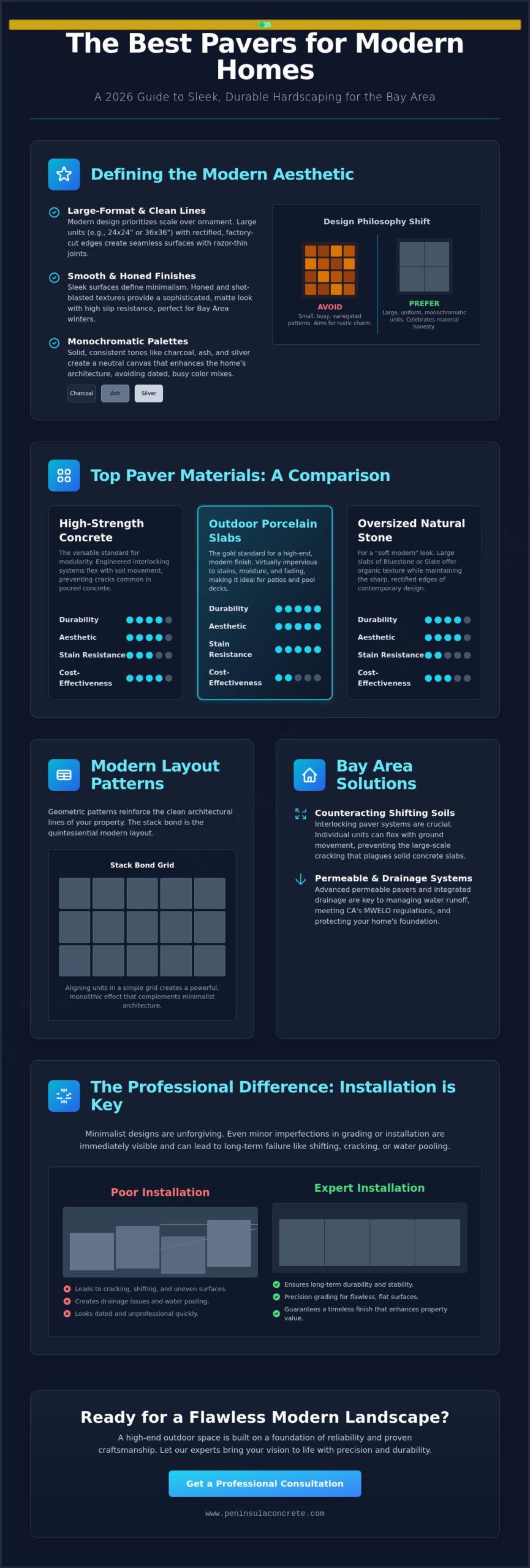
Modern hardscaping is defined by a fundamental shift in design philosophy. While traditional styles often aim for a rustic, “old-world” charm, contemporary design prioritizes geometric precision and structural honesty. The best pavers for modern homes aren’t meant to look like they’ve been there for centuries. Instead, they celebrate the clean, industrial beauty of the materials themselves. This aesthetic relies heavily on “rectified” edges. These are units cut with factory precision to ensure every piece is identical, allowing for razor-thin joints and a perfectly flat surface that emphasizes scale over ornament.
While the basic definition of a Paver (flooring) has remained consistent for generations, the materials and shapes have evolved significantly to meet the demands of modern architecture. Today, the focus has shifted toward large-format units that mirror the home’s interior flooring. When your patio or driveway uses the same scale and color as your indoor living room tile, the entire property feels like a cohesive, single-living space. This seamless transition is the hallmark of high-end Peninsula homes where the outdoors is treated as a direct extension of the house.
Texture and Finish: From Smooth to Honed
Smooth surfaces are the standard for modern minimalism, but there’s a growing preference for honed or shot-blasted finishes in 2026. A honed finish provides a matte, sophisticated look that feels like natural stone but offers the structural integrity of high-strength concrete. We always emphasize that a smooth appearance shouldn’t mean a slippery surface. Modern manufacturing allows us to achieve high slip resistance even on the sleekest designs, ensuring safety during our wet Bay Area winters. Shot-blasted textures are another excellent choice for those seeking subtle depth. This process uses tiny steel beads to lightly etch the surface, exposing the natural aggregates within the stone while maintaining a clean, modern edge.
The Power of Monochromatic Palettes
Color plays a vital role in grounding a modern home and ensuring the landscape doesn’t feel cluttered. Contemporary architecture favors solid, monochromatic tones like Charcoal, Ash, and Silver. These foundational colors provide a neutral canvas that highlights the home’s structural details rather than competing with them. You might choose a high-contrast look, placing deep black pavers against white siding, or opt for a tone-on-tone approach for a serene, monolithic effect. We recommend avoiding dated, variegated color mixes. Selecting the best pavers for modern homes means sticking to consistent, solid hues that remain as timeless as the architecture they support.
Top Paver Materials for Contemporary Architecture
Selecting the best pavers for modern homes requires a look at both the surface finish and the engineering beneath. While many focus solely on the color, the material determines how the space handles the Bay Area’s wet winters and shifting soils. Contemporary hardscaping in 2026 relies on three primary categories: high-strength concrete, outdoor porcelain, and oversized natural stone. Each offers a unique balance of aesthetic appeal and long-term performance in high-traffic areas like driveways and patios.
Concrete remains the versatile standard for modern modularity. It allows for massive 24×24 or 36×36 inch units that create the “industrial slab” look popular in minimalist architecture. For those seeking the ultimate high-end finish, porcelain has emerged as the premier choice. It’s virtually impervious to stains and moisture, making it ideal for the “Hydro-Hardscaping” trends we see today. If you prefer a “soft modern” look, oversized slabs of Bluestone or Slate provide organic texture while maintaining the sharp, rectified edges required for contemporary design.
High-Strength Concrete Interlocking Systems
Modern interlocking pavers are engineered to outperform traditional poured concrete, especially in regions prone to soil movement. Unlike a single slab of concrete that is guaranteed to crack over time, an interlocking system consists of individual units that can flex slightly without compromising the surface’s integrity. For a deeper look at these systems, see our Interlocking Concrete Pavers: The Ultimate Guide. In 2026, the “Industria” style is a dominant trend. These large-format units mimic the look of raw industrial concrete but offer far greater strength and precision than a standard pour.
The Rise of Outdoor Porcelain Slabs
Porcelain has quickly become the gold standard for modern pool decks and patios. These slabs are fired at extremely high temperatures, resulting in a material with near-zero water absorption. This technical advantage makes them naturally resistant to salt, chemicals, and the moss growth common in shaded Bay Area yards. They also offer incredible design flexibility. You can achieve the look of rare wood or polished concrete with a material that won’t scratch or fade over time. Their high breaking strength ensures they handle the weight of modern outdoor furniture without issue.
When considering the best pavers for modern homes, longevity is just as important as the initial look. Concrete pavers typically last 25 to 50 years for patios and up to 30 years for driveways when installed with proper base preparation. Many homeowners are also opting for Permeable Pavement systems to manage stormwater runoff effectively. These eco-conscious choices often align with local drainage codes and municipal rebates. If you are planning a project and need expert guidance on material selection, our team at Peninsula Concrete Contractors is ready to help you build a legacy of quality.
Design Patterns and Layouts for Modern Minimalism
The move toward modern minimalism in hardscaping is characterized by a departure from the intricate, busy patterns of the past. Traditional layouts like the Herringbone, while classic, often create too much visual “noise” for the sleek lines of a contemporary home. Instead, the best pavers for modern homes are typically arranged in patterns that emphasize geometric perfection and structural clarity. The Stack Bond pattern is a prime example. By aligning pavers in a perfect grid, you create a sense of order and calm that complements modern architecture. This layout demands absolute precision during installation; even a minor misalignment will be immediately visible to the eye.
Another growing trend for 2026 is the use of “living joints.” By leaving wider gaps between large-format pavers and filling them with low-water succulents or moss, you soften the industrial feel of the stone while adhering to California’s Model Water Efficient Landscape Ordinance (MWELO). This integration of nature and masonry provides a high-end look that functions well in our local climate. It’s a sophisticated way to manage runoff while maintaining a premium aesthetic.
Large Format Slabs and the Illusion of Space
Using oversized slabs, such as 24×24 or 24×36 inch units, is one of the most effective ways to expand the perceived size of a space. In many Bay Area backyards where square footage is at a premium, these massive units reduce the number of joint lines. Fewer lines mean less visual clutter, which tricks the eye into seeing a larger, more continuous area. However, installing these units requires significant sub-base precision. Because larger pavers have a broader surface area, they are more susceptible to rocking or cracking if the ground beneath isn’t perfectly graded and compacted. Our experience with the Peninsula’s clay soil ensures that these large-scale designs remain stable for decades.
Linear Layouts and Directional Design
Linear patterns like the Running Bond are excellent for directing movement or drawing the eye toward a specific view. This directional design is particularly effective when using “plank” style pavers that mimic the appearance of interior hardwood flooring. By extending these lines from the house out into the garden, you create a seamless flow that blurs the boundary between indoor and outdoor living. A critical component of these linear designs is the integration of drainage. We prioritize hidden or decorative drainage channels that follow the lines of the pavers. This ensures that water management doesn’t disrupt the clean, modern aesthetic of your hardscape.
Selection Criteria: Durability and the Bay Area Climate
Modern aesthetics are only as good as the engineering beneath them. In the San Francisco Peninsula, the best pavers for modern homes must be selected with our expansive clay soil in mind. This soil expands when wet and contracts when dry, which can cause rigid surfaces like poured concrete to crack. A flexible interlocking paver system is the superior choice for our seismic zone. It allows for microscopic movements without compromising the flat, sleek finish that contemporary architecture requires. By choosing a system that breathes with the earth, you ensure your investment remains flawless for decades.
Engineering for Bay Area Soil Conditions
Large-format pavers are the dominant trend for 2026, but they demand a deeper, more rigorously compacted aggregate base than smaller units. Without this foundation, the broad surface area of a 24-inch or 36-inch slab becomes a lever that can tilt or rock. We prioritize a multi-layered base strategy to ensure your patio remains perfectly level. For homeowners with sloped lots, a stable foundation often starts with structural support. We recommend Hiring Retaining Wall Contractors who understand the specific geological pressures and drainage requirements of the Peninsula.
Permeability and Sustainable Modernism
Local drainage codes in cities like Palo Alto and San Francisco are becoming increasingly strict. You can achieve a high-end, minimalist look while meeting these requirements by choosing modern permeable pavers. These systems feature specialized joints that allow water to filter directly into the ground. This reduces runoff and protects your home’s foundation from the hydraulic pressure of standing water. The latest 2026 designs don’t look like traditional “eco-pavers.” They offer the same crisp, rectified edges and monochromatic finishes as standard slabs but with a hidden, sustainable benefit.
Climate also dictates your color palette. If you’re designing a patio in sunny Redwood City, lighter shades like Ash or Silver help mitigate heat retention. This keeps the surface comfortable for bare feet even during the peak of summer. For shaded areas in Woodside or Hillsborough, darker tones like Charcoal can add dramatic contrast without the risk of becoming uncomfortably hot. The best pavers for modern homes are those that respect the local environment as much as the architectural style.
The most common concern we hear from homeowners is whether large-format pavers are prone to cracking. The reality is that the paver itself is incredibly strong; the failure usually happens in the sub-base. Our signature approach focuses on perfect grading and precision edges to eliminate the stress points that lead to damage. If you’re ready to invest in a landscape that balances beauty with uncompromising strength, contact Peninsula Concrete Contractors to discuss your vision.
The Peninsula Professional Approach: Installation and Longevity
Achieving a minimalist aesthetic requires more than just high-quality materials. It demands a level of craftsmanship that only comes with decades of hands-on experience. While we’ve discussed how to select the best pavers for modern homes, the ultimate success of your project rests on the precision of the installation. In a modern design, there is no ornate pattern or rustic texture to hide a slight misalignment or a poorly graded corner. Every line must be straight; every surface must be perfectly level. This geometric perfection is what separates a professional hardscape from a standard DIY or generalist attempt.
At Peninsula Concrete Contractors, our signature approach is built on a foundation of integrity and technical excellence. We don’t just lay stones. We engineer outdoor living spaces that are designed to last for generations. Our team brings over 40 years of local expertise to every site. This ensures that the unique challenges of the Bay Area, from our expansive clay soils to our specific seismic requirements, are addressed before the first paver is even set. We take pride in our reputation for dependable, community-rooted service that Peninsula homeowners have trusted for decades.
Why Experience is the Ultimate Modern Luxury
Hiring a general landscaper for high-precision modern hardscaping often leads to long-term frustration. Large-format pavers require a sophisticated understanding of sub-base compaction and drainage integration that many generalists simply don’t possess. As a multi-generational, family-owned business, we take a personal stake in every project we touch. We believe in doing the job right the first time, using proven methods that have earned us a reputation for reliability. You can learn more about our commitment to excellence by reading Why Choose Peninsula Concrete Contractors? for your next project.
Start Your Modern Hardscape Transformation
Your journey toward a contemporary outdoor space begins with a thoughtful consultation. We help you identify the best pavers for modern homes that specifically complement your property’s unique architecture and soil conditions. Our holistic approach means we don’t just look at the patio surface. We evaluate how your new pavers will integrate with your existing drainage systems and any necessary retaining or garden walls. This ensures a cohesive, high-end look that functions as beautifully as it looks. It’s about creating a seamless transition from your interior to your exterior.
Modern hardscaping is an investment in your home’s future and your family’s quality of life. Don’t leave the results to chance with unproven alternatives. Trust a team that has been a part of this community for over four decades and has a hard-earned reputation for honesty and skill. Contact us today to receive a professional estimate and take the first step toward transforming your Bay Area landscape into a modern masterpiece.
Build Your Modern Legacy
Designing a landscape that mirrors the sophistication of your architecture begins with selecting the best pavers for modern homes. Success in minimalist design depends on the harmony between high-performance materials and the geometric precision of the installation. In the Bay Area, this also requires a technical understanding of soil movement and drainage to prevent shifting. A beautiful patio or driveway should remain as level and striking decades from now as it is on the day of completion.
Peninsula Concrete Contractors has been family-owned and operated since 1979. We specialize in navigating the complex soil and drainage conditions unique to our local community. Our team brings deep expertise to high-precision, large-format installations that demand absolute accuracy. We are ready to help you translate your contemporary vision into a durable reality. Don’t leave your project to chance. Get a Free Estimate for Your Modern Paver Project and start your transformation today. We look forward to building something exceptional with you.
Frequently Asked Questions
What are the most durable pavers for a modern driveway?
High-strength interlocking concrete pavers are the most durable choice for a modern driveway. These systems are specifically engineered to support the weight of vehicles while maintaining the clean lines of a contemporary design. Unlike traditional poured slabs, interlocking units can flex with the Peninsula’s shifting clay soils. This prevents the surface cracks that often ruin a minimalist aesthetic over time. We recommend selecting pavers with a high compressive strength to ensure the surface remains pristine under constant use.
Do large format pavers crack more easily than small ones?
Large format pavers don’t inherently crack more easily, but they do require a more precise sub-base. Because these units cover a broader surface area, any voids in the underlying aggregate can create stress points. Professional installation ensures a deep, compacted foundation that supports the entire slab. This prevents the rocking or leverage-based cracking that can occur when oversized units are placed on poorly prepared ground. When installed correctly, they are just as stable as smaller units.
What is the best paver color for a modern home?
Monochromatic tones like Charcoal, Ash, and Silver are considered the best pavers for modern homes in 2026. These solid colors provide a neutral, sophisticated canvas that highlights the architectural details of the house. We suggest avoiding multi-color blends, which can look dated and busy. Instead, focus on consistent hues that create a monolithic, high-end appearance across your patio or driveway. This approach ensures your landscape remains timeless as design trends evolve.
How do I maintain modern pavers to keep them looking new?
Keeping modern pavers looking new requires regular sweeping and occasional pressure washing to remove organic debris. Applying a high-quality, breathable sealer every few years is also essential for protecting the surface from oil stains and UV fading. For porcelain options, maintenance is even simpler because the material is non-porous and naturally resists staining. Always use pH-neutral cleaners to avoid etching the surface of natural stone or concrete. Regular care prevents the buildup of moss and grime in the joints.
Are porcelain pavers too slippery for a pool deck?
Modern porcelain pavers are specifically designed with high slip-resistance ratings for use around pool decks. Most outdoor-rated porcelain features a textured surface that provides excellent traction even when wet. It’s a safer and more durable alternative to traditional materials because it doesn’t absorb water or harbor algae growth. We always verify that the selected materials meet local safety standards for wet environments before installation begins. This ensures your pool area remains both stylish and secure for your family.
Can modern pavers be installed over an existing concrete patio?
Modern pavers can often be installed over an existing concrete patio using an overlay method. However, this is only recommended if the current concrete is structurally sound and free of major settling or structural cracks. If the base slab is shifting, those movements will eventually transfer to the pavers above. Our team evaluates the condition of your existing patio to determine if it’s a safe foundation or if a full excavation is required. Proper drainage must also be maintained during an overlay project.
How much does a modern paver installation cost in the Bay Area?
The cost of a modern paver installation in the Bay Area varies based on the material choice and the complexity of the site preparation. Large-format slabs and porcelain often require more labor-intensive handling and precision grading compared to standard units. While regional averages for materials like natural stone or porcelain reflect the premium nature of these projects, you should consult with a local professional to get an accurate estimate. Factors like soil stabilization and drainage systems will also influence the final investment for your property.
Do I need a permit for a new paver patio in Redwood City?
You often need a permit for a new patio in Redwood City if the project exceeds a certain square footage or involves significant changes to your property’s drainage. Local codes frequently regulate the ratio of permeable to impermeable surfaces to manage stormwater runoff effectively. It’s always best to check with the Redwood City Building Division before starting construction. We help our clients navigate these local regulations to ensure every project remains compliant with municipal standards and environmental codes.