
In the Bay Area, a standard poured concrete pool deck isn’t a permanent installation. It is a countdown to the first major crack. Our local soil is famous for its movement, and rigid surfaces simply cannot keep up with the shifting earth without eventually failing.
You want a backyard retreat where kids can run safely on slip-resistant surfaces, but you’re likely worried about heat retention and the structural integrity of your investment. We understand that concern. Since 1979, we’ve seen how the right materials make the difference between a high-maintenance headache and a lifelong asset. This 2026 guide reveals why interlocking pavers for pool decks are the smartest structural choice for homeowners on the Peninsula. You’ll learn how these systems flex with ground movement, stay cool under the summer sun, and align with new California Title 24 energy standards. We will preview the latest large-format design trends and essential San Francisco permit requirements to ensure your pool surround is as safe as it is beautiful.
Key Takeaways
- Learn why the Bay Area’s expansive clay soil makes segmental paving systems a more durable, flexible choice than traditional poured concrete.
- Discover how to evaluate slip-resistance ratings and thermal performance to ensure your family remains safe and comfortable on the hottest days.
- Understand the specialized engineering required for interlocking pavers for pool decks to prevent shifting and hydrostatic pressure in local soil conditions.
- Explore 2026’s top luxury design trends, including large-format pavers and multi-tonal palettes that mirror the natural California landscape.
- Identify why a multi-generational, local approach to masonry provides the reliability and personal oversight necessary for complex pool deck installations.
Interlocking Pavers vs. Poured Concrete: Why Flexibility Wins
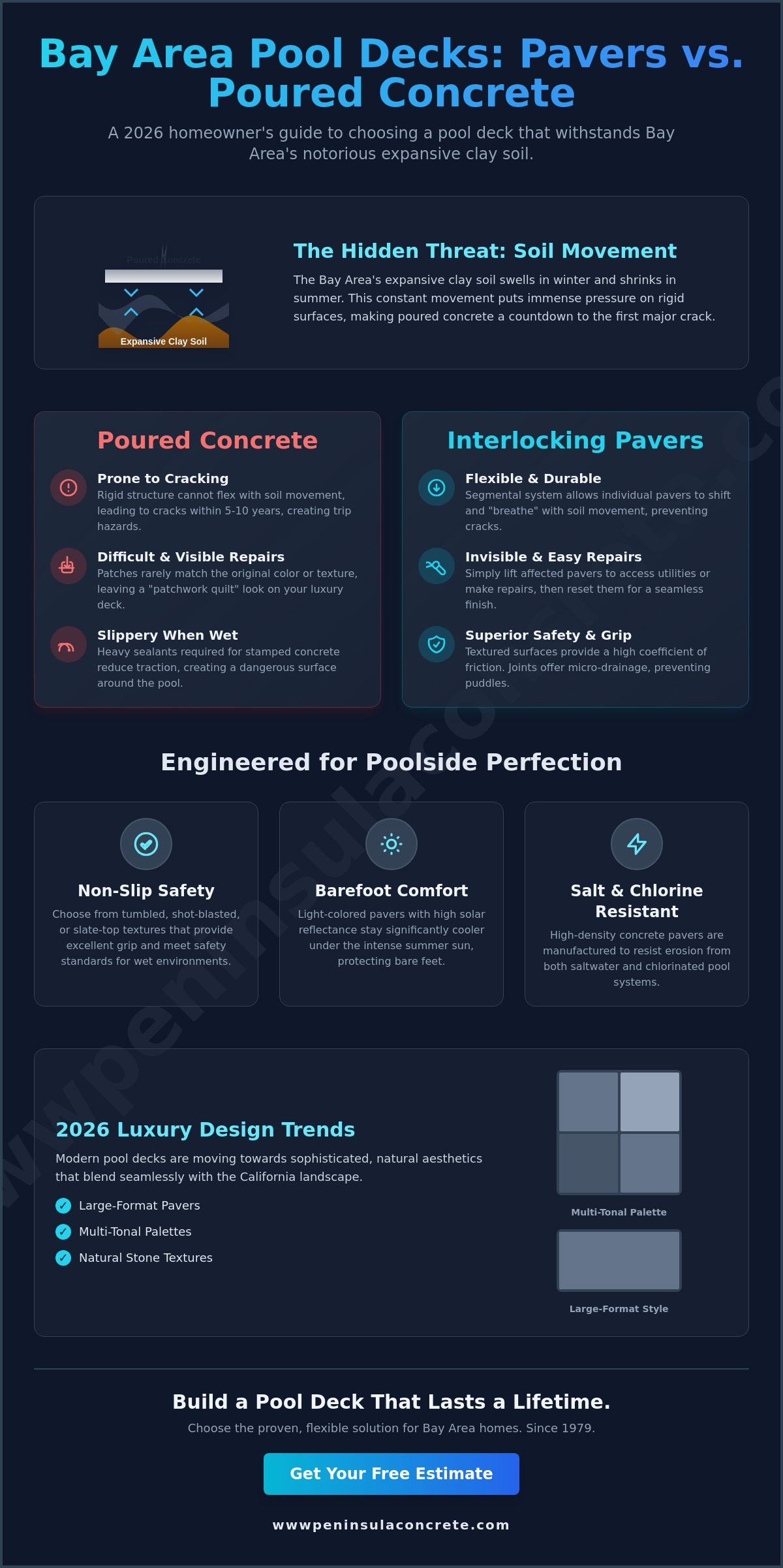
Choosing a pool deck material in the Bay Area requires more than just an eye for design. It requires an understanding of local geology. Our region is home to expansive clay soil that acts like a sponge. It swells significantly during rainy winters and contracts during the dry summer months. This constant movement creates immense pressure on any backyard surface. While a poured concrete slab is a single, rigid monolithic structure, interlocking pavers for pool decks are a segmental system. This distinction is the difference between a surface that breaks and one that breathes.
Because interlocking concrete pavers are individual units, they possess a self-healing quality. During minor seismic shifts or soil expansion, the joints between the pavers absorb the movement. Instead of a large crack forming across your deck, the individual pieces shift slightly and remain intact. It’s a proven engineering principle that has kept our installations looking pristine on the Peninsula since 1979.
The Problem with Poured Concrete Pool Decks
Many homeowners are told that poured concrete is a maintenance-free option. Our experience tells us otherwise. Within five to ten years, almost every concrete slab in the Bay Area will develop hairline cracks. These aren’t just aesthetic issues. Over time, they widen into trip hazards as the ground continues to heave. Repairing these cracks is nearly impossible to do discreetly. A patch won’t perfectly match the original pour’s color or texture, leaving your luxury pool area looking like a patchwork quilt. Stamped concrete presents another risk. It often requires heavy sealants that make the surface dangerously slippery when wet.
The Interlocking Advantage for Poolside Safety
Pavers excel where slabs fail because they distribute weight and pressure across the entire system. This prevents the heaving common with large concrete sections. One of the greatest practical benefits is the ability to perform invisible repairs. If you ever need to access underground utilities or install new drainage systems to manage water runoff, you can simply lift the specific pavers needed and reset them once the work is done. There’s no need for jackhammers or messy demolition. Your pool deck maintains its structural and aesthetic integrity for decades, protecting both your family’s safety and your property value.
Selecting the Best Paver Materials for Pool Environments
Selecting the right materials for a pool surround requires balancing aesthetics with high-performance engineering. In the Bay Area, where the summer sun can be intense, thermal performance is a primary concern. Choosing interlocking pavers for pool decks that remain cool underfoot is essential for comfort. Generally, light-colored pavers with high solar reflectance are the most effective at keeping surface temperatures manageable for bare feet. Beyond heat, the density and porosity of the material determine how well it stands up to the constant splash of chemically treated water.
Pool coping serves as the critical transition between the water and the deck. It provides a safe, rounded edge for swimmers to grab and a seamless visual finish. High-strength concrete pavers are often preferred for this role because their low porosity resists the erosive effects of salt and chlorine better than many natural stones. This durability ensures the edges of your pool remain smooth and structurally sound for decades.
Non-Slip Textures and Safety Standards
Safety is paramount in any wet environment. We evaluate materials based on their Coefficient of Friction (COF) to ensure they provide adequate traction. Tumbled pavers offer a rustic, textured surface, while shot-blasted finishes provide a more modern look with a consistent, non-slip grip. Slate-top textures mimic natural stone while providing micro-ridges that catch the foot. The traditional sand-set installation method is particularly beneficial here. It allows for natural micro-drainage between joints, which helps prevent the dangerous puddling often seen on solid concrete slabs. Adhering to established pool deck safety standards ensures that your design choices protect every member of the family.
Chlorine and Saltwater Resistance
Saltwater pool systems have become increasingly popular, but they are notoriously hard on masonry. Modern interlocking pavers are engineered to withstand these corrosive environments. High-density concrete units are manufactured under extreme pressure, making them nearly impervious to chemical penetration. This is a significant advantage over natural stones like limestone or travertine, which are often porous and prone to spalling, or flaking, if not sealed properly every few years. To maintain the integrity of the system, we use high-quality polymeric sand in the joints. This specialized sand hardens to resist wash-out from pool splashing and prevents weeds from taking root. If you are planning a renovation, consulting with a specialist in interlocking paver systems can help you find a material that balances these technical requirements with your personal style.
Engineering a Durable Pool Deck in the Bay Area
The beauty of a pool surround is only as reliable as the ground beneath it. In communities like Redwood City and Menlo Park, the soil is notorious for its high clay content. This expansive clay shifts with moisture levels, which can easily ruin a poorly planned installation. When we install interlocking pavers for pool decks, our focus starts well below the surface. We prioritize subgrade compaction to ensure the earth is stable enough to support the weight of the masonry and the pressure of the water. Without this foundational step, even the highest quality pavers will eventually heave or settle unevenly.
Engineering for a poolside environment requires adjusting the thickness of the aggregate base layer. Because the soil near a pool is frequently saturated, a standard four-inch base often isn’t enough. We typically increase this depth to provide better load distribution and drainage. Managing the transition between the pool’s concrete bond beam and the paver field is another critical detail. Since the pool shell and the deck are separate structures, they move independently. We use specialized jointing techniques to ensure this transition remains seamless and safe, preventing the trip hazards that plague many older Bay Area homes.
The 5-Step Professional Installation Process
Our approach to installing interlocking pavers for pool decks follows a rigorous protocol developed over decades of experience. We don’t cut corners because we know the local climate doesn’t forgive mistakes. The process includes:
- Step 1: Precision Excavation. We calculate the exact slope needed to guide water away from the pool and home, meeting 2026 engineering standards.
- Step 2: Aggregate Base Installation. We lay a multi-layered, crushed stone base and compact it in stages to prevent future settling.
- Step 3: Bedding Sand. A precise layer of sand is screeded to provide a level surface for the interlocking pattern.
- Step 4: Coping and Edge Restraints. We install the pool coping and secure the perimeter with heavy-duty restraints to ensure lateral stability.
- Step 5: Final Compaction. We use vibratory plates to lock the pavers into the sand and finish with polymeric sand to seal the joints.
Solving Bay Area Drainage Challenges
Water management is the most important factor in deck longevity. Improperly managed runoff can lead to hydrostatic pressure, which can actually damage your pool shell. We integrate sophisticated drainage systems such as French drains or sleek channel drains around the perimeter. These systems ensure that every drop of water is directed away from the foundation and the pool area. For homeowners with sloped lots, retaining wall contractors are often brought in to create level terraces, ensuring the pool deck remains stable and visually integrated with the surrounding landscape. Our goal is to build a deck that handles the heaviest winter rains without a second thought.
2026 Design Trends for Luxury Pool Decks
The aesthetic focus for high-end Bay Area homes has shifted toward minimalism and biophilic integration. Homeowners are moving away from busy, small-scale patterns in favor of large-format pavers. These oversized units create a cleaner, more modern look by reducing the number of visible seams. This trend isn’t just about style. Fewer joints mean a more continuous walking surface, which enhances the “seamless transition” from the home’s interior to the pool area. When choosing interlocking pavers for pool decks, we’re seeing a strong preference for dark, dramatic finishes like charcoal and graphite, which create a sophisticated resort-style atmosphere.
Multi-tonal color palettes are also gaining traction. These designs use subtle variations in shade to mimic the look of natural California stone, such as granite or bluestone. To add functional elegance, we often incorporate contrasting borders or “rug” patterns. This technique uses different paver shapes or colors to visually define lounging areas and dining spaces without needing physical barriers. For environmentally conscious homeowners, permeable paving solutions are now a standard request. These systems allow rainwater to filter back into the ground, reducing runoff and helping properties stay in line with local water management goals.
Modern vs. Mediterranean Aesthetics
The architectural diversity of the San Francisco Peninsula requires a tailored approach to material selection. For contemporary homes in Palo Alto or Los Altos, grey-scale tones and linear patterns provide a sophisticated edge. Conversely, classic estates in Woodside often benefit from tumbled textures and warm neutrals like beige, which complement traditional Mediterranean architecture. It’s essential to coordinate your interlocking concrete pavers with your home’s existing siding and trim to create a cohesive property profile.
Lighting and Perimeter Features
A luxury pool deck should be as functional at midnight as it is at noon. We’re increasingly integrating low-voltage LED lighting directly into paver steps and pool coping to enhance safety and ambiance. Beyond the flat surfaces, we use matching pavers to construct integrated fire pits and seating walls. These vertical elements provide structure and comfort, turning the pool surround into a multi-use living space. By planning these features early, we can create a seamless flow from the water’s edge to an outdoor kitchen or fire lounge. If you’re ready to modernize your backyard, our team can help you design a custom interlocking paver system that reflects these 2026 trends.
Why Peninsula Concrete is the Bay Areas Trusted Paver Expert
Building a luxury pool surround requires more than just technical skill. It requires a deep connection to the community and a personal stake in the results. At Peninsula Concrete, we’ve spent more than four decades perfecting our craft on the San Francisco Peninsula. Since 1979, our family-owned business has operated with a simple philosophy: Integrity First. This commitment means we don’t just finish a job; we ensure every installation of interlocking pavers for pool decks is built to withstand the unique geological challenges of our region for a lifetime.
Unlike national franchises that apply one-size-fits-all solutions, we understand the specific nuances of Bay Area soil. We know exactly how the expansive clay in Redwood City or the coastal conditions in San Mateo affect masonry. Our local expertise allows us to anticipate problems before they happen, ensuring your investment is protected against the cracking and heaving that often plague less experienced contractors. When you choose an established local team, you’re choosing personal accountability and a legacy of excellence that spans generations.
Proven Local Experience Since 1979
Our long history in the region informs our modern approach to every project. While we’ve evolved with the latest 2026 design trends, our core values remain rooted in the craftsmanship we established in the late seventies. This experience is why many homeowners look for specialized landscape contractors who understand how to integrate hardscaping with the broader environment. We prioritize long-term durability over the quick shortcuts that often lead to project failure. Our portfolio includes hundreds of successful pool deck projects across the Peninsula, each one a testament to our focus on quality and reliability. We don’t just build surfaces. We build the foundations for family memories.
Start Your Pool Deck Transformation
Taking the first step toward a new outdoor space should be a rewarding experience. When you contact us for an on-site design consultation, you’ll meet with a professional who understands the intersection of engineering and aesthetics. We’ll evaluate your site’s specific drainage needs, soil type, and sun exposure to recommend the best interlocking pavers for pool decks. Our estimates are transparent and detailed, ensuring you understand the value of every component with no hidden fees or surprises. We believe in honest dealings and clear communication from the first meeting to the final compaction. We invite you to join our family of satisfied clients and experience the difference that 40 years of local expertise can make for your home.
Secure Your Backyard Investment for Decades to Come
A high-quality pool surround is about more than just modern aesthetics. It is a structural decision that protects your property from the Bay Area’s unique geological pressures. By choosing a segmental system over a rigid slab, you ensure your deck can flex with the soil rather than cracking under the strain. You’ve seen how the right textures improve safety and how 2026 design trends can turn a simple pool into a luxury retreat. These interlocking pavers for pool decks provide the perfect balance of resilience and style.
At Peninsula Concrete, our family-owned team has specialized in managing local soil and drainage conditions since 1979. We take immense pride in our 4.9-star average customer rating, which reflects our commitment to integrity and long-term durability. We don’t believe in shortcuts because we know your home deserves a surface that lasts a lifetime. When you’re ready to upgrade your outdoor living space, Request a Free Estimate for Your Bay Area Pool Deck. We look forward to helping you create a safe, beautiful environment that your family will enjoy for years to come.
Frequently Asked Questions
Are interlocking pavers slippery when used around a pool?
Interlocking pavers are not inherently slippery if you choose the correct surface texture. We recommend materials with a high Coefficient of Friction (COF), such as tumbled or shot-blasted finishes. These textures provide excellent traction even when the surface is wet. The consistent joint spacing between the individual units also helps by providing additional grip underfoot, making them a safe choice for families with active children.
How do you prevent weeds from growing between pool deck pavers?
The most effective way to prevent weed growth is the use of high-quality polymeric sand during the final stage of installation. This specialized sand contains a binder that hardens when misted with water, creating a durable seal in the joints. This barrier prevents seeds from taking root and also discourages ants from nesting. Regular sweeping and occasional rinsing will help maintain this protective seal over many years.
Can interlocking pavers be used with a saltwater pool system?
Yes, high-strength concrete pavers are exceptionally resilient against the corrosive effects of saltwater systems. Unlike some natural stones that may flake or spall when exposed to salt, modern interlocking pavers for pool decks are manufactured with high density and low porosity. This engineering prevents salt from penetrating the surface. We always ensure the materials we select meet the durability standards required for these chemically active environments.
What is the best color for pool deck pavers to keep them cool?
Light, neutral tones are the best choice for maintaining a comfortable surface temperature. Colors like beige, light grey, or tan have higher solar reflectance, meaning they absorb less heat from the sun. This is a critical consideration for Bay Area homes that receive direct afternoon sunlight. While darker colors like charcoal are popular for modern aesthetics, they can become uncomfortably hot for bare feet during the summer months.
Do pool deck pavers require a lot of maintenance?
Interlocking paver systems are remarkably low-maintenance compared to wood decks or stamped concrete. Routine care involves simple sweeping and the occasional use of a garden hose to remove debris. Because the system is segmental, you don’t have to worry about the expensive crack repairs common with solid slabs. If a single paver is ever stained or damaged, it can be removed and replaced without affecting the rest of the deck.
How long does it take to install an interlocking paver pool deck?
Most residential pool deck projects in the Bay Area are completed within one to two weeks. The timeline depends on the size of the area and the complexity of the drainage requirements. This period includes the precision excavation, the multi-layered compaction of the aggregate base, and the final setting of the pavers. Our experienced crews work efficiently to minimize the disruption to your home while ensuring every structural detail is handled correctly.
Is it possible to install pavers over an existing concrete pool deck?
We can often install pavers over an existing concrete slab using an overlay method. This is a great way to revitalize a dated or cracked surface without the cost of full demolition. However, the existing concrete must be structurally sound and have a proper slope for drainage. We use thinner pavers specifically designed for overlays to ensure the new surface doesn’t interfere with doorway thresholds or the pool’s edge.
Will my pool deck pavers sink or shift over time?
Properly engineered interlocking pavers for pool decks will not sink or shift if the foundation is prepared correctly. Shifting is almost always the result of poor subgrade compaction or an inadequate base layer. We use a rigorous five-step installation process that accounts for the expansive clay soil found on the Peninsula. By creating a stable, compacted stone base, we ensure your pool surround remains level and beautiful for decades.