
A natural stone landscape in the Bay Area isn’t just a home renovation; it’s a hundred year legacy that demands more than a surface-level installation. With local installation costs for stone pavers averaging between $40 and $55 per square foot in 2026, you’re making a serious investment in your property’s future. It’s natural to feel some hesitation when comparing these costs to concrete or worrying if poor craftsmanship will lead to shifting and cracking over time. Finding the right natural stone masonry contractors is the key to ensuring your stunning outdoor space remains a permanent asset rather than a structural liability.
We know you want a visually stunning retreat that offers genuine peace of mind and long-term value. This guide will show you how to select the best materials and professionals to create a landscape that truly lasts for generations. We’ll break down the 2026 California Building Code updates, such as the increase in minimum design strength to 2,000 psi, and help you navigate the “quiet luxury” trends of matte finishes and warm earth tones. You’ll gain the clarity needed to choose a team that values honesty and quality work as much as you do.
Key Takeaways
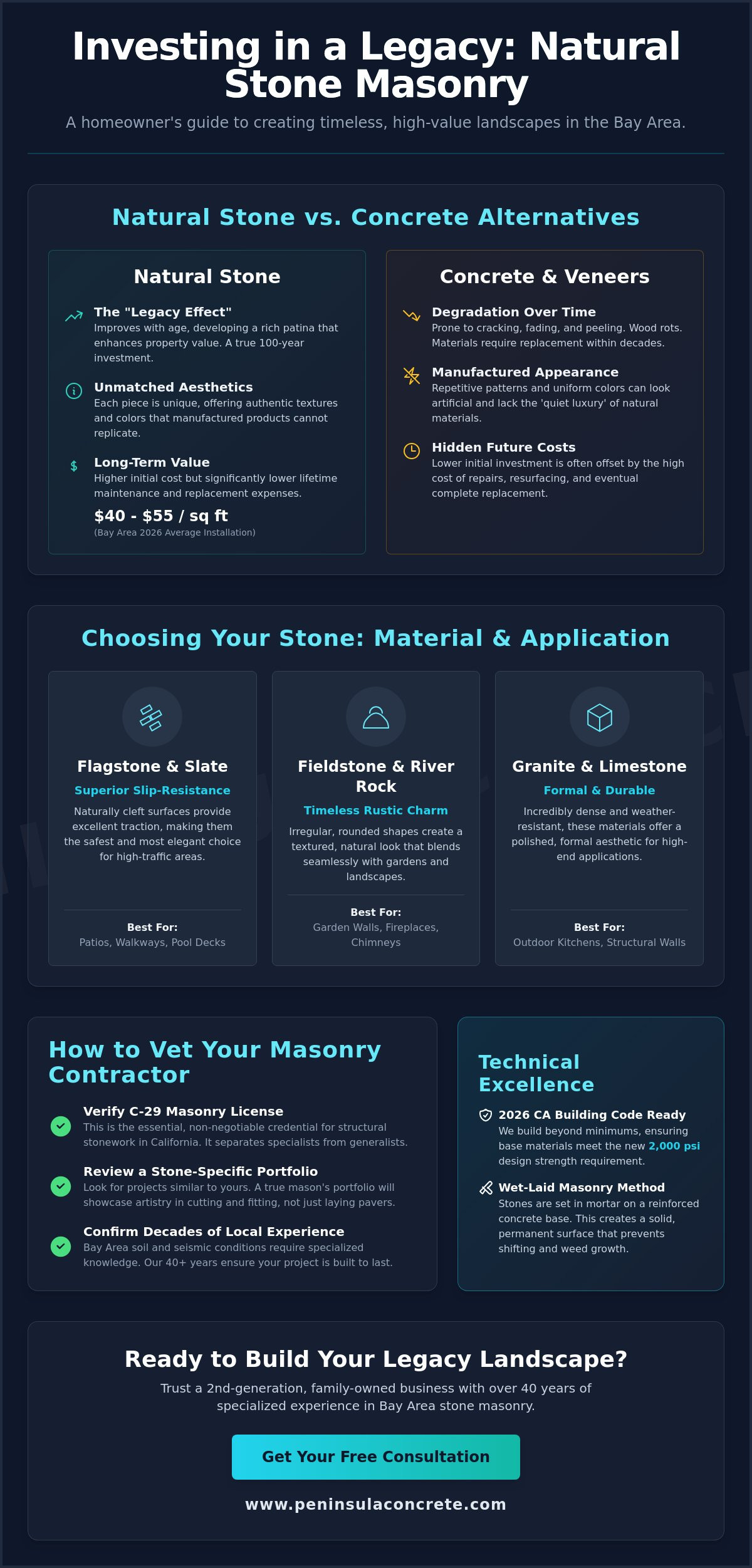
- Understand why natural stone creates a “legacy effect” that increases property value and aesthetics as it ages.
- Identify the best applications for flagstone, slate, and river rock to achieve specific slip-resistant or rustic designs.
- Evaluate the long-term cost-value ratio of natural stone versus concrete alternatives to make an informed project investment.
- Discover the specific criteria for vetting natural stone masonry contractors, including the essential C-29 license and stone-specific portfolio reviews.
- Learn how a 2nd-generation, family-owned business applies 40+ years of experience to ensure your hardscaping lasts for decades.
What is Natural Stone Masonry and Why Does it Matter for Your Property?
Building with authentic materials requires a deep understanding of geological properties and structural physics. What is Natural Stone Masonry exactly? It’s the ancient craft of shaping and arranging raw stones like granite, limestone, and slate into permanent, load-bearing structures. Unlike modern modular blocks, every piece of stone is unique. This requires a level of artistry and precision that only comes from years of hands-on experience. Since 1979, we’ve seen how these materials transform a standard yard into a sophisticated retreat. It’s a discipline that balances the rugged beauty of the earth with the technical requirements of modern engineering.
The ‘Legacy Effect’ is a primary reason homeowners invest in stone. Natural stone is the only building material that actually improves with age and weathering. While wood rots and concrete veneers can peel over time, authentic stone develops a rich patina that adds character to your property. This longevity is a massive asset in the competitive Bay Area real estate market. A well-executed stone project creates an immediate sense of permanence and luxury that sets a home apart from its neighbors. Beyond aesthetics, it’s a sustainable, low-carbon choice. Stone is a natural product that doesn’t require the chemical-heavy manufacturing processes found in synthetic alternatives.
The Difference Between a Mason and a Landscaper
A common mistake is assuming that any backyard contractor can handle a stone project. Landscapers primarily focus on living elements like soil, drainage, and plant health. Masons are structural specialists. They understand how to cut stone to fit precise angles and how to apply mortar so it withstands the test of time. In our region, structural integrity is non-negotiable due to our unique soil conditions and seismic requirements. Hiring specialized natural stone masonry contractors ensures your hardscape is built to last. It’s the difference between a decorative garden wall and a structural foundation that secures your property for decades.
Common Natural Stone Masonry Projects
Experienced natural stone masonry contractors use these materials to serve both functional and aesthetic purposes across your landscape. Here are a few ways we use these materials to enhance Bay Area homes:
- Structural Retaining Walls: These are vital for managing sloped lots, preventing erosion, and creating flat, usable tiers for patios or gardens.
- Custom Outdoor Kitchens: Natural stone is naturally heat-resistant. This makes it the ideal choice for surround-work on wood-fired pizza ovens and high-end grills.
- Flagstone Patios: These surfaces offer natural slip resistance and a unique variegation that manufactured pavers can’t replicate.
Popular Stone Materials and Masonry Techniques
Choosing the right material is the first step toward a successful hardscape. Each variety of stone offers different performance characteristics and aesthetic profiles. For example, flagstone and slate are excellent choices for flatwork. Their naturally cleft surfaces provide superior slip resistance; this makes them a safe option for patios and walkways that see heavy foot traffic. If you’re looking for a more rustic feel, fieldstone and river rock are perfect for garden walls and chimneys. Their irregular shapes create a textured, timeless look that blends naturally with the surrounding environment.
For homeowners who prefer a formal, polished aesthetic, granite and limestone are the gold standards. These materials are incredibly dense and durable, resisting the wear and tear of Bay Area weather for decades. According to leading industry organizations, the selection process should always account for both the stone’s mineral composition and its intended use. Expert natural stone masonry contractors understand how to match these materials to the specific demands of your property’s topography.
Wet-Laid Masonry: The Foundation of Durability
Wet-laid masonry involves setting stones in a bed of mortar over a reinforced concrete sub-base. This method is the most durable way to install stone on flat surfaces. The mortared joints create an impermeable, solid floor that prevents weeds from growing between the stones and keeps the surface level. Because the stones are bonded to a rigid base, they don’t shift or wobble underfoot. This technique is ideal for formal entryways, pool surrounds, and stairs where structural stability is the top priority. If you’re planning a high-traffic area, Peninsula Concrete can help you design a layout that balances these technical needs with your personal style.
Drystack Masonry: The Natural Aesthetic
Drystack masonry relies on gravity and precision fitting rather than mortar. This technique creates walls that can shift slightly with the earth without cracking. It’s an excellent choice for garden settings because the gaps between stones allow for natural drainage, which is crucial for soil health. Many retaining wall contractors recommend drystack for shorter walls where a softer, more integrated look is desired. While these structures require high skill to build, they offer a unique, handcrafted appearance that mortared walls can’t match. Professional natural stone masonry contractors ensure that each stone is carefully selected and placed to maintain structural integrity without the use of adhesives.
Natural Stone vs. Alternatives: Pavers and Concrete
When you start planning a hardscape project, the price tag for natural stone often stands out. It’s true that the upfront cost of stone is higher than most alternatives. However, looking at the lifecycle expense tells a different story. Natural stone doesn’t rot, peel, or lose its structural integrity over time. While manufactured products may need replacement after 15 or 20 years, a stone patio built by experienced natural stone masonry contractors can easily last for generations. This long-term durability makes stone a high-value investment that pays for itself through reduced maintenance and increased property resale value.
Aesthetics are where the gap between real stone and alternatives becomes most visible. Manufactured pavers are designed to look like stone, but they rely on repetitive molds and pigments. This often results in a “stamped out” appearance that lacks the organic soul of the real thing. Natural stone offers a unique variegation where no two pieces are identical. According to the Natural Stone Institute, this mineral diversity is what creates the timeless appeal homeowners crave. Real stone also resists UV fading and salt damage far better than concrete-based products, which can turn “chalky” or lose their color after years of exposure to the California sun.
There are times when interlocking concrete pavers are actually the superior choice. For high-traffic driveways where heavy vehicles are parked daily, the uniform strength and flexibility of a paver system can be more practical than certain types of stone. Pavers are engineered to handle specific weight loads and offer an “unsurpassed” level of flexibility in shifting Bay Area soils. We often recommend these systems for clients who want a clean, modern look with maximum structural reliability for their vehicles.
Natural Stone vs. Manufactured Stone Veneer
The choice between “Full Bed” stone and “Thin Veneer” is a common debate for home exteriors. Full bed stone is 3 to 5 inches thick and provides a massive, structural look. Thin veneer is a sliced version of real stone that’s easier to install on existing walls. We always suggest real stone over manufactured concrete veneers. Real minerals carry their color all the way through. If you accidentally chip a piece of real stone, it just reveals more stone. If you chip a manufactured veneer, you’ll see the grey concrete underneath. Plus, you can power-wash or even chisel real stone to refresh its look, which would destroy a manufactured product.
When Concrete is the Smarter Choice
For large-scale projects with a strict budget, concrete is an incredibly versatile tool. Stamped concrete can mimic the texture of stone at a lower price point, allowing you to cover more square footage without breaking the bank. Even when you choose a stone finish, a Bay Area concrete base is often the secret to a successful installation. Using a reinforced concrete sub-base prevents the stone from shifting or sinking. Many of our most successful projects combine stone accents, like a flagstone border or a stone retaining wall, with a high-quality concrete patio to balance costs while maintaining a premium feel. Professional natural stone masonry contractors can help you find that perfect middle ground between luxury and budget.
How to Evaluate Natural Stone Masonry Contractors
Choosing the right team for your stonework is about more than just checking a price list. It requires vetting for specific technical skills that go beyond basic landscaping. Start by verifying that your candidates hold a C-29 Masonry Contractor license in California. This specialized classification ensures the contractor has passed trade-specific exams and maintains the required bonding. General liability and workers’ compensation insurance are equally vital. Without these, you are personally liable for any accidents that occur on your property. Don’t just take their word for it; ask for their license number and verify it on the CSLB website.
Next, look closely at their portfolio. You need to see actual stone projects, not just interlocking pavers or concrete pours. Natural stone masonry contractors must demonstrate proficiency in stone cutting and mortar application. A quality portfolio should show tight joints, consistent levels, and a clear understanding of color blending. Ask to see a project that is at least five years old. This allows you to see how their foundations hold up against the test of time and weather. If a wall is still straight and a patio is still level after half a decade, you’ve found a craftsman.
The Importance of Local Experience
Soil types in Redwood City and across the Peninsula vary significantly. If you live in an area with heavy clay soil, your stone walls require different engineering than those built on solid rock. Clay expands when wet, creating immense hydrostatic pressure. If your contractor doesn’t plan for proper drainage and weep holes, that pressure can eventually collapse a beautiful stone wall. Seismic activity is another local reality. We use specific mortar mixes and flexible joint designs to ensure masonry can handle the subtle Earth movements common in our region. This level of local insight is what separates a permanent structure from a temporary one.
Questions to Ask During the Estimate
A professional estimate is the perfect time to dig into the details of your project. Ask where the stone is sourced. Local quarries often provide materials that better match the native Bay Area landscape. You should also ask how the new installation will integrate with existing structures. For example, if your new stone walkway meets the street, your contractor should be familiar with sidewalk repair standards to ensure a seamless transition. Finally, always ask about the sub-base. A stone patio is only as good as the reinforced concrete or compacted gravel underneath it.
Ready to build a legacy in your backyard? Contact Peninsula Concrete today to discuss your project with a team that has provided quality work since 1979.
Peninsula Concrete: Your Trusted Partner for Quality Work Since 1979
Our heritage is built on a foundation of long-term experience and community roots. Peninsula Concrete is a local, 2nd-generation, family-owned business that has served Redwood City and the surrounding areas for over four decades. We don’t view ourselves as a faceless corporation. Instead, we’re a team of seasoned craftsmen with a personal stake in the reputation we’ve built. When you hire us as your natural stone masonry contractors, you’re partnering with a company that values honesty and high-quality work above all else. Our tagline, “QUALITY WORK SINCE 1979,” is more than just a phrase; it’s our identity.
The Peninsula Promise represents our unique approach to hardscaping. We combine 40+ years of traditional masonry techniques with modern engineering standards. This is essential in the Bay Area, where seismic activity and varying soil types demand more than just a surface-level installation. We specialize in both high-end stone masonry and structural concrete because we understand how these materials work together. By using reinforced concrete for foundations and sub-bases, we ensure that your natural stone surfaces remain level and beautiful for generations. Every project we touch benefits from “Concrete Thinking,” our signature approach to solving complex landscape challenges with intelligence and integrity.
From Planning to Success
Selecting the right stone is a critical step that dictates the visual harmony of your property. We help homeowners navigate the selection process to find materials that complement their home’s specific architecture. Whether you need a formal granite entryway or a rustic fieldstone retaining wall, we ensure the material matches the functional needs of the site. Our process prioritizes structural integrity at every turn. We don’t take shortcuts on drainage or soil preparation. This commitment to doing things the right way is why Peninsula Concrete Contractors is the safe choice for families who want a legacy outdoor space without the fear of future failure.
Start Your Project Today
We’re ready to help take your project from the planning stages to a successful completion. Your journey begins with a free, professional estimate where we’ll discuss your vision and evaluate the technical requirements of your lot. During our initial site consultation, we’ll look at drainage patterns, soil conditions, and existing structures to provide an accurate and honest quote. We believe in unambiguous communication and direct results. Let us bring our 40 years of expertise to your backyard. CONTACT US today to start building a durable, high-value landscape that your family will enjoy for decades to come.
Build Your Legacy with Professional Stone Masonry
Investing in natural stone is about more than just current aesthetics; it’s about creating a structural legacy that ages gracefully. You now understand the critical differences between authentic minerals and manufactured veneers, as well as the technical requirements for drainage and seismic stability in our unique local soil. Finding the right natural stone masonry contractors ensures that your vision is supported by a foundation that won’t shift or crack as the decades pass. Choosing quality materials today means you’re building a space that actually improves with every passing season.
As a 2nd-generation, family-owned business, we’ve been serving the San Francisco Peninsula for over 40 years. We take immense pride in our heritage and our established reputation for honesty and craftsmanship. Our team applies “Concrete Thinking” to every project, combining traditional artistry with the modern engineering required for long-term durability. We’ve provided quality work since 1979, and we’re ready to bring that same level of personal care to your home renovation.
Start your natural stone project today with a free estimate from Peninsula Concrete Contractors. We look forward to helping you transform your outdoor space into a permanent asset you’ll be proud to own for a lifetime.
Frequently Asked Questions
How much does natural stone masonry cost per square foot in 2026?
In 2026, the average cost for natural stone paver installation in the Bay Area typically ranges from $40 to $55 per square foot. If you are building a natural stone wall, the total cost for materials and labor generally falls between $45 and $200 per square foot. These prices are approximately 15% to 40% higher than the national average due to local labor rates and the high demand for skilled masons in our region.
Does natural stone require sealing or special maintenance?
Most natural stone surfaces benefit from a high-quality, breathable sealer to prevent deep staining and moisture absorption. While stone is incredibly durable on its own, a sealer helps maintain the vibrant mineral colors and protects against salt damage or oil spills on patios. We recommend a simple cleaning with water and a soft brush once or twice a year to keep the stone looking its best for decades.
What is the best stone for a pool deck in the Bay Area?
Flagstone and travertine are the most popular choices for pool decks because they provide natural slip resistance and stay relatively cool under the California sun. Their textured, matte surfaces offer a safe grip for wet feet, which is a top priority for family safety. Professional natural stone masonry contractors can help you select a specific stone variety that balances these safety features with your home’s unique architectural style.
Can natural stone be installed over an existing concrete patio?
Natural stone can be installed over an existing concrete patio if the original slab is structurally sound and free of major settling cracks. We typically use a mortar bed to bond the stone directly to the concrete surface, creating a permanent and stable floor. It is important to verify that the added height of the stone won’t interfere with your door thresholds or the existing drainage patterns around your home’s foundation.
How long does a natural stone retaining wall typically last?
A properly engineered natural stone retaining wall can easily last 50 to 100 years or more with minimal maintenance. Unlike wood or certain manufactured products, natural stone doesn’t rot or degrade when exposed to soil and moisture. Its actual lifespan depends on the quality of the initial foundation and the drainage systems used to prevent hydrostatic pressure from building up behind the wall over time.
Is a permit required for stone masonry walls in the Peninsula area?
Most cities on the Peninsula require a building permit for any retaining wall that exceeds three or four feet in height. Even for shorter walls, local codes often require a permit if the wall supports a surcharge, such as a driveway or a steep hillside. We always recommend checking with your specific building department in Redwood City or your local municipality to ensure every structure meets the latest safety standards.
What is the difference between flagstone and pavers?
Flagstone is a natural, quarried stone with irregular shapes and unique mineral variegation, while pavers are typically manufactured from concrete in uniform, modular sizes. While concrete pavers offer a predictable and modern look, flagstone provides an organic, “one-of-a-kind” aesthetic that improves with age. Many natural stone masonry contractors prefer working with flagstone because it offers a higher level of authenticity and long-term property value.
Can natural stone withstand the seismic activity in San Francisco?
Natural stone structures are designed to withstand local seismic activity when they are built using specialized engineering techniques. For example, drystack walls allow for subtle Earth movements without cracking, while mortared projects require reinforced concrete footings to stay stable. We build every project to comply with the 2025 California Building Standards Code to ensure your hardscape remains safe and secure during any seismic events.