
If your driveway, patio, or walkway sends every drop of rain rushing into the street drain, you’re not alone. Most older paved surfaces in Redwood City do exactly that. The problem is that traditional concrete and asphalt don’t let water through. All that runoff carries oil, sediment, and pollutants straight into local creeks and the Bay.
Peninsula Concrete installs permeable pavers and pervious concrete systems that fix this at the source. Water soaks through the surface, filters into the aggregate base below, and recharges the groundwater naturally. Your property looks great, drains properly, and stays compliant with local stormwater rules.
We’ve been serving homeowners and businesses across Redwood City and San Mateo County for years. Our team holds a California Contractors State License Board (CSLB) Class C-8 concrete contractor license, and our installers are certified through the Interlocking Concrete Pavement Institute (ICPI). We carry full general liability insurance and workers’ compensation coverage on every job.
What Are Permeable Pavers and Pervious Concrete?
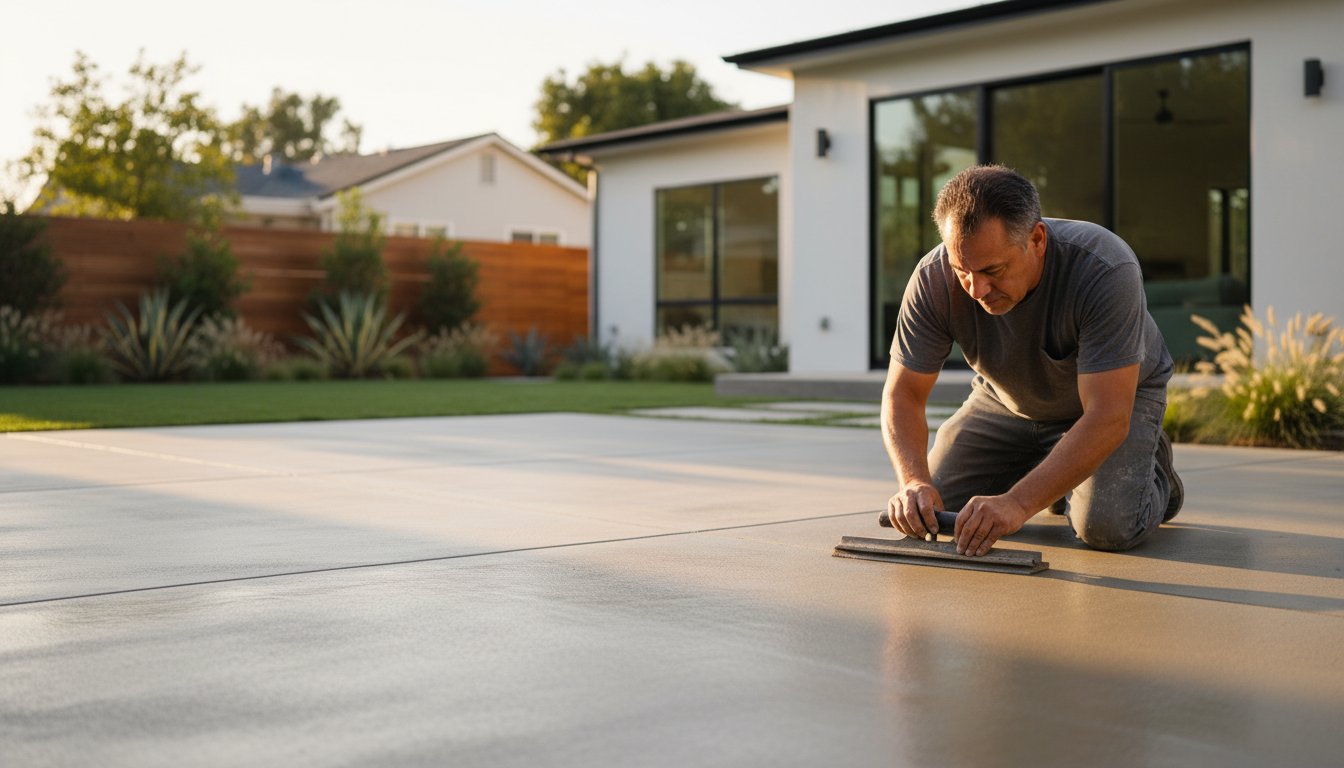
These are two different products that solve the same problem. Both let rainwater pass through your paved surface rather than run off it.
Permeable Interlocking Concrete Pavers (PICP) are individual concrete paver units installed with gaps between them. Those gaps get filled with small aggregate instead of standard jointing sand. Water enters through the joints, moves into an open-graded crushed stone sub-base, and slowly percolates into the soil below. They look similar to standard pavers and come in many styles, colors, and patterns.
Pervious concrete is a different material entirely. It uses Portland cement and coarse aggregate but skips most of the fine sand. That creates a porous structure with about 15 to 25 percent void space throughout the slab itself. Water passes directly through the concrete surface. It’s a great option for driveways, parking areas, and larger flat surfaces where a uniform look is preferred.
Both systems use geotextile fabric, a properly sized aggregate reservoir base, and careful sub-base compaction to perform well long-term.
Why Redwood City Properties Benefit from Permeable Paving
Redwood City gets most of its rain between November and April. During heavy storms, traditional impervious surfaces dump that water directly into the storm drain system, which feeds local waterways and the Bay. Permeable paving interrupts that cycle.
Here’s what that means for your property specifically:
It reduces stormwater runoff. Water infiltrates through the surface and into the ground rather than rushing off your driveway into the street.
It qualifies as pervious surface under San Mateo County’s C.3 stormwater requirements. This matters if you’re expanding or replacing paved areas. Under San Mateo Countywide Water Pollution Prevention Program (SMCWPPP) rules, permeable pavers and pervious concrete are not counted as impervious surface when they’re properly underlain with pervious storage material. That can reduce what’s required of your project under low impact development (LID) guidelines.
It supports groundwater recharge. Rather than water being lost to runoff, it seeps back into the soil and replenishes local groundwater.
It reduces the urban heat island effect. Standard concrete and asphalt absorb and radiate heat. Permeable surfaces stay cooler and allow moisture evaporation from the sub-base.
It can help with LEED credit eligibility. For commercial and multi-family projects, permeable paving contributes to sustainable site credits under LEED certification.
Our Permeable Paving Services in Redwood City
Peninsula Concrete installs permeable and pervious systems for residential and commercial properties throughout Redwood City, including neighborhoods like Emerald Hills, Farm Hill, Redwood Shores, Mount Carmel, Woodside Plaza, Sequoia, Friendly Acres, and Horgan Ranch.
Permeable Driveway Installation
Your driveway handles more load than almost any other paved surface on your property. We design PICP driveways with a properly engineered aggregate base and sub-base compaction to handle vehicle weight without shifting or cracking. Each project starts with site grading and drainage analysis so the water goes where it’s supposed to.
Permeable Patio Installation
A permeable patio lets you enjoy your outdoor space without sending runoff into neighboring yards or the street. We use PICP systems for patios because the design flexibility is excellent and they handle foot traffic beautifully for years.
Permeable Walkways and Pathways
Front walkways, side yard paths, and backyard pathways are all good candidates for permeable paving. We can install ADA-compliant surfaces using PICP that meet accessibility standards while managing stormwater.
Pervious Concrete Driveways and Parking Areas
For a clean, uniform look on larger flat areas, pervious concrete is often the right call. We mix the material specifically for permeability, pour it on a prepared aggregate base, and cure it properly for the local climate. Infiltration rate testing confirms the system performs as designed.
Stormwater Management Solutions
Some properties need more than just a permeable surface. We can combine permeable paving with site grading, slope and drainage analysis, and edge restraint systems to manage water across larger areas. If your project is subject to C.3 stormwater requirements or municipal separate storm sewer system (MS4) regulations, we can help you understand what’s needed and deliver a compliant result.
How the Installation Process Works
No two properties are exactly the same, but most permeable paving projects follow the same core steps:
Site assessment and drainage analysis. We look at your soil type, existing drainage patterns, slope, and how much area you’re paving. This determines how deep the aggregate base needs to be and whether a liner or underdrain is required.
Excavation and sub-base preparation. We excavate to the required depth using an excavator or skid steer, then place and compact the crushed stone sub-base. Geotextile fabric separates the sub-base from surrounding soil to prevent contamination over time.
Edge restraint installation. Proper edge restraints keep the system in place, especially for PICP. We install them before placing any pavers or pouring concrete.
Paver installation or concrete pour. For PICP, we set each paver using a laser level to maintain accurate grades and slopes. For pervious concrete, we use a ready-mix truck with the correct mix design and pour carefully to preserve the void structure.
Joint filling or curing. PICP joints get filled with permeable jointing aggregate (not standard sand). Pervious concrete gets properly cured to reach its full strength and permeability.
Final inspection and infiltration testing. We check the surface for proper drainage and can perform infiltration rate testing if your project requires documentation for permitting purposes.
Serving Redwood City and All of San Mateo County
Peninsula Concrete works across the entire Peninsula region. In addition to all Redwood City neighborhoods, we serve:
Menlo Park, Atherton, San Carlos, Belmont, San Mateo, Palo Alto, East Palo Alto, Woodside, Portola Valley, and Foster City.
If you’re in San Mateo County and need a licensed concrete contractor with real experience in permeable paving, call us.
Why Choose Peninsula Concrete
Most general contractors know how to pour a standard driveway. Permeable paving is different. Getting it wrong means a system that clogs within a few years or doesn’t actually drain. Getting it right means a surface that performs well for decades.
Here’s what you get when you work with us:
- CSLB Class C-8 licensed concrete contractor
- ICPI-certified installers with hands-on permeable paving experience
- General liability insurance and workers’ compensation on every project
- Knowledge of San Mateo County C.3 stormwater requirements and local LID regulations
- 5-star reviews from Redwood City homeowners on Google and Yelp
- Workmanship warranty on all installed projects
- Free written estimates with a detailed scope of work
- Before and after project photos from local Peninsula jobs
- BBB-accredited business
- Active member of the Redwood City Chamber of Commerce
We don’t hand your job off to a subcontractor. Our own crew handles every project from excavation to final inspection.
Frequently Asked Questions
Do I need a permit to install permeable pavers or pervious concrete in Redwood City?
It depends on the scope of your project. Smaller residential patios and walkways often don’t require a permit, but new or expanded driveways typically do. If your project creates or replaces 5,000 square feet or more of paved surface, it likely falls under C.3 stormwater treatment requirements from San Mateo County. We can walk you through what applies to your specific property during your free estimate. We’ve done this work in Redwood City many times and know the permitting process well.
How do permeable pavers hold up under car weight?
Very well, when installed correctly. Permeable interlocking concrete paver units have compressive strengths of over 8,000 psi. The key is the base design. The aggregate sub-base has to be properly sized and compacted to transfer vehicle loads without the pavers shifting or sinking. We engineer the base depth based on the expected load, whether that’s a standard passenger car or a heavier vehicle. PICP systems are used in commercial settings including loading docks and fire lanes when properly designed.
How do I maintain permeable pavers or pervious concrete?
The main thing to know is that clogging is the biggest risk for any permeable surface. Sediment, leaves, and fine particles gradually fill the voids over time. For PICP, periodic vacuum sweeping with a regenerative air sweeper removes debris from the joints. Standard rotary broom sweepers push material into the joints and make things worse, so don’t use them. For pervious concrete, vacuum sweeping and occasional pressure washing can restore infiltration if clogging occurs. How often you need maintenance depends on nearby trees, traffic volume, and surrounding landscaping. We give every customer specific guidance when the job is complete.
How are permeable pavers different from regular pavers?
Regular pavers look similar but they’re installed over a compacted aggregate base with standard jointing sand, which doesn’t allow significant water infiltration. Permeable interlocking concrete pavers use an open-graded aggregate base and aggregate-filled joints specifically designed to move water through. The sub-base also acts as a storage reservoir during heavy rain events. On paper they look similar. In function they’re quite different.
Will permeable paving count as impervious surface under San Mateo County stormwater rules?
No, not if it’s installed correctly. San Mateo County’s planning guidance is clear that pervious pavement, including PICP and pervious concrete, is not counted as impervious surface when it’s underlain with pervious storage material sized to hold the required volume of stormwater runoff per Provision C.3 of the Municipal Regional Stormwater Permit (MRP). This is a real advantage if you’re planning an addition, ADU, or other project where impervious surface limits matter. We can document the installation to support your permit application.
How long does permeable paving last?
A well-built permeable paver system typically lasts 20 to 30 years or more with proper maintenance. Pervious concrete has a similar lifespan when the mix design and base are right. The aggregate sub-base doesn’t degrade the way traditional compacted road base does, which actually contributes to long-term stability. Individual PICP units can also be removed and replaced if utility work ever needs to happen beneath the surface, without disturbing the rest of the installation.
What does a permeable paving project cost in Redwood City?
Permeable paving costs more upfront than standard concrete. PICP systems typically run higher per square foot than conventional poured concrete, and pervious concrete is also priced above standard mix. The specific cost depends on your site conditions, the size of the area, sub-base depth requirements, and whether any grading or drainage work is needed. That said, permeable paving can reduce or eliminate the need for separate drainage infrastructure on your property, which can offset some of the difference. We provide detailed, written estimates at no charge so you know exactly what you’re getting before any work starts.
Ready to Get Started?
Call Peninsula Concrete or fill out the contact form to schedule your free estimate. We serve Redwood City and all of San Mateo County, including Menlo Park, Atherton, Woodside, Palo Alto, San Carlos, Belmont, Foster City, and beyond.
Tell us about your project and we’ll come out, look at the site, and give you a clear written proposal with no pressure and no vague pricing.