
In January 2023, after a series of atmospheric rivers soaked Northern California, many homeowners in San Mateo watched their backyard structures begin to tilt or sink. It’s a frustrating sight, but it isn’t usually a flaw in the shed itself. Most often, the culprit is the expansive clay soil common across the Bay Area. You likely already know that our local ground moves significantly between the dry summer and the rainy winter. Designing a proper concrete foundation for shed installations is the only way to keep your structure level through these seasonal shifts.
At Peninsula Concrete, we’ve provided quality work since 1979, and we believe a foundation should be a one-time investment. This guide will teach you how to build a professional-grade base that withstands soil shifts and prevents wood rot for 30 years or more. We’ll also walk through the building permit requirements for Santa Clara and San Mateo counties to ensure your project stays fully compliant with local codes from the very start.
Key Takeaways
- Understand why the Bay Area’s unique “Bay Mud” requires a professional concrete foundation for shed installations to prevent shifting and sinking over time.
- Learn the technical specifications, including ideal slab thickness and sub-base materials, required to manage expansive clay soil and heavy seasonal rains.
- Compare the long-term value of concrete slabs against gravel and piers to determine which foundation provides the best 20-year return on investment.
- Identify essential planning steps, from navigating local building permits in the Peninsula to marking utility lines before you break ground.
- Discover how professional site grading and finishing techniques from a local, family-owned expert can guarantee a lifetime of durability for your outbuilding.
Why a Concrete Foundation for Sheds is Essential in the Bay Area
Building a shed in the Bay Area requires more than just a flat spot in the yard. Peninsula Concrete has provided quality work since 1979, and we’ve seen how the local environment treats subpar structures. A Concrete slab foundation represents the gold standard for any permanent outbuilding. It provides a rigid, level surface that defies the shifting nature of Northern California soil.
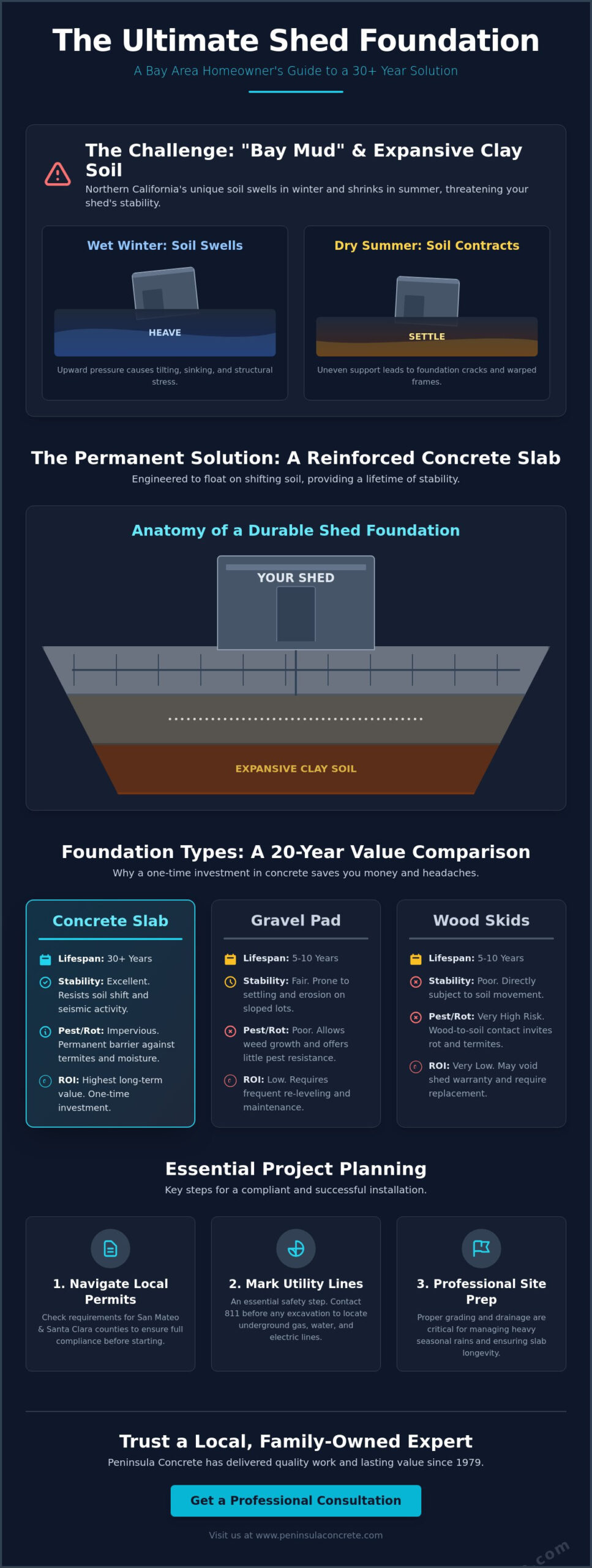
Homeowners on the Peninsula often face the “Bay Mud” challenge. This expansive clay soil swells significantly during our wet winters and contracts during the dry summer months. Without a stable base, your shed will shift, causing doors to jam and frames to warp. A professional concrete foundation for shed projects ensures your investment remains plumb and level regardless of soil movement. We’ve built a reputation for honesty and high-quality work by addressing these geological realities head-on.
Seismic activity is another reality for local residents. A solid foundation helps distribute the weight of the structure evenly. This reduces the risk of structural failure during a tremor. Over the long term, the return on investment is clear. While a wood or gravel base might save money today, the humid Peninsula climate and salty air will degrade those materials within 5 to 10 years. Concrete is the only material that offers the durability needed for our unique coastal environment.
The Problem with Temporary Shed Bases
Wood skids are a common but flawed choice. They rot quickly in the damp Bay Area winters, especially when placed directly on soil. On sloped Peninsula lots, gravel bases often suffer from settling where the material washes away or shifts downhill. This instability leads to structural failure. Most major shed manufacturers will actually void your warranty if the building isn’t placed on a level, approved surface. It’s a risk that most homeowners shouldn’t take with their investment.
Concrete as a Life-Long Solution
Concrete provides a permanent barrier against pests like termites and rodents that thrive in Northern California. It also offers critical fire resistance for homes located in wildland-urban interface zones. A floating slab is the ideal seismic-ready shed base because it consists of a single, thick layer of concrete with reinforced edges that allows the entire structure to move as one unit during a quake. Choosing a high-quality concrete foundation for shed construction means you won’t be replacing your base in a decade. Our family-owned business takes pride in delivering this kind of lasting value.
Technical Specifications for a Durable Shed Slab
Building a high-quality concrete foundation for shed projects requires more than just pouring a wet mix into a frame. Since 1979, our team has seen how the Bay Area’s expansive clay soils can shift, making technical precision vital for any long-term structure. For most residential sheds, a 4-inch thick slab is the gold standard. This depth provides the necessary structural integrity to support 40 pounds per square foot, which is the typical load for garden equipment and storage racks.
A durable slab actually starts below the concrete surface. You need a 4-inch sub-base of compacted crushed rock, often referred to as Class II aggregate base. This layer manages the soil expansion common in our region. It acts as a buffer that allows water to drain away instead of putting upward pressure on the concrete. Without this rock layer, the slab is at a much higher risk of cracking during the wet winter months. We use #3 rebar or welded wire mesh to hold the slab together. While concrete is incredibly strong under compression, it needs steel reinforcement to handle tension and prevent small hairline fractures from becoming structural failures.
Choosing the Right Concrete Mix
For a reliable concrete foundation for shed use, we recommend a mix rated between 3000 and 4000 PSI. This strength ensures the surface resists abrasion and heavy loads. In many Bay Area cities, pervious concrete is a smart choice to meet local stormwater runoff requirements because it allows water to pass through the slab into the ground. We also utilize air-entrained concrete. This material contains microscopic bubbles that improve the slab’s resistance to moisture cycles, ensuring your foundation lasts for decades. If you want to ensure your slab meets these high standards, you can consult with our experienced team for your next project.
Reinforcement and Edge Details
If you’re building a “She-Shed” or a home office, a thickened edge slab is a necessary upgrade. We often increase the edge thickness to 8 or 12 inches to support the concentrated weight of finished walls and roofing. Proper rebar spacing, typically 12 to 18 inches on center, helps the slab move as a single unit during local soil shifts. A 6-mil poly vapor barrier is essential for office sheds because it stops ground moisture from rising through the slab and ruining your interior flooring or electronics. This simple addition protects your investment from the dampness that can seep through porous concrete over time.
Concrete Slab vs. Gravel and Piers: A Local Comparison
Choosing a concrete foundation for shed projects involves looking past the first invoice. While a gravel pad or pre-cast pier system might seem like a bargain on day one, the total cost of ownership over a 20-year period often tells a different story. Gravel requires periodic replenishing and weeding. Piers can shift as the Bay Area’s clay-heavy soil expands and contracts with seasonal rains. A professionally poured slab, backed by our experience providing quality work since 1979, eliminates these recurring maintenance tasks.
Installation timelines also vary significantly. A gravel base is often a single-day project for a homeowner, but it lacks the permanence required for heavy-duty use. A concrete slab typically requires a three-day window: one day for excavation and forming, one day for the pour, and a short curing period before assembly begins. This small investment in time provides a surface capable of supporting heavy loads that would crush or tilt other foundations, such as:
- Riding Mowers: Heavy machinery requires a stable, non-shifting floor to prevent frame stress.
- Home Gyms: Deadlifts and squat racks exert concentrated pressure that can crack thin pavers or cause gravel to displace.
- Workshops: Precision woodworking requires a perfectly level floor so your table saw and workbenches don’t wobble.
Beyond utility, a concrete base increases your property value. It looks intentional and permanent. It transforms a simple storage area into a legitimate backyard asset that appeals to future buyers who value durability and clean lines.
When Gravel is “Good Enough” (and When It Isn’t)
Gravel works well for small, lightweight plastic storage bins used for garden hoses or pool toys. However, it’s a poor choice for heavy timber-framed sheds. Over time, the weight of a wooden structure causes gravel to shift, leading to stuck doors and roof leaks. On the steep hillsides of the Peninsula, gravel is particularly risky. Heavy winter rains can wash away the fines in a gravel bed, undermining the entire structure. If your yard has any degree of slope, a reinforced concrete foundation for shed stability is the only way to ensure your building doesn’t migrate downhill.
The Case for Professional Concrete
Precision leveling is the hallmark of a professional job. DIY attempts often result in “low spots” where water pools, eventually rotting the bottom plates of your shed. As a 2nd-generation, family-owned business, we focus on the details that make assembly easy. When your base is perfectly flat, prefab shed kits snap together in half the time because every bolt hole aligns perfectly. For a truly high-end finish, you can integrate your slab with interlocking concrete pavers to create a seamless transition between your shed and your patio. This creates a cohesive backyard design that feels like an extension of your home rather than an afterthought.
Planning Your Project: Permits, Drainage, and Site Prep
A durable concrete foundation for shed projects begins long before the first cubic yard of cement is poured. In the Bay Area, the planning phase is where you ensure your investment stays legal and dry. Your very first step must be calling 811. This free service coordinates with local utility providers to mark underground gas, water, and electrical lines. Since we’ve been serving this community since 1979, we’ve seen how skipping this simple step can lead to costly repairs and dangerous service interruptions.
Navigating Local Regulations
Permit requirements for a concrete foundation for shed installations vary significantly between San Mateo, Palo Alto, and San Jose. In most Peninsula cities, a building permit isn’t required for a shed that is 120 square feet or smaller, provided it doesn’t contain electrical or plumbing systems. However, even “permit-exempt” structures must follow strict setback rules. Most local codes require a minimum 3 to 5-foot gap between your shed and the property line. In Palo Alto, specific “floor area ratio” (FAR) calculations might apply, even for small structures. If your backyard features a steep grade, hiring retaining wall contractors is often the best way to create a level, code-compliant building pad before the slab work begins.
The Critical Role of Drainage
Water is the primary threat to concrete longevity in Northern California. Our region’s heavy winter rains can lead to soil expansion and “ponding” around your slab. To prevent this, we integrate professional drainage systems into our foundation designs. This often includes:
- French Drains: Perforated pipes surrounded by gravel that intercept groundwater.
- Catch Basins: Grated boxes that collect surface runoff and pipe it away from the structure.
- Strategic Sloping: Grading the surrounding soil at a 2% slope, which moves water at least 2.5 inches downward for every 10 feet of distance.
Ready to build a foundation that lasts for decades? Start your project today with a free consultation from our local experts.
The Peninsula Concrete Difference: Quality Work Since 1979
Choosing a contractor for a concrete foundation for shed projects requires more than just picking a name from a list. Peninsula Concrete is a 2nd-generation, family-owned business that has served the San Francisco Peninsula for over 45 years. This longevity isn’t a coincidence; it’s the direct result of personal accountability. Because our family name is attached to every slab we pour, we don’t cut corners. We understand that a shed foundation must withstand the specific expansive clay soils found in cities like Redwood City, Menlo Park, and San Mateo.
Our team manages the entire technical lifecycle of your project with a focus on long-term stability. We follow a rigorous multi-step process to ensure your structure stays level for decades:
- Professional Site Grading: We calculate slopes to ensure water drains away from your shed, preventing moisture buildup.
- Sub-base Preparation: We use compacted aggregate to create a stable platform that resists soil movement.
- Reinforcement: We integrate rebar or wire mesh based on your specific load requirements.
- Final Broom Finish: Every job concludes with a professional broom finish, providing a clean look and a slip-resistant surface.
We recognize that your backyard is a sanctuary. Our crews use specialized equipment and protective measures, such as temporary plywood pathways, to minimize disruption to your existing landscape and hardscape. We treat your property with the same respect we’d show our own homes.
Our Heritage of Excellence
We’ve maintained a reputation for honesty and high-quality craftsmanship since 1979. Homeowners across the region trust us for complex Bay Area concrete driveways and structural foundations because we prioritize durability over speed. Our 45 years of local experience means we’ve seen every soil challenge the Peninsula can offer. We provide straightforward advice and clear communication, ensuring you know exactly what goes into your project from the first day to the last.
Start Your Shed Project Today
Ready to build a workspace or storage area that lasts? Getting a professional concrete foundation for shed installation starts with a simple phone call. During your free estimate, we’ll evaluate your site’s slope, soil condition, and access points. You can expect a transparent timeline and a crew that arrives on time, works efficiently, and leaves your yard cleaner than they found it.
Don’t settle for a foundation that might crack or shift in a few years. Let our experienced team provide the stability your structure deserves. Contact Peninsula Concrete Contractors today for your free consultation and experience the difference that 45 years of local expertise makes.
SECURE YOUR INVESTMENT WITH EXPERT CRAFTSMANSHIP
A quality shed is only as stable as the ground beneath it. In the Bay Area, shifting soil and heavy seasonal rains make a professional concrete foundation for shed the most reliable choice for long-term structural integrity. Choosing a slab over gravel or piers ensures your investment stays level and dry; this prevents the rot and warping that common drainage issues cause. It’s a decision that protects your property and saves you from costly repairs down the road.
Peninsula Concrete has served local homeowners as a family-owned and operated business since 1979. As 2nd-generation concrete experts, we understand the specific technical requirements of our region’s unique geography. We specialize in Bay Area soil and drainage solutions to ensure every project meets strict local standards. We’ve built our reputation on honesty and high-quality work, so you don’t have to worry about the complexities of site prep or permits.
Request a Free Estimate for Your Shed Foundation
We look forward to helping you take your project from the planning stages to a successful, durable reality.
Frequently Asked Questions
Do I need a permit for a concrete shed foundation in the Bay Area?
You generally need a building permit in the Bay Area if your shed exceeds 120 square feet. Cities like San Jose and San Francisco have strict codes regarding setbacks from property lines and height restrictions. It’s vital to check with your specific municipal planning department because rules vary between San Mateo and Santa Clara counties. Peninsula Concrete has navigated these local requirements since 1979, ensuring every concrete foundation for shed projects we handle stays fully compliant with regional safety standards.
How thick should a concrete slab be for a 10×12 shed?
A standard 10×12 shed requires a concrete slab that is at least 4 inches thick. If you plan to store heavy machinery or a vehicle, increasing that thickness to 6 inches is a smart investment to prevent structural failure. For a 120 square foot area, a 4-inch pour requires approximately 1.5 cubic yards of concrete. We always ensure the edges are thickened to 8 inches to provide extra support for the weight of the shed walls and roof.
How much does a concrete shed foundation cost in 2026?
Industry data from construction economic reports suggests that professional concrete installation costs are projected to rise by 3% to 5% annually through 2026 due to material and labor trends. While we don’t set fixed prices years in advance, national averages currently sit between $8 and $14 per square foot for professional labor and materials. Bay Area homeowners should expect local rates to reflect the higher cost of living and specialized seismic requirements in Northern California. We provide clear, honest estimates based on current market conditions to keep your project on budget.
Can I pour a concrete shed foundation over existing grass?
You cannot pour a concrete foundation for shed directly over grass or topsoil. Organic material eventually rots, which creates hollow gaps under the slab and leads to significant sinking or cracking. Our crew excavates 4 to 6 inches of soil to remove all vegetation before laying a stable foundation. We then install a 4-inch layer of compacted Class 2 permeable or crushed rock to ensure proper drainage and a level surface that lasts for decades.
How long does a concrete shed foundation need to cure before building?
You should wait a minimum of 7 days before you begin framing or anchoring walls to the new slab. While the concrete is hard enough to walk on within 24 to 48 hours, it takes 28 days to reach its full design strength. Building too early can stress the material while it’s still chemically reacting. As a 2nd-generation family-owned business, we recommend a patient curing process to ensure your investment remains durable and stable for the long haul.
What is the best way to prevent a concrete shed slab from cracking?
The most effective way to prevent cracking is to cut control joints every 5 to 10 feet. These joints act as intentional “weak spots” that tell the concrete exactly where to crack as it naturally shrinks during the drying process. Proper subgrade compaction to 95% density is also essential to prevent the ground from shifting. We combine these technical methods with high-quality mixes to protect your slab from the Bay Area’s expansive clay soils.
Should I use rebar or mesh for my shed foundation?
Rebar is the superior choice for shed foundations because it offers much higher structural integrity than wire mesh. We typically use #3 rebar placed in a grid pattern every 12 to 16 inches to reinforce the slab against heavy loads and ground movement. While wire mesh can help with small surface cracks, it often sinks to the bottom of the pour where it provides no benefit. Using steel rebar ensures your foundation meets the high-quality standards we’ve maintained since 1979.