
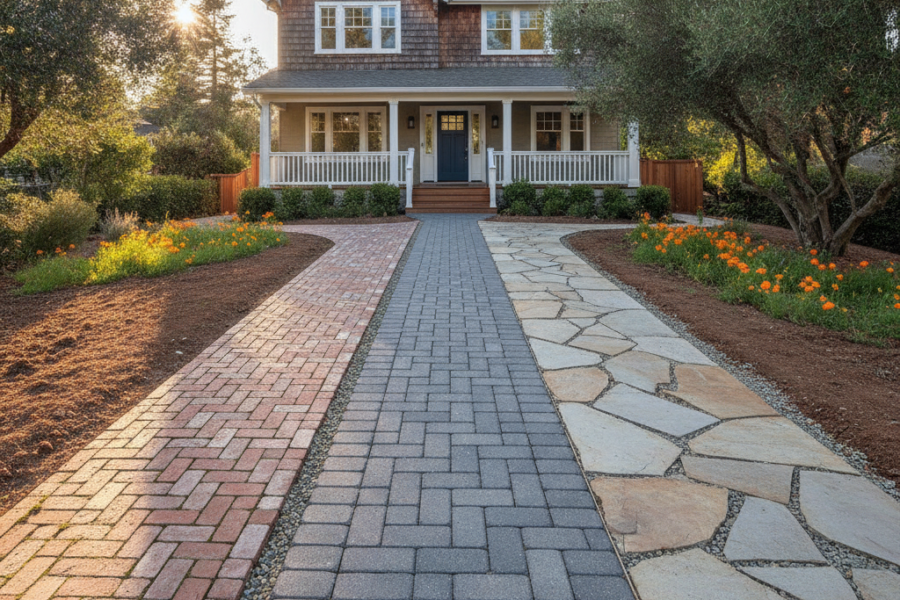
Choosing between traditional brick, concrete pavers, and natural stone for a front walkway in San Mateo comes down to more than looks — soil conditions, drainage, and how the path connects to your home all matter. This guide breaks down what local homeowners should know before they start.
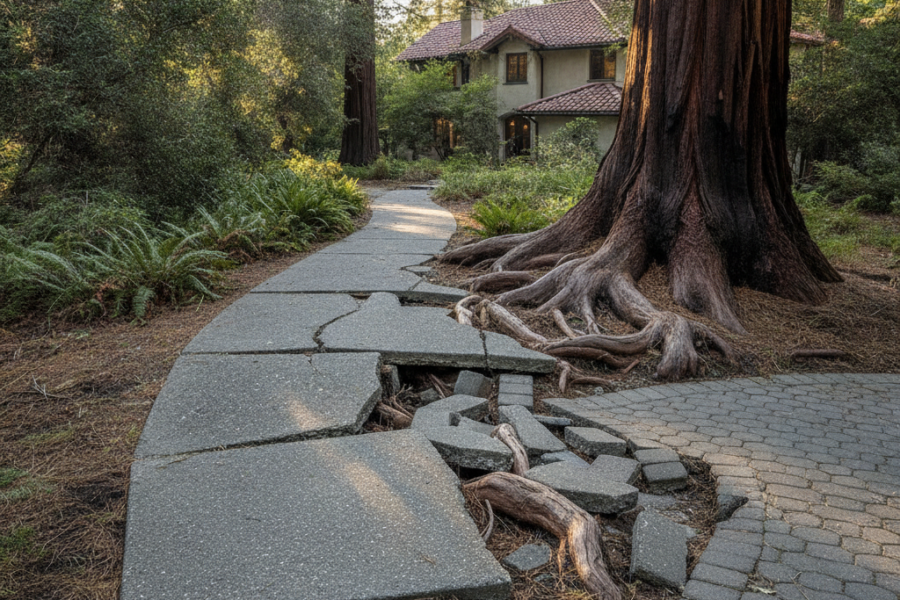
Tree roots are one of the most common — and least talked about — causes of cracked, heaved walkways and driveways on wooded Peninsula properties. If you live in Los Altos Hills or anywhere along the mid-Peninsula foothills, here is what you need to know before you replace damaged concrete and why how you rebuild matters as much as what you remove.
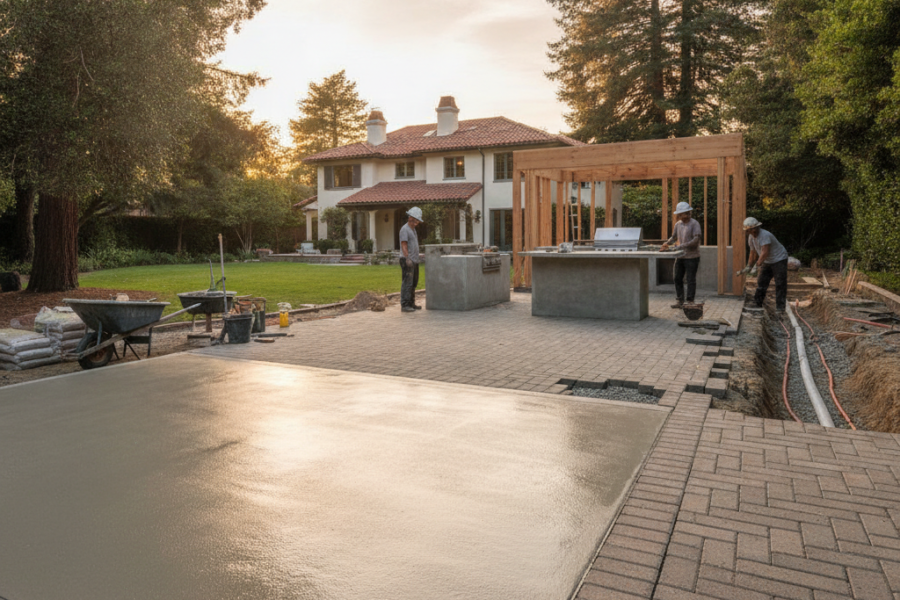
Building an outdoor kitchen in Palo Alto starts well below the countertop — the concrete slab or paver base underneath determines whether your investment holds up for decades. This guide covers what a proper outdoor kitchen foundation actually involves, from soil prep and drainage to finish options that work in the Peninsula climate.

Thinking about adding a paver patio in Menlo Park? This guide walks you through the full installation process — from site prep and base compaction to joint sand and sealing — so you know exactly what a well-done job looks like before you hire anyone.

A retaining wall without proper drainage behind it is a wall waiting to fail. If you're planning a retaining wall on a hillside lot in Woodside, Portola Valley, or Emerald Hills, here's what you need to understand about hydrostatic pressure, weep holes, and gravel backfill before you ever pour a footing.

The driveway approach — the section where your private driveway meets the public sidewalk or street — is one of the most regulated and least-understood parts of any driveway project in Redwood City. Here's what homeowners need to know before work begins, including permits, City standards, and what to watch out for when hiring a contractor.

Replacing or extending a concrete walkway on a large Atherton property involves more than pouring a slab — base prep, drainage, finish, and matching existing hardscape all matter. Here's what to plan for before you call a contractor.

Trying to decide between a poured concrete patio and interlocking pavers for your Hillsborough or Peninsula backyard? Here's an honest breakdown of how each option performs in real Bay Area conditions — soil, climate, budget, and all.


When it comes to creating outdoor living spaces such as patios, walkways, and driveways, there are a variety of options available. Two popular choices are poured-in-place concrete and interlocking pavers.

Stamped concrete is a decorative concrete technique that involves imprinting a pattern or texture onto freshly poured concrete using specialized stamps. The technique was first developed in the 1950s in

Exposed aggregate concrete is a decorative form of concrete that has been popular for several decades. It is created by pouring concrete and then removing the top layer of cement

When it comes to designing or renovating your outdoor living space, hardscaping is an essential aspect. Hardscaping involves the installation of non-living elements such as pavers, retaining walls, fire pits,

When it comes to creating a modern look, there are a few things to keep in mind: Choose a large format tile: Large format porcelain tiles are popular in modern

Asphalt and concrete are both popular materials used for constructing driveways. While each material has its own set of advantages and disadvantages, choosing the right one ultimately comes down to

Interlocking pavers have a long history, dating back to ancient civilizations such as the Romans, who used interlocking paving stones for their roads and plazas. The concept of interlocking pavers