
A home’s first impression isn’t built on seasonal flowers that fade by autumn. It’s built on the permanent, structural foundation of your property. If you’re tired of looking at a cracked concrete driveway or a front yard that feels flat and uninspired, you aren’t alone. Most homeowners recognize that creating curb appeal with hardscaping is the single most effective way to secure long-term value and beauty. It’s about more than just aesthetics; it’s about engineering a landscape that stands the test of time while solving practical issues like poor drainage and pooling water.
We understand that your home is your legacy, and you deserve an exterior that reflects that pride. You want a front entrance that offers a “wow” factor for guests and remains a reliable asset for your family. This guide shows you how to transform your property into a high-value masterpiece using professional masonry and interlocking paver systems. We’ll explore the 2026 trends in natural stone and functional garden walls that provide the structural dimension your yard currently lacks. You’ll learn how to achieve low-maintenance beauty that’s designed to last for decades.
Key Takeaways
- Understand why permanent structural elements offer a 20-year aesthetic solution that far outlasts traditional seasonal planting.
- Identify high-impact projects like interlocking paver driveways and natural stone walkways that create a seamless flow for visitors.
- Evaluate the maintenance costs and lifespans of different materials when creating curb appeal with hardscaping to ensure your investment lasts for decades.
- Learn how to navigate local Peninsula challenges such as expansive clay soil and seismic design to protect the integrity of your masonry.
- Discover the role of 3D visualization and seasoned craftsmanship in turning a complex site plan into a durable, high-value reality.
Defining Curb Appeal: Why Hardscaping is the Foundation of First Impressions
Curb appeal is often misunderstood as a collection of quick, cosmetic fixes like a fresh coat of paint or a few flats of seasonal flowers. While those elements help, they are fleeting. Real, lasting appeal starts with the structural “bones” of your property. For those focused on creating curb appeal with hardscaping, the goal is to build a permanent framework that dictates how your home is perceived from the street. It’s the difference between a house that looks “nice” for a few months and one that commands attention for decades.
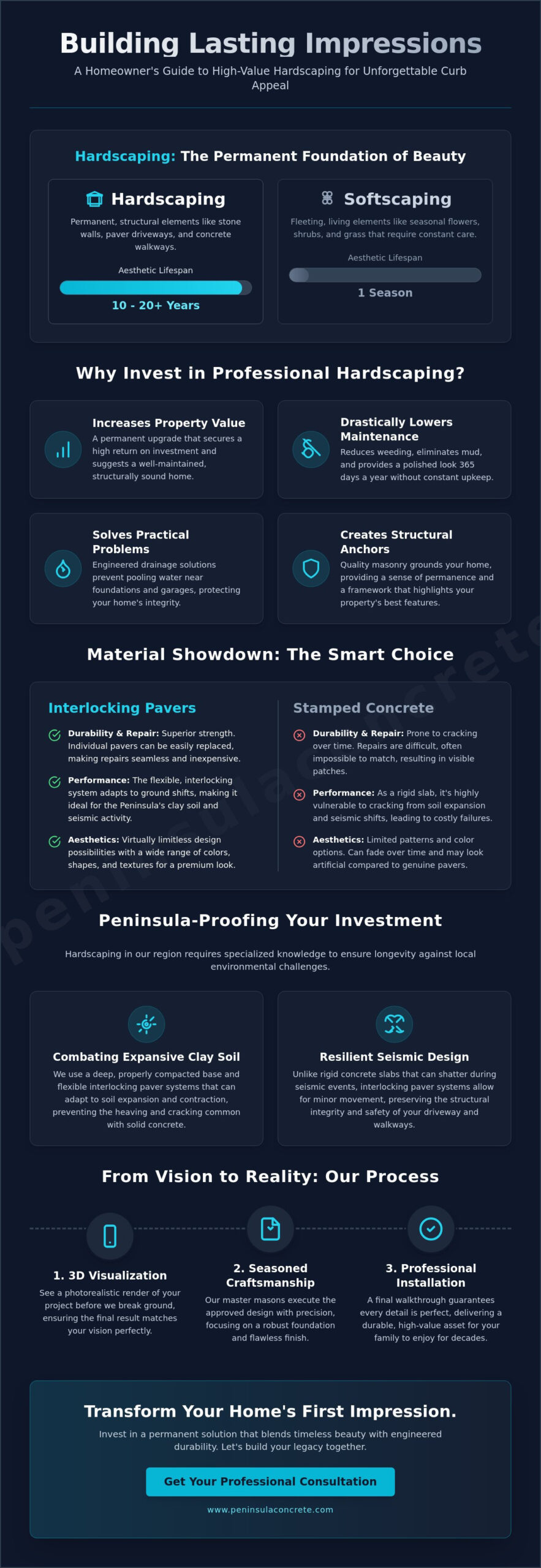
To understand the scope of these projects, it’s helpful to look at What is Hardscaping? essentially, it is the non-living, man-made features of your landscape. While softscaping (plants and trees) changes with the seasons, hardscaping provides a 10 to 20-year aesthetic solution. A well-constructed interlocking paver system or a natural stone wall doesn’t wilt in the summer heat or lose its shape in the winter. It remains a consistent, high-value asset that grounds your home’s architectural style.
The psychological impact on visitors and potential buyers is immediate. A clean, structured entryway suggests a home that is well-maintained and structurally sound. This perceived value often leads to a higher return on investment than simple landscaping. When you invest in permanent masonry, you aren’t just buying materials; you’re securing a long-term upgrade that resists the wear and tear of our unique Bay Area climate.
Hardscaping vs. Softscaping: Finding the Balance
The most beautiful homes use hardscape elements to frame and highlight their favorite greenery. Instead of letting a garden bed spill onto the lawn, a stone garden wall creates a crisp border that makes the colors of your plants pop. This approach significantly reduces maintenance time. Permanent concrete features and stone walkways mean less weeding and less mud. You get a polished look that doesn’t fade when the winter months arrive, ensuring your home looks its best 365 days a year.
The ‘Anchor’ Effect of Quality Masonry
Quality masonry acts as an anchor for your property. Whether it’s a brick entryway or a concrete driveway, these features ground the home and provide a sense of permanence. Texture and color play a vital role here; choosing the right stone can elevate a standard facade into a premium masterpiece. Because we understand the local environment, we design these structures to be resilient. Creating curb appeal with hardscaping requires a focus on durability, ensuring that your investment stands up to the shifting soils and weather patterns common in our region without losing its structural integrity.
Strategic Hardscaping Elements That Transform Your Front Yard
If the foundation of your home’s exterior is the masonry, then the specific structures you choose are the design language that speaks to your neighbors and guests. Your front yard is the first thing people see. It sets the tone for the entire property. When homeowners focus on creating curb appeal with hardscaping, they often start with the largest visual elements. These aren’t just decorative additions; they’re functional upgrades that solve common problems like poor drainage and crumbling surfaces.
Driveways: More Than Just a Place to Park
Think of your driveway as the red carpet of your property. It covers a significant portion of your front yard’s visual real estate. Many older homes struggle with cracked, outdated asphalt that detracts from the house’s beauty. Transitioning to premium interlocking concrete pavers provides an immediate upgrade in both durability and style. Beyond the look, a well-designed driveway addresses practical needs. We often integrate specialized drainage system installation into these projects to prevent water from pooling near your garage or foundation. Adjusting the width of the driveway or adding a contrasting stone border can also improve the scale of your home, making the entire lot feel more expansive and balanced.
Walkways: Crafting the Guest Journey
A walkway is more than a path; it’s a guided experience from the curb to your front door. The layout you choose should reflect your home’s personality. Meandering paths offer a relaxed, organic feel that complements traditional architecture, while straight lines provide a crisp, modern aesthetic. Safety is a priority for Northern California homeowners, so we focus on choosing slip-resistant materials for every project. Integrating low-voltage lighting within natural stone walkways ensures that your entryway is safe and inviting after the sun goes down. Even when looking for Budget-Friendly Hardscaping options, investing in quality masonry for the main entrance ensures the journey to your door feels intentional and high-end.
Retaining Walls for Visual Interest
Sloped lots are common across the Peninsula, and they often lead to wasted space or erosion issues. Retaining and garden walls are the perfect solution for adding dimension and height to a flat yard. By terracing a slope, you create new levels for planting or even built-in seating areas. These structures must be built to last. Because they manage the weight of thousands of pounds of soil, hiring expert retaining wall contractors is vital for long-term safety. Local regulations often require permits for walls exceeding three or four feet in height, so professional planning is essential. If you’re ready to see how these elements can work together, the team at Peninsula Concrete and Masonry can help you design a layout that maximizes every square foot of your yard.
Sophisticated detailing in brick and natural stone masonry provides the final touch. Whether it’s a stone pillar at the end of a driveway or a brick border around a garden bed, these accents tie the entire landscape together. Creating curb appeal with hardscaping is about these intentional choices that combine to make a home look established, safe, and truly exceptional.
Selecting Materials: Pavers vs. Stamped Concrete for Maximum Value
Selecting the right material is the most critical decision in any exterior renovation. It dictates your weekend schedule and your property’s value for the next twenty years. When you’re creating curb appeal with hardscaping, you aren’t just choosing a color palette. You’re choosing a maintenance profile and a structural lifespan. Most premium materials used in modern masonry offer a 30-year service life, but how they reach that milestone depends on your specific needs and the local environment.
The choice often comes down to a comparison between interlocking systems and solid surfaces. Both options can mimic the look of natural stone, slate, or even wood. However, the long-term cost-benefit analysis shifts when you consider repair needs. A solid surface might require a higher level of initial precision, while individual units offer flexibility. Your decision should balance the immediate “wow” factor with the reality of long-term upkeep.
The Case for Interlocking Pavers
Interlocking paver systems are celebrated for their remarkable flexibility. Because they consist of individual units sand-set over a prepared base, they can handle the soil shifting common in our region without cracking. This is a significant advantage over rigid surfaces. If a single paver becomes stained or damaged, you can replace that specific piece rather than the entire driveway. These systems also offer eco-friendly permeable options. These designs manage rain runoff effectively, which is a growing priority for homeowners across the Peninsula. If you ever need to access underground utilities, pavers can be removed and reinstalled seamlessly, avoiding the need for messy demolition.
The Versatility of Custom Concrete
Custom concrete remains the industry standard for structural foundations and high-traffic areas. It offers an incredible range of aesthetic possibilities through stamped patterns and custom integral colors. For modern, minimalist homes, a simple broom finish provides a clean and sophisticated look that highlights the home’s architecture. It’s a reliable, cost-effective way to achieve a high-end appearance. Because Bay Area concrete is engineered for local conditions, it provides a stable and dependable surface for everything from patios to heavy-duty driveways. While it requires resealing every few years to protect the finish, the initial installation is often more streamlined than hand-laid stone.
Ultimately, creating curb appeal with hardscaping is about matching the material to your lifestyle. If you prefer a low-maintenance surface that requires only occasional sand refilling, pavers are an excellent choice. If you want a seamless, custom-designed pattern that anchors your home’s entry, professional concrete masonry is the way to go. Both paths lead to a durable, high-value masterpiece that will serve your family for decades.
Planning for the Peninsula: Local Considerations for Hardscape Success
Success in creating curb appeal with hardscaping depends on more than just selecting the right stone. In our region, what lies beneath the surface is just as important as the finish on top. The Peninsula presents unique geological challenges that can compromise even the most beautiful masonry if not addressed during the planning phase. From Redwood City to San Mateo, homeowners must account for expansive clay soil that swells when wet and contracts during our dry summers. This constant movement requires a deep, well-compacted base to prevent your new driveway or walkway from shifting or buckling over time.
Seismic activity is another reality of living in Northern California. Designing hardscapes that can withstand minor shifts is essential for long-term durability. We often recommend interlocking systems for this reason; they provide the necessary flexibility to move with the earth. Beyond the soil, you must navigate local permitting and codes. Every city in the Bay Area has specific requirements regarding drainage and the amount of impermeable surface allowed on a lot. Ignoring these regulations can lead to costly fines or the need to tear out completed work. Professional planning ensures your project is compliant from the first day of excavation.
Managing Drainage and Runoff
Protecting your home’s foundation from San Francisco Bay moisture is a top priority. We view drainage system installation as a non-negotiable component of any hardscape project. This often includes the strategic placement of French drains and catch basins alongside new driveways to capture heavy rainfall. Grading is the invisible art of our trade. It involves precisely sloping surfaces to move water away from your structure and toward proper exit points. Without this integrated approach, pooling water can undermine your hardscape’s longevity and eventually damage your home’s foundation.
Architectural Harmony in the Bay Area
Your hardscape should feel like a natural extension of your home’s history. Whether you own a Mid-Century Modern in Palo Alto, a classic Victorian, or a Spanish Colonial, the materials must match the architectural style. We select colors and textures that complement the unique Northern California light and the surrounding landscape. By working alongside local landscape contractors, we can unify the hard and soft elements of your yard into a single, cohesive vision. If you’re ready to secure your property with a structurally sound and beautiful exterior, contact Peninsula Concrete and Masonry to start your consultation.
Executing Your Vision: From Design to Professional Installation
Moving from a conceptual idea to a finished masterpiece requires a bridge of technical precision. Creating curb appeal with hardscaping isn’t just about picking a stone you like; it’s about how that stone is integrated into your property’s specific topography. A detailed site plan is the first step in this journey. In 2026, many homeowners rely on 3D visualization to see exactly how new retaining walls or a paver driveway will interact with their home’s existing architecture before the first shovel hits the dirt. This clarity prevents expensive mid-project changes and ensures the final result matches your original vision.
The construction process itself is a disciplined sequence. It begins with professional excavation and the establishment of a robust sub-base, which we’ve already noted is vital for the Peninsula’s clay soils. From there, the focus shifts to precise grading and the installation of structural layers. Multi-generational experience is particularly important during these complex masonry phases. At Peninsula Concrete and Masonry, we draw on over 40 years of local expertise to ensure every joint is tight and every slope is perfect. Our long-standing presence in the community means we don’t just finish a job; we build a legacy that stays beautiful for decades.
Choosing the Right Hardscape Partner
Selecting a contractor is the most important decision you’ll make for your home’s exterior. You should always ask about current licensing and insurance, but you should also look deeper. A family-owned business with deep community roots offers a level of accountability that large corporations can’t match. We recommend reviewing portfolios for projects that reflect your specific architectural style. Whether you need natural stone masonry or an interlocking paver system, seeing a contractor’s previous work on similar Bay Area homes provides peace of mind that they understand the local aesthetic and structural requirements.
Starting Your Project with Confidence
A successful project begins with an honest assessment of your property. Scheduling a site consultation allows experts to identify potential challenges, like hidden drainage issues or soil instability, before they become problems. If you’re working with a specific budget, consider prioritizing your hardscape renovation in phases. You might start with the “red carpet” driveway and move to garden walls in a later season. This strategic approach ensures every element is built to the highest standard without compromise. When you’re ready to transform your home, you can contact Peninsula Concrete and Masonry for an estimate on your 2026 project and take the first step toward a high-value, low-maintenance exterior.
Secure Your Home’s Future Value
Investing in your property’s exterior is about more than a quick makeover. It’s about establishing a structural foundation that stands up to the unique geological challenges of the Peninsula. By prioritizing permanent elements like interlocking paver systems and reinforced retaining walls, you ensure your home remains a high-value masterpiece for decades. Creating curb appeal with hardscaping allows you to solve functional issues like drainage while delivering a sophisticated look that never fades with the seasons.
Choosing a partner with deep local roots makes all the difference in the success of your project. We have been serving the Bay Area since 1979 as a family-owned and operated business. With over 40 years of experience, we specialize in custom interlocking pavers and structural concrete designed for longevity and excellence. Transform your curb appeal with a free estimate from Peninsula Concrete Contractors today. Your home deserves a front entrance that reflects your pride of ownership and provides a safe, welcoming environment for your family.
Frequently Asked Questions
How much does hardscaping increase home value?
Hardscaping provides a substantial return on investment by expanding the usable square footage and improving the structural integrity of your property. Professional appraisers often view permanent masonry features and high-quality driveways as long-term assets that command a higher resale price than temporary landscaping. It’s a reliable way to ensure your home stands out in a competitive market.
Are pavers or concrete better for a driveway in the Bay Area?
Interlocking pavers are often the superior choice for Bay Area driveways because they handle seismic shifts and expansive clay soil better than rigid surfaces. While a professionally installed concrete driveway is incredibly durable, pavers offer the unique benefit of flexibility. This allows individual units to shift slightly without causing the unsightly cracks often seen in solid slabs.
Do I need a permit for a new retaining wall in Redwood City?
Permit requirements in Redwood City generally apply to retaining walls that exceed three or four feet in height or those that alter existing drainage patterns. Local building codes are designed to ensure structural safety and proper water management. It’s essential to check with the Redwood City Building Division before you begin excavation to confirm the specific regulations for your lot.
How long does a typical hardscaping project take to install?
A standard installation usually takes between one and three weeks depending on the complexity of the masonry and the total square footage. The process includes several critical phases: excavation, site grading, base compaction, and the final laying of materials. Proper site preparation is the most time-consuming part but it’s vital for the longevity of the finished surface.
Can hardscaping help with yard drainage issues?
Yes, creating curb appeal with hardscaping is the most effective time to address and solve chronic yard drainage issues. Professional installers can integrate French drains, catch basins, and permeable paver systems directly into your new design. These elements work together to move water away from your foundation and prevent pooling during heavy Northern California rains.
What is the best hardscape material for a sloped front yard?
Structural retaining and garden walls made of concrete block or natural stone are the best materials for managing a sloped yard. These features allow you to terrace the land, which prevents soil erosion and creates flat, functional areas for planting. Using heavy masonry ensures the structure can withstand the pressure of the soil behind it for decades.
How do I maintain my pavers to keep them looking new?
Maintaining pavers involves regular sweeping and refilling the joints with polymeric sand every three to five years to prevent weed growth. Unlike other surfaces, individual pavers don’t require frequent resealing to maintain their integrity. This low-maintenance profile is one of the primary reasons homeowners choose interlocking systems for creating curb appeal with hardscaping.
What is the difference between stamped concrete and regular pavers?
The primary difference is that stamped concrete is a single, continuous slab with a decorative pattern, while pavers are individual units set on a flexible base. Pavers are easier to repair because you can replace a single stone if it becomes damaged. Stamped concrete offers a seamless look but requires resealing every two to three years to protect its color and surface finish.