

In San Mateo, the ground beneath your feet is constantly moving, which means a standard concrete slab is often just a ticking clock until the first major crack appears. You likely want an outdoor space that stays level and beautiful despite the Peninsula’s notorious expansive clay soil. Most homeowners are tired of dealing with poor drainage and shifting surfaces, but the solution isn’t just buying better materials. Achieving a lasting result requires a specialized approach to paver installation San Mateo that prioritizes engineering over aesthetics alone.
We’ve built a reputation for honesty and high-quality work since 1979, and we know that a durable hardscape starts with the foundation you can’t see. In this guide, you’ll discover how to plan for the 2026 local cost averages of $20 to $35 per square foot while ensuring your project meets the city’s 65% waste recycling mandate. We’ll preview the latest trends like large-format pavers and explain why our 2nd-generation family business relies on geotextile fabric and compacted Class 2 bases to beat the Bay Area’s unique soil conditions. Let us help take your project from the planning stages to a long-term success.
Key Takeaways
- Learn why interlocking pavers are the superior choice for the Peninsula, offering unmatched flexibility that prevents the cracking common in traditional concrete slabs.
- Discover the technical requirements for professional paver installation San Mateo, focusing on specialized base preparation and geotextile fabric to handle expansive clay soil.
- Identify the best materials for our unique microclimate by evaluating slip resistance and durability against coastal fog and afternoon heat.
- Get a clear roadmap of the professional installation process, including realistic timelines and strategies for managing site access and drainage.
Why Paver Installation is the Superior Choice for San Mateo Homes
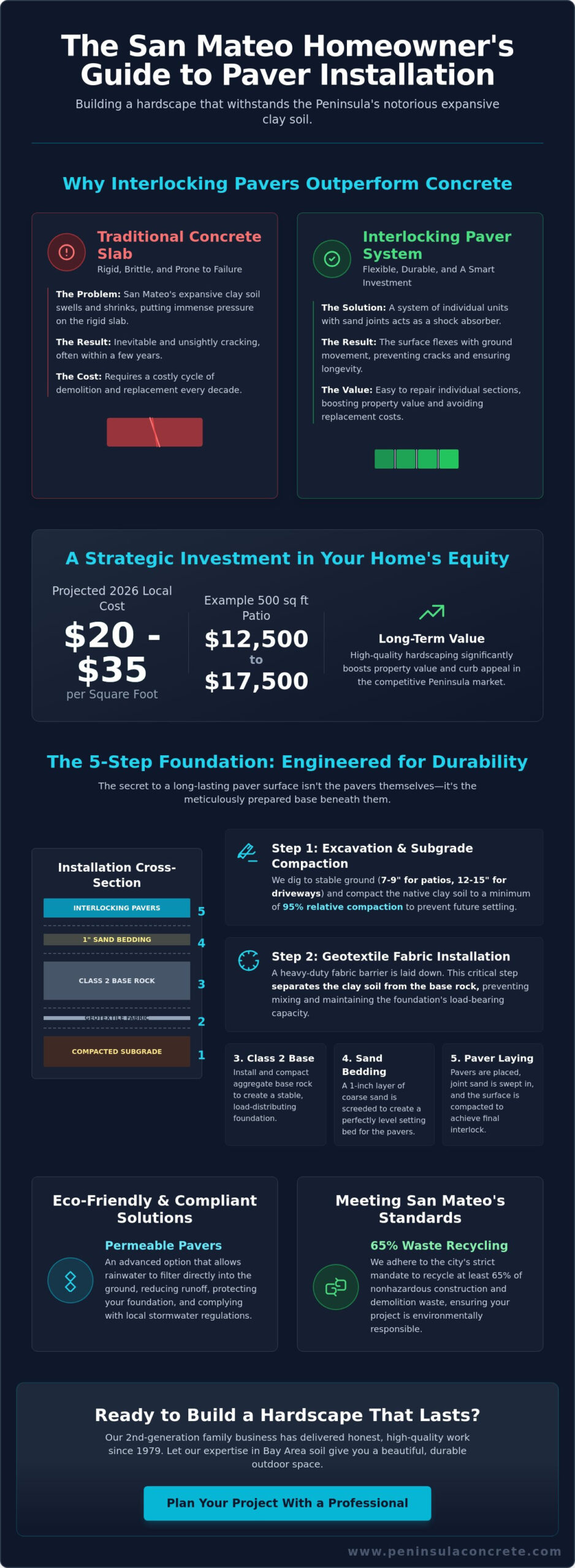
San Mateo homeowners often face a frustrating reality: the beautiful concrete driveway they poured five years ago is already showing jagged lines. In older Peninsula neighborhoods, cracked slabs are almost a rite of passage because of the region’s expansive clay soil. This soil expands when wet and shrinks when dry, putting immense pressure on rigid surfaces. Choosing professional paver installation San Mateo solves this problem by replacing a single, brittle slab with a system of individual units. This approach doesn’t just fix a functional issue; it significantly boosts property values. High-quality hardscaping is a major selling point in the local market, where outdoor living space is at a premium and first impressions matter.
Investing in a high-end hardscape is a strategic move for your home’s equity. While a standard 500 square foot patio in the Bay Area might require an investment of $12,500 to $17,500 as of April 2026, the long-term savings are substantial. You won’t have to deal with the costly cycle of tearing out and replacing cracked concrete every decade. Our family has seen these benefits firsthand since we started our business in 1979. We’ve built a reputation for honesty and quality because we understand that a driveway or patio isn’t just a surface; it’s a foundation for your home’s outdoor life.
Durability vs. Flexibility: The Interlocking Advantage
Interlocking pavers are unsurpassed in strength and flexibility. Unlike monolithic concrete, these systems allow for natural ground movement without structural failure. The “interlock” comes from the sand joints between the pavers, which act as a shock absorber. If a single unit is damaged or a section settles due to a tree root, you don’t have to jackhammer your entire yard. You simply remove the affected pieces, fix the base, and reset them. This modular design handles heavy vehicle weight with ease, making it a smart choice for driveways. We’ve refined our installation techniques over two generations to ensure your surface remains level and beautiful despite the Peninsula’s shifting terrain.
Permeable Pavers and San Mateo Drainage Requirements
Managing Bay Area rainfall is a technical challenge that requires more than just a slight slope. The City of San Mateo has strict requirements regarding construction waste and stormwater runoff. Utilizing permeable paving systems allows rainwater to filter directly into the ground rather than pooling near your home’s foundation or overwhelming local storm drains. These pervious options help you stay compliant with local environmental regulations, including the mandate to recycle 65% of nonhazardous construction waste. It’s an eco-friendly choice that combines modern engineering with the classic look of natural stone or brick. By preventing water from sitting against your home, you protect your property’s structural integrity for years to come.
Technical Standards: Base Preparation for San Mateo’s Unique Soil
Building on the Peninsula requires more than just a shovel and a level; it requires an understanding of what lies beneath the surface. The “Peninsula Clay” is notorious for its expansive nature, which can easily ruin a poorly planned project. This soil behaves like a sponge, swelling in our wet winters and shrinking during dry summers. This movement is the primary reason why traditional concrete driveways in San Mateo often fail within a few years. For residential paver projects in San Mateo, the native subgrade must be compacted to a minimum of 95% relative compaction to prevent settling in expansive clay conditions. This technical requirement is the backbone of every durable paver installation San Mateo homeowners trust to last for decades. Without this level of precision, even the most expensive pavers will shift and sink after a single rainy season.
A critical component we use is geotextile fabric. This heavy-duty barrier sits between the clay and your aggregate base. It prevents the rock from sinking into the soft soil while allowing water to pass through. If the base rock mixes with the clay, the entire foundation loses its load-bearing capacity. Our family has used these methods since 1979 because we know that skipping these steps leads to failure. If you’re ready to start your project right, let us help you plan your foundation with a professional site visit.
The 5-Step Foundation Process
- Step 1: Excavation. We dig 7 to 9 inches for patios and 12 to 15 inches for driveways to reach stable ground.
- Step 2: Subgrade Prep. We compact the native soil and install a geotextile weed and soil barrier.
- Step 3: Aggregate Base. We layer Caltrans-specified Class 2 Aggregate Base in compacted lifts to ensure a solid core.
- Step 4: Bedding Sand. A 1-inch sand layer is screened for precision leveling before the pavers are set.
- Step 5: Final Set. We sweep in polymer sand and vibrate the surface to lock every unit into place.
Addressing Seismic Resilience on the Peninsula
Interlocking pavers handle seismic shifts by flexing rather than cracking. This flexibility is vital for San Mateo homes near active fault lines. We use heavy-duty edge restraints to prevent the lateral “creep” that often ruins DIY work. Professional paver installation San Mateo requires this level of detail to ensure your driveway remains stable through ground movement and heavy use. Our installation standards follow the Caltrans Concrete Pavement Guide to ensure your investment stays secure for the long haul.
Comparing Paver Materials for the Peninsula Microclimate
San Mateo’s microclimate presents a unique challenge for hardscaping. One hour you’re dealing with thick coastal fog that leaves surfaces damp; the next, you’re under the glare of intense afternoon sun. Selecting the right materials for interlocking concrete pavers means balancing these environmental factors. We’ve been helping homeowners make these choices since 1979, and we’ve seen how different stones react to the Peninsula’s specific conditions. Safety is our primary concern for pool decks and sloped walkways. We prioritize materials with high slip-resistance ratings to ensure stability even during the dampest mornings. High UV exposure is another factor. We select pavers manufactured with integral pigments that resist fading, ensuring your investment looks as good in ten years as it does on day one.
Our 2nd-generation family business follows ICPI installation guidelines to ensure every material performs to its peak. Whether you choose concrete, stone, or brick, the installation quality determines the longevity. For a successful paver installation San Mateo project, the material must be rated for the intended use, whether it’s a light-traffic garden path or a heavy-duty driveway. We ensure every stone we lay meets these professional standards.
Concrete Pavers vs. Natural Stone vs. Brick
Concrete pavers provide the most versatility for San Mateo properties. They offer a huge variety of shapes and colors while maintaining a high weight-bearing capacity. Natural stone, like travertine or flagstone, is the choice for a high-end, organic aesthetic. It’s perfect for Peninsula estates where the goal is a seamless blend with the landscape. Brick remains a favorite for traditional architecture. Its rich, warm tones provide a classic look that never goes out of style. Each material has its own maintenance profile, but all three outperform traditional slabs in our local soil.
Style and Pattern Selection for Bay Area Homes
The pattern you choose affects both the look and the structural integrity of your project. For driveways, the Herringbone pattern is the most stable. It interlocks the units so they don’t shift when you turn your car’s wheels. Ashlar patterns are popular for patios because they use multiple sizes to create a sophisticated, random appearance. Running Bond is a simple, clean choice for narrow walkways. We often use borders and accents to define outdoor living rooms. A simple sailor course in a contrasting color can transform a plain patio into a high-end design feature. We suggest choosing colors that mirror the warm, earthy tones of the local landscape, such as sandstone or tan, to create an inviting outdoor space.
The Installation Process: What to Expect from Start to Finish
A successful project depends on a clear timeline and meticulous coordination. Before any excavation begins, the most critical step is utility marking. We coordinate with 811 services to identify underground gas, water, and electrical lines, ensuring the safety of your property and our crew. Once the site is cleared, we manage the logistics of site access to minimize disruption to your neighbors. Professional paver installation San Mateo requires a steady rhythm; a typical 300-square-foot patio usually takes 35 to 40 hours to complete. We take pride in our efficiency and our commitment to local regulations, including the City of San Mateo’s mandate to recycle at least 65% of nonhazardous construction waste.
Our team handles the heavy lifting, but we keep you informed at every stage. We’ve built a reputation for honesty since 1979, which means we don’t cut corners on the schedule or the cleanup. We ensure that transit routes for machinery are protected and that the job site remains organized from the first day to the final sweep. If you’re ready to transform your yard, contact us today for a project estimate and let our family-owned team handle the details.
From Design to Site Prep
Everything starts with a detailed consultation and precise measurements of your outdoor space. We don’t just look at where the stones go; we create a comprehensive drainage plan to protect your home’s foundation from water pooling. This stage is where our “Concrete Thinking” really shines, as we account for the specific slopes of your lot. While some homeowners consider general landscape contractors, choosing a specialized paver expert ensures that the technical grading is handled with the precision required for long-term stability.
The Final Finishing Touches
The strength of the system is finalized during the “locking” phase. We use industrial plate compactors to vibrate the pavers into the bedding sand, which ensures a perfectly level surface. We typically recommend polymeric sand for the joints because it contains a binder that hardens when misted with water, effectively blocking weed growth and resisting washouts. The final sanding and sealing phase involves sweeping fine-grained sand into the joints to create a unified surface and applying a protective coating to preserve the material’s color and resist oil stains. Once the work is done, we perform a thorough post-installation cleanup, leaving you with a beautiful, durable space that’s ready for immediate use.
Choosing a Local Expert: The Peninsula Concrete Advantage
Experience on the Peninsula isn’t just about technical skill; it’s about being accountable to your neighbors for decades. We have provided quality work since 1979, which gives our team a unique perspective on how local projects age over forty years. Many firms enter the Bay Area market with high-energy sales pitches, but they often lack the deep-rooted community ties required for true accountability. When you choose Peninsula Concrete Contractors for your project, you’re working with a 2nd-generation, family-owned business that treats every driveway and patio as a testament to our family legacy. We understand that a successful paver installation San Mateo project relies on a reputation built through honesty and high-quality craftsmanship. You can learn more about our heritage and why homeowners trust Peninsula Concrete Contractors for their most ambitious hardscape goals.
Our team is invested in the long-term success of the community. We don’t just finish a job and disappear; we’re a local fixture with a personal stake in every stone we lay. This level of dedication is what separates a seasoned craftsman from a general laborer. We pride ourselves on being a reliable choice for homeowners who value proven expertise and a personal touch over unproven alternatives. Our “Concrete Thinking” approach ensures that every design choice we make is backed by nearly half a century of local geological knowledge.
Quality Assurance and Warranty
A contractor’s warranty is only as strong as the company standing behind it. We prioritize durability over the “quickest” installation because we know that shortcuts in the foundation lead to failures that won’t appear until years later. Our deep roots in San Mateo mean we’re always reachable to answer questions or address concerns long after the project is complete. We offer a transparent warranty that reflects our confidence in our work, backed by decades of glowing customer testimonials that highlight our commitment to being “as good as it gets.” We’ve spent forty-five years perfecting our methods so you can enjoy your outdoor space without worry.
Request Your Free San Mateo Paver Estimate
Taking the first step toward a new outdoor space is simple when you have an experienced partner. To prepare for your project consultation, consider your primary goals, whether it’s improving curb appeal with a new driveway or creating a functional backyard retreat. We’ll provide a clear, accurate quote tailored to your specific lot and design preferences. Our process ensures you have a firm grasp of the project scope and drainage requirements before we break ground. Start your project with Peninsula Concrete Contractors today and let our family help take your vision from planning to a beautiful, lasting success.
Build Your Legacy With a Durable Peninsula Hardscape
Your home’s exterior is an extension of its heritage, and it deserves a foundation that can withstand the Peninsula’s unique geological pressures. Throughout this guide, we’ve highlighted why the engineering beneath the surface is just as important as the stones on top. By prioritizing technical standards like 95% subgrade compaction and specialized drainage, you protect your investment from the inevitable shifts of local clay. Choosing Peninsula Concrete Contractors means you’re opting for a 2nd-generation, family-owned team that has provided Quality Work Since 1979. We take pride in our “Concrete Thinking” approach, ensuring that every paver installation San Mateo project we handle is built for long-term resilience rather than just immediate appeal.
Our deep-rooted experience allows us to navigate local permitting and environmental mandates with ease, giving you a seamless experience from start to finish. It’s time to stop worrying about cracking slabs and start enjoying a high-end, durable hardscape tailored to your lifestyle. Request Your Free Paver Installation Estimate today and let us help take your project from the planning stages to a lasting success. We look forward to building something beautiful together.
Common Questions About Paver Installation in San Mateo
How much does paver installation cost in San Mateo?
Professional paver installation San Mateo costs typically range from $20 to $35 per square foot as of April 2026. For a standard 500-square-foot patio, you should budget between $12,500 and $17,500. Driveway projects covering 1,000 square feet often range from $20,000 to $35,000 depending on the material and site complexity. These rates reflect the high-quality materials and specialized labor required for the Peninsula’s unique terrain.
Do I need a permit for a new paver driveway or patio in San Mateo County?
Yes, the City of San Mateo requires a permit for most construction, repair, or improvement projects. If you live in an unincorporated area of San Mateo County, you’ll need a Driveway Permit for any work within the county’s right-of-way. It’s important to note that the county generally prohibits permanent hardscape improvements like pavers within public right-of-way areas in these unincorporated zones.
How long does a typical paver installation project take?
A professional crew can typically complete a 300-square-foot patio in 35 to 40 hours. This timeline covers the full process from excavation and base preparation to the final sanding and cleanup. Larger projects or those with complex custom patterns will require additional time. We prioritize a steady, meticulous pace to ensure the foundation is perfectly compacted before we lay a single stone.
Can pavers be installed over my existing cracked concrete patio?
We don’t recommend installing pavers over old concrete, especially given the Peninsula’s expansive clay soil. The same ground movement that cracked your original slab will eventually cause the pavers above it to shift and become uneven. For a result that lasts decades, it’s best to excavate the old material and build a proper aggregate base with a geotextile barrier.
How do I maintain my pavers to ensure they last for decades?
Maintaining your pavers is straightforward and involves regular sweeping and occasional rinsing with a garden hose. You should check the joint sand every year and top it off if you notice any significant erosion or gaps. Applying a professional-grade sealer every 3 to 5 years is the best way to protect the color from UV fading and prevent oil or food stains from penetrating.
What is the best type of paver for a driveway in the Bay Area?
Interlocking concrete pavers are the superior choice for driveways because they handle heavy vehicle weight without cracking. We specifically recommend a Herringbone pattern for these surfaces. This layout provides the strongest interlock, which resists the lateral force and torque created when you turn your car’s wheels. It ensures your driveway remains level and doesn’t shift over time.
Are interlocking pavers better than stamped concrete for San Mateo homes?
Pavers are much better suited for our local environment because they flex with the soil. Stamped concrete is still a rigid, monolithic slab that’s prone to jagged cracks when the San Mateo clay expands and contracts. Interlocking systems distribute that pressure across hundreds of individual units, which prevents the structural failure and unsightly repairs often seen with traditional poured concrete.
What happens if a single paver gets damaged or stained?
One of the greatest benefits of this system is that repairs are localized and invisible. If a single unit gets chipped or heavily stained by oil, we can simply pop that stone out and replace it with a new one. This is a fast, cost-effective solution that doesn’t require you to tear up your entire yard. It’s part of why we’ve recommended these flexible systems since 1979.