
What if the steep, unusable hill behind your home was actually your property’s most valuable asset? Most Bay Area homeowners look at a 30 degree incline and see wasted space or a mudslide waiting to happen during the heavy January rains. It’s frustrating to pay for square footage you can’t even walk on, let alone enjoy for a weekend lunch. At Peninsula Concrete Contractors, we’ve helped families reclaim their land since 1979, and we know that a slope is simply an opportunity for a more dynamic, multi-level landscape.
You’re about to discover how to turn that liability into a functional masterpiece using the latest garden wall ideas for sloped yard for 2026. Whether you want to stop soil erosion or significantly increase your property’s curb appeal, this guide provides the professional design inspiration and engineering clarity you need. We’ll explore tiered terrace layouts, durable material options, and the specific permit requirements that ensure your new landscape stands strong for the next 40 years.
Key Takeaways
- Learn how professional structural elements provide critical erosion control while adding an immediate aesthetic “wow factor” to your landscape.
- Discover inspiring garden wall ideas for sloped yard layouts, including terraced amphitheaters and multi-functional seating walls that reclaim unusable space.
- Identify why interlocking paver systems offer the best flexibility and durability for the unique soil conditions found throughout the Bay Area.
- Understand the essential engineering behind drainage and foundations to protect your investment from hydrostatic pressure and wall failure.
- See how a 2nd-generation, family-owned team uses decades of expertise to guide your project from initial planning to a finished masterpiece.
The Art of the Slope: Why Garden Walls Are Essential for Bay Area Yards
At Peninsula Concrete, we’ve provided quality work since 1979. We understand that a Bay Area backyard often feels like a complex puzzle. When you’re searching for garden wall ideas for sloped yard projects, you’re looking for more than a decorative border. You’re looking for a structural solution that keeps your property secure. A garden wall is a vital landscape element that anchors your home to the hillside. It’s the difference between a yard you can actually enjoy and a yard that’s slowly sliding toward your neighbor’s fence. Our 2nd-generation, family-owned business treats every wall as a piece of engineering that must stand the test of time.
The role of the garden wall is shifting as we move toward 2026. In the past, many homeowners viewed these structures as simple gray barriers. Today, we design integrated, multi-functional hardscapes. These modern designs combine aesthetic “wow factor” with the rugged durability required for the San Francisco Peninsula’s unique topography. Whether you’re in Redwood City or San Mateo, a well-built wall creates “found space” on properties that previously felt unusable due to steep inclines.
Erosion Control and Soil Stabilization
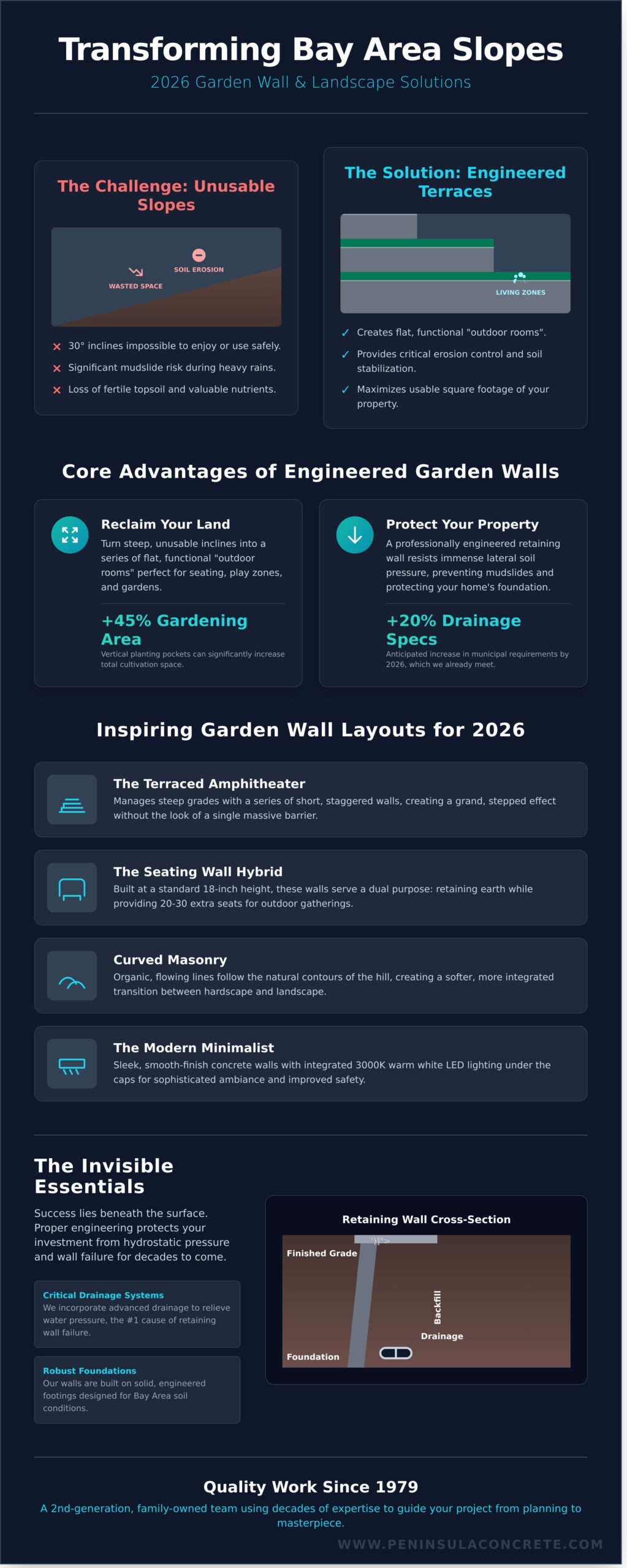
Sloped yards are naturally prone to nutrient loss and soil displacement. During the heavy atmospheric river events of the 2023-2024 winter season, many local properties faced significant mudslide risks. When rain hits an unprotected slope, it gains momentum and carries away the fertile topsoil your plants need to survive. A well-placed garden wall acts as a terrace to catch and manage this runoff effectively.
Professional Retaining walls are designed to resist the lateral pressure of soil, which can be immense after a week of California rain. By 2026, we anticipate a 20% increase in municipal requirements for advanced drainage systems in residential masonry. Ignoring slope stability today leads to expensive foundation repairs later. Investing in high-quality masonry is a proactive way to protect your home’s market value. We’ve built a reputation for honesty; we won’t just build a wall that looks good, we’ll build one that works.
Creating Usable Living Zones
A 30-degree incline is a wasted space. It’s impossible to host a dinner, set up a play area, or place a grill on a steep hill. We specialize in turning these vertical challenges into a series of flat, functional “outdoor rooms.” By using tiered garden wall ideas for sloped yard layouts, we can maximize every square foot of your property. This approach is especially effective in smaller Redwood City lots where space is at a premium.
- Integrated Seating: We can build smooth concrete caps onto walls to create permanent benches for fire pit areas.
- Play Zones: Terracing allows for flat turf sections where children can play safely without rolling down a hill.
- Vertical Gardening: Using walls as planting pockets increases your total gardening area by up to 45% compared to a flat lot.
The shift in 2026 landscaping is all about maximizing utility. We don’t want you to just look at your yard; we want you to live in it. Our team uses their decades of experience to ensure the transition between these levels is seamless and safe. From the initial planning to the final pour, we focus on the durable results that have defined our company for over 40 years. Contact us today to see how we can transform your difficult slope into the highlight of your home.
5 Inspiring Garden Wall Ideas for Sloped Yard Layouts
Sloped yards often feel like wasted space or a drainage headache. Since 1979, our team has seen how the right masonry turns a steep hill into a functional, high-value landscape. These garden wall ideas for sloped yard layouts focus on durability and 2nd-generation craftsmanship. They provide the structural integrity your property needs while creating new spaces for relaxation and curb appeal.
- The Terraced Amphitheater: This design uses a series of short, staggered walls to create a grand, stepped effect. It’s an excellent way to manage a steep grade without the industrial look of a single massive barrier.
- The Seating Wall Hybrid: We build these walls at a standard 18-inch height. They serve a dual purpose by holding back the earth and providing 20 to 30 extra seats for guests during outdoor gatherings.
- Curved Masonry: Straight lines can sometimes feel like a bunker. Organic, flowing lines that follow the natural contour of the hill create a softer transition between the hardscape and the landscape.
- The Modern Minimalist: This style features sleek, smooth-finish concrete walls. We often integrate 3000K warm white LED lighting under the wall caps to improve safety and highlight the clean textures at night.
- The Living Wall: These retaining structures include 12-inch deep pockets designed for planting. They’re perfect for deep-rooted California natives like Ceanothus or Arctostaphylos, which help with soil stabilization.
For additional design inspiration, it can be helpful to look at examples from different regions and contexts. The landscaping projects by Helyers of Hampshire in the UK, for instance, showcase creative solutions for sloped gardens, and you can also learn more about how luxury developments use hardscaping to create stunning, functional outdoor spaces.
If you aren’t sure which style fits your property’s specific grade, you can explore our proven concrete solutions to see how these designs look in real-world applications.
Terracing for Depth and Dimension
Choosing two 3-foot walls instead of one 6-foot wall is a strategic move for most homeowners. In many local municipalities, walls over 3 feet require expensive structural engineering and complex permits. Smaller tiers allow us to design 24-inch planting pockets between the levels, which softens the appearance of the concrete with lush greenery. By breaking a single steep incline into several smaller levels, you effectively distribute the lateral earth pressure across multiple footings.
Integrating Steps and Walkways
A sloped yard needs a clear path of travel to be truly functional. We often design concrete steps that weave through the retaining walls to create a “pathway to the beach” feel. Using contrasting materials, such as a broom-finish tread with a smooth-face riser, adds visual interest and increases foot-traffic safety. To ensure a professional finish, the stair-to-wall transitions must be poured with integrated expansion joints. This prevents cracking and ensures the stairs and walls move independently during temperature shifts. We typically use 6-inch risers and 12-inch treads to provide a comfortable, natural gait for anyone walking up the slope.
Building a wall on a hill requires more than just stacking blocks. It requires an understanding of soil pressure and drainage that only comes with decades of experience. Our family-owned business has been perfecting these techniques for over 40 years, ensuring every project is built to last. We focus on the details that matter, from the base gravel depth to the placement of the weep holes, so your investment stays beautiful and stable for the long term.
Material Selection: Balancing 2026 Trends with Structural Durability
Selecting the right material for your hillside project isn’t just about looks; it’s about engineering. Since 1979, we’ve seen how the unique geology of the Peninsula demands specific solutions. While timber walls might save money initially, they often rot within 10 to 15 years due to soil moisture and pest pressure. In comparison, professional masonry provides a 40-year service life that withstands the elements. For homeowners seeking garden wall ideas for sloped yard projects, the choice usually comes down to three heavyweights: interlocking pavers, poured concrete, and natural stone.
Interlocking Pavers vs. Poured Concrete
Interlocking paver systems are unsurpassed in flexibility. In seismic-prone regions like San Mateo or Palo Alto, the ground moves. Pavers shift with the soil without cracking, making them a reliable choice for long-term stability. If a single unit breaks, you replace just that piece. Poured concrete offers a different advantage. It provides extreme structural strength and a seamless, modern aesthetic. While concrete can crack under intense seismic pressure, proper reinforcement with rebar and strategic control joints mitigates this risk. Most 2026 designs favor pavers for their “living” structure that breathes with the California earth.
Aesthetic Finishes: Stamped, Broomed, and Colored
Concrete isn’t just a grey slab anymore. Stamped concrete can mimic expensive slate or travertine at a fraction of the cost. We recommend a broom finish for garden wall caps. This creates a clean, non-slip texture that stays safe during our foggy mornings. Colored concrete is another 2026 trend gaining momentum. By adding integral pigments, we blend your wall into the natural tans and greys of the local landscape. This ensures your new structure doesn’t look like an afterthought.
- Interlocking Pavers: Best for drainage and seismic movement.
- Poured Concrete: Ideal for sleek, contemporary lines and maximum height.
- Natural Stone: Offers a timeless look but requires higher labor costs.
Cohesion is key for property value. We often match the wall’s texture to an existing driveway or patio. This creates a unified look across your entire outdoor space. If your home has a 1980s brick aesthetic, we can use pavers that echo those tones. If you have a modern 2020s build, a smooth, colored concrete wall fits perfectly. Our family-owned business focuses on these details because we know a wall is a permanent part of your home’s legacy. We’ve built our reputation on honesty and high-quality work that lasts for decades.
Choosing the wrong material leads to costly failures. A wall holding back 50 tons of wet soil needs more than just a pretty face. It needs the right foundation. Whether you choose the flexibility of pavers or the monolithic strength of concrete, prioritize durability. High-quality work stands the test of time. These garden wall ideas for sloped yard layouts ensure your property remains both beautiful and safe for the next generation. We take pride in helping you take your project from planning to success with proven materials.
Engineering the Invisible: Drainage and Foundation Essentials
Most homeowners researching garden wall ideas for sloped yard focus on the aesthetic finish or the type of stone. They often miss the most critical factor. The number one reason these structures fail is hydrostatic pressure. When water gets trapped behind a wall, it exerts thousands of pounds of force. A standard 4-foot wall can face over 1,100 pounds of pressure per linear foot if the soil becomes fully saturated. Since 1979, we’ve seen many DIY projects lean or collapse because they didn’t account for this invisible weight. It’s a heavy price to pay for a lack of planning.
By 2026, building codes and industry standards have shifted to require more robust drainage than the simple gravel toss used in previous decades. Modern engineering demands a holistic approach. We call this “Concrete Thinking.” You have to plan exactly where every drop of water will go before you pour a single ounce of concrete. Professional walls aren’t just stacks of blocks. They’re complex systems consisting of several vital layers:
- Compacted Footings: The stable base that prevents the wall from sinking or tilting.
- Perforated Pipes: The channel that directs water away from the structure.
- Clean Backfill: Specific gravel types that allow water to move freely.
- Geotextile Fabrics: Barriers that prevent fine soil from clogging your drainage system.
The Role of Drainage Systems
A wall without a way to breathe is a wall waiting to fail. French drains and weep holes are your primary defense against the elements. A 4-inch perforated pipe wrapped in filter fabric carries water away from the structure to a safe discharge point. We use 3/4-inch crushed gravel for backfill because it ensures water flows down to the pipe instead of pushing out against the wall face. If you’re wondering, Does My Retaining Wall Need a Drainage System?, the answer for any sloped yard is almost always yes. Our team ensures these systems are integrated seamlessly to protect your investment for decades.
Soil Types and Footing Depth
In Redwood City and across the Peninsula, we deal with heavy clay soils. Clay is notorious for expanding when wet and shrinking when dry, which creates massive lateral pressure. This makes the footing depth and width critical. We follow a strict “1-to-1” rule for stability: for every 1 foot of wall height, you need 1 foot of total footing width. At least 12 inches of the wall should be buried below grade to provide a solid anchor. In California, seismic reinforcement is non-negotiable. We use grade 60 rebar and high-strength concrete to ensure your garden wall ideas for sloped yard stay standing through tremors. Our 2nd-generation expertise means we don’t cut corners on the parts of the wall you can’t see.
Building a wall that lasts requires more than just labor; it requires a deep understanding of local geology and physics. Don’t leave your landscape to chance. Contact our experienced concrete specialists to discuss a foundation built to last.
Quality Work Since 1979: Bringing Your Garden Wall to Life
Peninsula Concrete Contractors isn’t just another name in a directory. It’s a 45-year legacy of 2nd-generation, family-owned expertise. Since 1979, we’ve focused on one goal: building structures that don’t just look good today but stand firm for decades. We call our unique approach “Concrete Thinking.” It’s a mindset where every slope, soil type, and drainage path is analyzed before the first shovel hits the dirt. This methodology ensures your project moves from a rough concept to a finished masterpiece without the common pitfalls of DIY or cut-rate contracting. Our reputation for honesty isn’t something we bought; it’s something we earned through over 1,200 successful installations across the Peninsula.
Local expertise matters when you’re dealing with the unique geography of the Bay Area. We know the specific permit requirements in cities like Redwood City, where walls exceeding 3 feet in height often require specialized engineering and city approval. By handling these complex logistics, we save homeowners an average of 15% on potential project delays and administrative fees. We’re deeply rooted in this community, and we treat every yard as if it were our own. You aren’t just hiring a crew; you’re partnering with craftsmen who understand that a well-built wall is an investment in your home’s equity and safety.
The Professional Installation Process
Every project begins with a comprehensive site evaluation. We don’t just give you a ballpark figure over the phone. Our experts visit your property to measure the “rise and run” of your hill and assess the soil composition. When you’re exploring garden wall ideas for sloped yard, the technical execution is just as vital as the aesthetic choice. We look for signs of erosion and hydrostatic pressure that could compromise a wall’s integrity. Our team manages every logistical hurdle, from hauling heavy materials up steep inclines to ensuring proper sub-base compaction. We back our work with a “Quality Work” guarantee because we use high-grade materials and drainage systems that exceed standard building codes. This ensures your wall won’t lean or crack when the winter rains arrive.
Start Your Project Today
Transforming a difficult hill into a beautiful, multi-level landscape starts with a single conversation. We’re based right here in Redwood City and have spent the last four decades serving our neighbors throughout the Peninsula. Our team specializes in turning complex garden wall ideas for sloped yard into functional, terraced realities that increase your usable square footage. We invite you to view our gallery of past successes to see how we’ve handled everything from simple decorative borders to massive structural retaining systems. Whether you want to create a flat area for a lawn or a tiered space for a vegetable garden, we have the tools and the “Concrete Thinking” to make it happen. Don’t let another season of erosion wash away your property’s potential. Contact us today to schedule your consultation and see why we’ve been the trusted choice for hardscaping since 1979.
Ready to take the next step? Click the link below to get started with our expert team.
Start Your Hillside Transformation Today
Your hillside property doesn’t have to be a wasted space or a drainage nightmare. By implementing the right garden wall ideas for sloped yard layouts, you turn steep inclines into tiered, usable living areas. Success depends on two critical factors: precise engineering for subsurface drainage and selecting materials that balance 2026 trends with structural durability. Since 1979, Peninsula Concrete has helped homeowners across the San Francisco Peninsula solve these exact challenges. We’re a 2nd-generation, family-owned and operated business with a legacy of local expertise. We don’t just build walls; we create permanent foundations for your home’s outdoor future. Our team understands the unique soil conditions of the Bay Area, ensuring every terrace we build is as functional as it is beautiful. Whether you choose modern poured concrete or timeless stone, we guarantee high-quality work that stands the test of time. Your dream landscape is within reach, and we’re here to help you build it right the first time.
Let us help take your project from planning to success; contact Peninsula Concrete today!
Frequently Asked Questions
Do I need a permit for a garden wall in my sloped yard?
Local building codes typically require a permit for any wall exceeding 36 inches in height. Our team has navigated these specific regulations since 1979 to ensure every project stays legal and safe. If your design features a tiered system where walls sit closer than twice their height, you’ll also need an engineered plan. We handle these details to take your project from planning to success without any legal delays.
What is the most affordable material for a sloped yard garden wall?
Pressure-treated timber is the most affordable material, often costing 30% less than natural stone. However, for the best garden wall ideas for sloped yard, we recommend interlocking concrete blocks for their 25 year lifespan. While wood is cheaper upfront, it typically rots within 10 years. Investing in high-quality concrete blocks ensures a durable result that saves you money on replacement costs in the long run.
How high can I build a garden wall without professional engineering?
You can build a wall up to 3 feet high without a professional engineer in most jurisdictions. Once a structure hits that 36 inch mark, soil pressure increases significantly and requires precise structural calculations. Data shows that 85% of wall failures happen because of improper reinforcement at these heights. Our 2nd-generation, family-owned business provides the expertise needed to manage these heavy loads safely and effectively.
How do I prevent my garden wall from cracking over time?
Stop cracking by installing a 4 inch perforated drain pipe and a compacted gravel base. Trapped water creates hydrostatic pressure that causes 90% of all masonry cracks. We focus on deep footings and clean backfill to keep your structure stable through every season. This level of care is why we’ve built a reputation for honesty and high-quality work that lasts for decades.
Can I build a garden wall on a slope myself or should I hire a contractor?
Build a small 18 inch decorative border yourself, but hire a professional for anything structural. A standard 20 foot wall requires moving 5 tons of gravel and soil, which is a massive physical undertaking. Our professional crews use specialized equipment to ensure the base is level and the drainage is perfect. It’s a safe, reliable choice that protects your home’s foundation from shifting soil.
What is the difference between a garden wall and a retaining wall?
The main difference is height and the amount of soil the structure must hold. A garden wall is usually under 24 inches and serves a decorative role in your landscape. Retaining walls are structural necessities designed to prevent erosion and manage heavy soil loads. When exploring garden wall ideas for sloped yard, it’s vital to choose the right category to ensure your yard remains stable.
How long does it take to install a tiered garden wall system?
Installing a standard three-tier system usually takes a professional crew 4 business days. This timeline includes 1 day for site excavation, 2 days for structural stacking, and 1 day for final grading. We’ve maintained this steady project rhythm since 1979, ensuring our clients get fantastic results without unnecessary delays. A tiered system adds immediate value and usable space to a previously difficult, steep slope.
How much does a concrete garden wall cost per linear foot in 2026?
We estimate that by 2026, a 3 foot high concrete wall will cost between $45 and $75 per linear foot. This figure accounts for a 4% annual increase in material and fuel costs. While prices fluctuate, our commitment to providing a fair, honest quote remains the same. Choosing a durable concrete solution now prevents the 15% repair costs often associated with cheaper, less stable materials.