
Planning a retaining wall project for your Bay Area property can feel overwhelming, especially when trying to establish a realistic budget. You need a clear understanding of the total concrete retaining wall cost, but fear of hidden fees, complex quotes, and the risk of a poorly built wall can create uncertainty. How do you know if you’re choosing the right materials? How can you be sure the structure will stand the test of time? These are valid concerns that every homeowner faces when investing in a significant hardscape improvement.
As a family-owned business dedicated to quality work since 1979, we believe in empowering our clients with honest information. This 2026 pricing guide is designed to give you that clarity. We will break down every factor that influences cost-from labor and materials to permits and site preparation. By the end, you will understand the difference between poured concrete and block walls, know what questions to ask a contractor, and feel confident creating a budget for a durable, high-quality retaining wall that adds lasting value to your home.
Understanding the Average Cost of a Concrete Retaining Wall
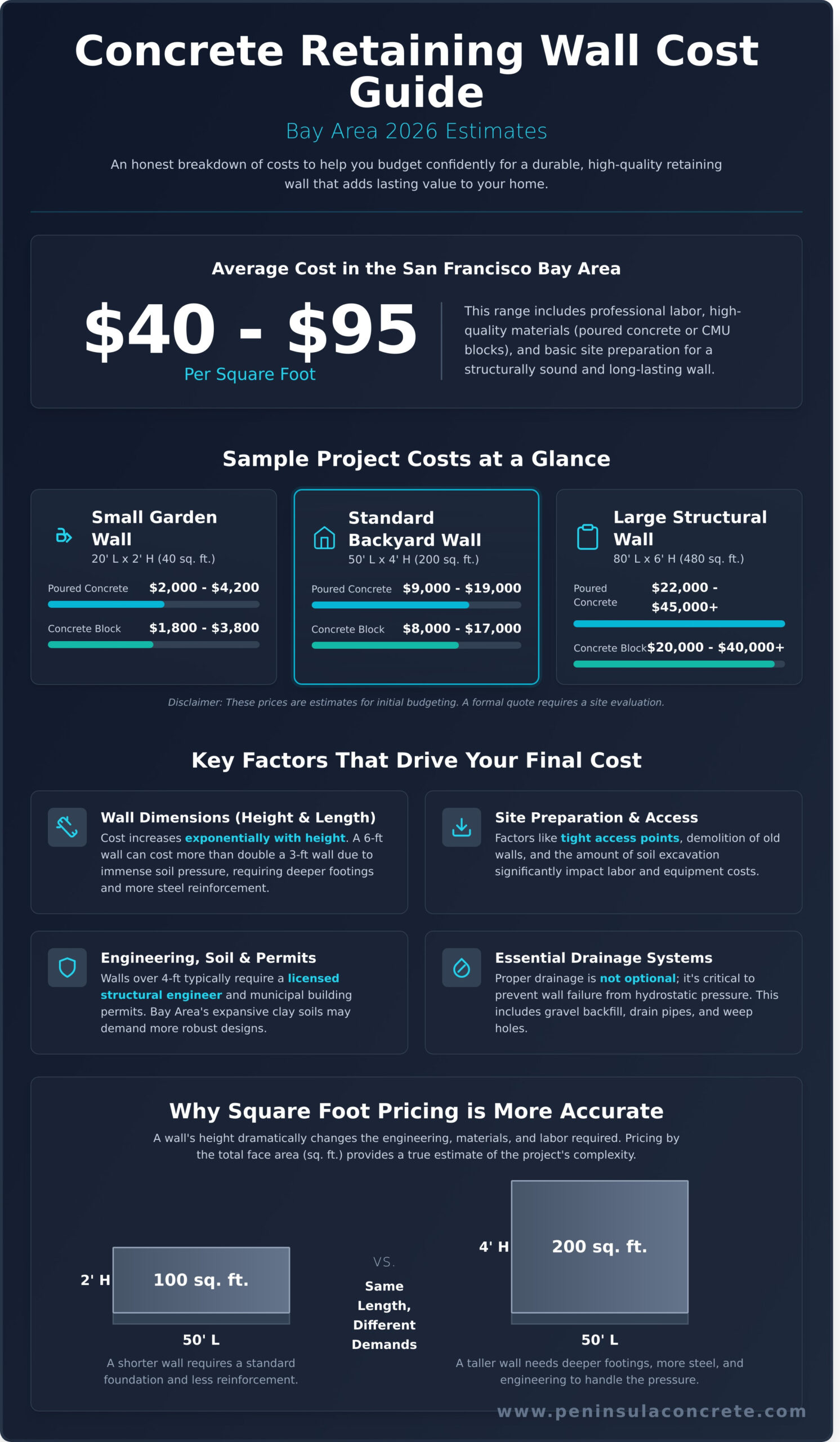
When planning your project, the first question is often about the budget. The average concrete retaining wall cost in the San Francisco Bay Area typically ranges from $40 to $95 per square foot. This price includes materials, professional labor, and basic site preparation. As a family-owned business with experience since 1979, we believe in providing clear, upfront information to help you make informed decisions.
This cost range covers the two primary types of concrete walls: solid, poured-in-place concrete and versatile concrete masonry units (CMU), or blocks. While these figures provide a reliable starting point, the final price will depend on several key factors, including wall height, soil conditions, and site accessibility, which we will explore in later sections.
Cost Breakdown: Per Square Foot vs. Per Linear Foot
While some contractors may quote per linear foot, pricing by the square foot of the wall’s face provides a more accurate estimate. The height of the wall is a critical factor; a 6-foot-tall wall requires significantly more labor, materials, and structural engineering than a 2-foot-tall wall of the same length. Understanding the basic principles of what a retaining wall is and the forces it must withstand makes it clear why total surface area is the industry standard for pricing. For comparison, a standard 4-foot-tall wall would equate to approximately $160 to $380 per linear foot.
Sample Project Costs in the Bay Area
To help you visualize your budget, here are some common project sizes and their estimated cost ranges in the Bay Area. These figures reflect the high-quality materials and expert craftsmanship you can expect from an established contractor.
| Wall Size (Length x Height) | Estimated Poured Concrete Cost | Estimated Concrete Block Cost |
|---|---|---|
| Small Garden Wall 20′ L x 2′ H (40 sq. ft.) |
$2,000 – $4,200 | $1,800 – $3,800 |
| Standard Backyard Wall 50′ L x 4′ H (200 sq. ft.) |
$9,000 – $19,000 | $8,000 – $17,000 |
| Large Structural Wall 80′ L x 6′ H (480 sq. ft.) |
$22,000 – $45,000+ | $20,000 – $40,000+ |
Disclaimer: These prices are estimates for initial budgeting purposes only. Every project is unique, and a formal quote requires a thorough site evaluation.
Key Factors That Drive Your Final Project Cost
When you receive an estimate, it’s important to understand that the wall itself is only one part of the total investment. As a 2nd-generation, family-owned business serving the Bay Area since 1979, we believe in transparent pricing. Your final concrete retaining wall cost is a comprehensive figure that includes crucial site work, engineering, and materials required to build a structure that is safe, compliant, and built to last for decades.
Here in the Bay Area, both labor and material costs are typically higher than national averages. Below are the key variables we assess for every project.
Wall Dimensions (Height and Length)
The size of your wall is the most obvious cost driver, but the cost increases exponentially with height, not linearly. A six-foot-tall wall can easily cost more than double a three-foot-tall wall because it must withstand immense soil pressure. Taller walls require significantly deeper and wider concrete footings, more steel rebar for reinforcement, and often require formal engineering. This principle applies to both poured-in-place walls and professionally engineered concrete block retaining walls, which both demand substantial structural integrity to ensure long-term stability.
Site Preparation, Access, and Excavation
What happens before we pour any concrete has a major impact on the budget. Our team must evaluate several factors that influence labor and equipment needs:
- Site Access: Can we easily get excavation equipment to the worksite? Tight access points or steep hillsides may require more manual labor and specialized machinery.
- Demolition: Is there an old, failing wall that needs to be demolished and hauled away? This adds significant time and disposal fees to the project.
- Excavation & Grading: The amount of soil that needs to be moved to create a level base for the footing and to accommodate proper drainage systems is a key part of the labor calculation.
Engineering, Soil Conditions, and Permits
Safety and compliance are non-negotiable. For most retaining walls over four feet in height (measured from the bottom of the footing), a licensed structural engineer must create a detailed plan. This ensures the wall is designed to handle the specific loads and soil conditions of your property. Here in the Bay Area, expansive clay soils often require more robust footing designs. We also manage the process of obtaining the necessary building permits from your local municipality, which is a required step for most structural retaining walls.
Essential Drainage Systems
Water is the number one enemy of a retaining wall. The pressure that saturated soil exerts-known as hydrostatic pressure-is the leading cause of wall failure. A properly installed drainage system is not an optional upgrade; it is a critical component of a lasting wall. This investment includes a gravel backfill zone, a perforated drain pipe to channel water away, and weep holes. Protecting your wall from water pressure is the best way to protect your entire investment.
Poured Concrete vs. Concrete Blocks: A Cost & Value Comparison
When evaluating your concrete retaining wall cost, the choice between poured concrete and concrete blocks is one of the most significant decisions you’ll make. Both materials create durable, long-lasting structures, but they differ in strength, appearance, and installation, making each better suited for specific applications. Understanding these differences is key to choosing the best long-term value for your property.
| Feature | Poured Concrete Walls | Concrete Block Walls |
|---|---|---|
| Upfront Cost | Typically higher due to labor and formwork. | Often more budget-friendly. |
| Strength | Superior; monolithic structure with rebar reinforcement. | High; interlocking design provides excellent stability. |
| Aesthetics | Smooth, modern finish. Can be stamped or textured. | Highly versatile with many colors, textures, and styles. |
| Installation | Slower and more complex process. | Faster and less labor-intensive. |
| Best For | Large, critical walls holding back significant loads. | Garden walls, tiered landscapes, and curved designs. |
The Cost and Benefits of Poured Concrete Walls
A poured concrete wall is a single, solid structure reinforced with steel rebar, offering unmatched strength and durability. While the upfront investment is generally higher due to the need for custom formwork and intensive labor, the long-term value is exceptional. This monolithic design is ideal for large retaining walls over four feet high or those supporting critical loads like driveways or foundations. Aesthetically, it provides a clean, modern look that can be customized with stamps, textures, or stains for a unique finish.
The Cost and Benefits of Concrete Block Walls
Segmental Retaining Wall (SRW) blocks are a popular, cost-effective alternative. The material and labor costs are often lower, and the installation process is significantly faster. This versatility makes them an excellent choice for DIY projects or professionally installed garden walls, tiered flower beds, and elegant curved designs. While installation is faster, proper site preparation, drainage, and a solid foundation are still critical. Following established retaining wall design considerations ensures the structure remains stable and effective for decades, maximizing the return on your investment.
Which Is Right for Your Project?
The right choice depends on your project’s specific needs and budget.
- Choose poured concrete when maximum strength, longevity, and a modern aesthetic are your top priorities. It is the superior option for tall, load-bearing walls.
- Choose concrete blocks if you need design flexibility, have a tighter budget, or are creating decorative landscape walls with curves and tiers.
Deciding between these high-quality options can be challenging. Our experts can help you choose the right material to ensure your retaining wall is both beautiful and built to last.
Don’t Forget These ‘Hidden’ Costs in Your Budget
At Peninsula Concrete, our reputation is built on honesty and quality work. A comprehensive quote should account for more than just materials and basic labor. Many factors can influence your final concrete retaining wall cost, and an experienced contractor will walk you through each one. Before construction even begins, remember to factor in potential expenses for professional design, engineering plans for larger walls, and necessary municipal permits.
Demolition and Debris Removal
If you are replacing a failing structure, your project site must be cleared first. This process involves labor and specialized equipment to break down and remove an old wall, concrete slab, or other obstructions. Your estimate should include line items for hauling away debris like old concrete, rotted wood, and excess soil, as disposal sites charge significant fees.
Fencing and Landscaping Restoration
Heavy equipment can be tough on your yard. A complete budget includes the cost of restoring any areas affected by construction. This often involves reinstalling sections of fencing that were removed for access, repairing damaged sprinkler lines, grading the soil, and laying new sod or seed. Backfilling behind the new wall with high-quality topsoil is also essential for proper drainage and future planting.
Decorative Finishes and Add-ons
A standard concrete wall is functional and durable, but aesthetic upgrades will increase the final price tag. These popular options add significant curb appeal but should be planned for in advance:
- Stamped Patterns: Forms can be used to press textures that convincingly mimic brick, natural slate, or fieldstone.
- Color and Veneers: Integral color, stains, or a stone veneer can be applied to match your home’s exterior.
- Capstone Blocks: Adding a flat, finished cap to the top of the wall provides a polished, high-end look.
Understanding the full scope of your project is the key to a successful outcome with no financial surprises. As a 2nd-generation, family-owned business, we believe in providing clear, all-inclusive estimates. For a quote that covers every detail from start to finish, contact our team today.
Build Your Bay Area Retaining Wall with Confidence
As we’ve explored, the final concrete retaining wall cost is shaped by far more than just linear feet. Key factors like site accessibility, soil conditions, and your choice between poured concrete and blocks all play a significant role. By planning for these variables and potential ‘hidden’ costs like drainage and permits, you can create a realistic and effective budget for your project.
While this guide provides a solid foundation, the only way to get a precise figure for your unique property is with a professional assessment. At Peninsula Concrete Contractors, we are proud of our heritage as a local, 2nd-generation family-owned business. With an A+ rating from the Better Business Bureau and a commitment to Quality Work Since 1979, we deliver transparent pricing and durable results you can depend on.
Ready to transform your landscape with a structure built to last? Get a Free, No-Obligation Estimate for Your Project today and partner with a team that has earned the trust of the Bay Area community for decades.
Frequently Asked Questions
How long does a concrete retaining wall last?
A professionally installed concrete retaining wall is a long-term investment in your property’s stability and value. When built correctly with proper steel reinforcement and adequate drainage, these structures are designed to last for 50 to 100 years, or even longer. The key to this longevity is mitigating hydrostatic pressure from water buildup. Quality construction ensures your wall will stand strong for decades, protecting your landscape from erosion and soil movement with minimal maintenance required.
Do I need a permit to build a retaining wall in the Bay Area?
In most Bay Area cities and counties, a building permit is required for any retaining wall over four feet in height, measured from the bottom of the footing to the top of the wall. However, some municipalities have stricter regulations, requiring permits for walls as low as three feet. It is always essential to verify the specific requirements with your local building department before beginning any work. As experienced local contractors, we manage the entire permitting process to ensure your project is fully compliant.
Can I save money by building a retaining wall myself?
While a DIY approach may seem less expensive upfront, it carries significant risks that can lead to higher costs later. Structural retaining walls must withstand immense soil and water pressure. An improperly engineered wall can fail, causing dangerous landslides and extensive property damage. The cost to demolish and rebuild a failed wall far exceeds the initial savings. For a safe, durable, and properly engineered structure, hiring an experienced and licensed professional is the most cost-effective long-term solution.
Why does a cheap retaining wall end up costing more?
A low initial concrete retaining wall cost often indicates that crucial steps or quality materials have been omitted. Common shortcuts include using inadequate steel reinforcement, skimping on the concrete footing, or failing to install a proper drainage system behind the wall. These deficiencies lead to premature failure like cracking, bowing, or a complete collapse. The expense of removing a failed wall and correctly rebuilding it, along with repairing any landscape damage, will always be greater than investing in quality work from the start.
What is the difference between a garden wall and a structural retaining wall?
The primary difference lies in their purpose and construction. A garden wall is typically decorative, under four feet tall, and designed to hold back a small amount of soil for a planter or terrace. A structural retaining wall is an engineered system designed to hold back a significant slope of earth and prevent erosion. It requires deep footings, extensive steel reinforcement, and robust drainage to manage immense pressure, making professional design and installation an absolute necessity for safety and durability.
How can I get an accurate estimate for my retaining wall project?
The only way to get a truly accurate estimate for your concrete retaining wall cost is through an on-site consultation with an experienced contractor. A reliable quote depends on many factors, including wall height and length, soil conditions, site accessibility for equipment, drainage needs, and whether engineering plans are required. Beware of any estimates given over the phone. A reputable professional will always need to see the site in person to provide a comprehensive and accurate project proposal.