
Transforming your Bay Area property with a beautiful new patio, garden, or complete outdoor living space is a significant investment in your home’s value and your quality of life. However, finding the right professionals to bring that vision to life can be a challenge. With so many landscape contractors to choose from, it’s easy to feel overwhelmed, and the fear of hiring an unreliable company is a valid concern. How do you sort through the options to find a team that is both skilled and trustworthy?
This guide is designed to remove the uncertainty from the hiring process. Drawing on decades of experience in high-quality work, we want to provide you with the clarity needed to make an informed decision. You will learn how to properly vet a contractor, understand key specializations like hardscaping, and ask the right questions to ensure your project is a success from start to finish. Our goal is to give you the confidence to hire the right team and achieve the beautiful, functional outdoor space you deserve.
Understanding the ‘Landscape Contractor’ Umbrella: More Than Just Mowing Lawns
When Bay Area homeowners begin their search for landscape contractors, the image that often comes to mind is a crew mowing a lawn. While maintenance is one part of the job, this view only scratches the surface of a complex and skilled trade. A true landscape contractor is a licensed professional who acts as the general manager for your entire outdoor project, from initial groundbreaking to final planting.
The formal Landscape contracting profession encompasses a vast range of skills, combining art, science, and high-quality construction. Understanding the different specializations under this umbrella is the first step to ensuring your project is built to last. The key is to match the right expert to your specific vision, as the professional who builds a durable paver patio is often different from the one who designs a native plant garden.
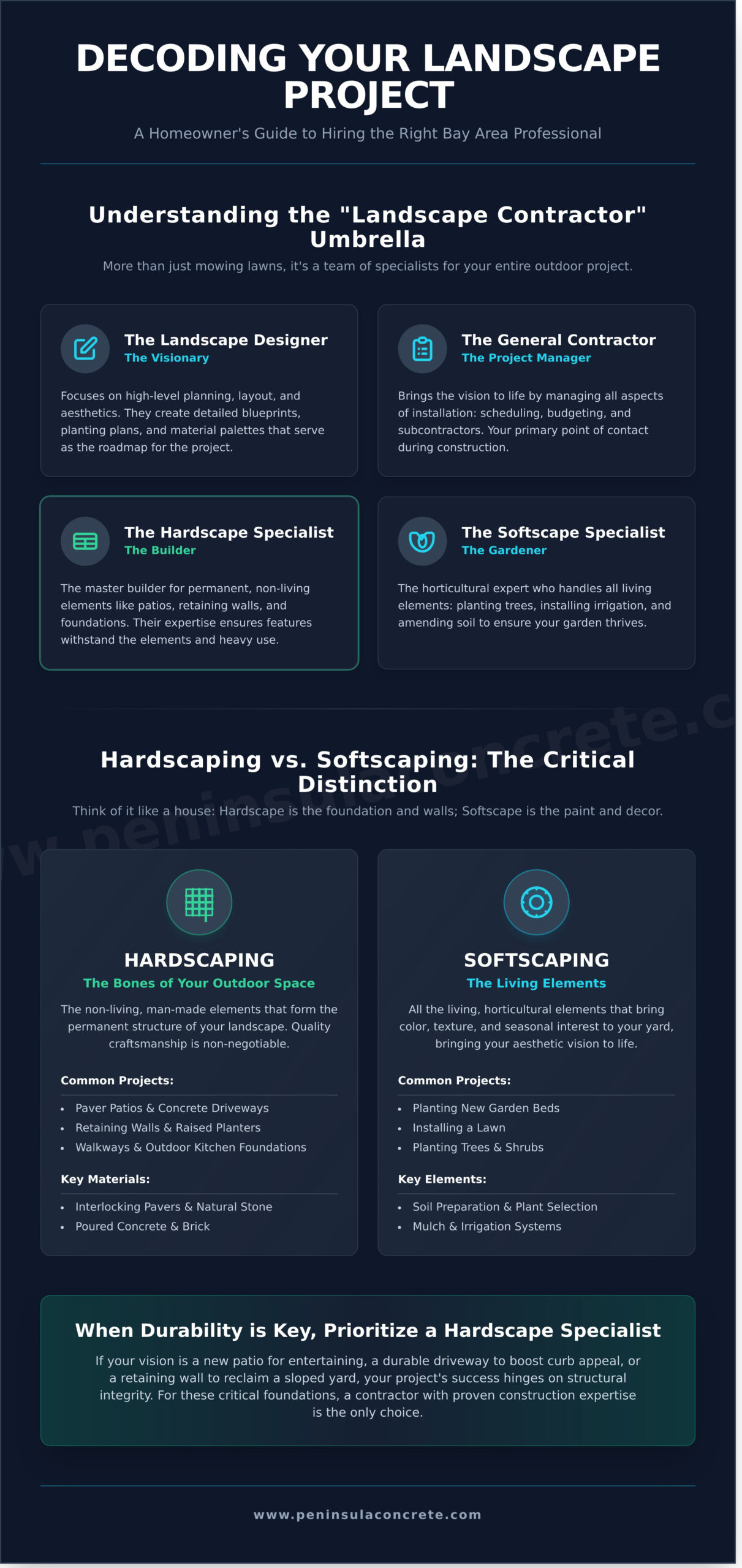
The Landscape Designer: The Visionary
A landscape designer or architect is the visionary. They focus on the high-level planning, layout, and aesthetic feel of your space. Their work results in detailed blueprints, planting plans, and material palettes that serve as the roadmap for the entire project. For major redesigns or projects starting from scratch, a designer is often the first professional you should consult.
The General Landscape Contractor: The Project Manager
The general landscape contractor is the field commander who brings the designer’s vision to life. This professional manages all aspects of the installation, from scheduling and budgeting to hiring specialized subcontractors. They oversee both the ‘softscape’ (plants, soil, irrigation) and ‘hardscape’ (patios, walls, structures), serving as your primary point of contact throughout the construction phase. They ensure the project is executed correctly, on time, and to code.
The Hardscape Specialist: The Builder
Hardscape specialists are the master builders of your landscape, focusing exclusively on the permanent, non-living elements. Their expertise is crucial for features that must withstand the elements and heavy use. Their work includes:
- Patios, driveways, and walkways
- Retaining walls and raised planters
- Outdoor kitchens and fire pits
- Concrete foundations and decorative features
These craftsmen possess deep knowledge of durable materials like interlocking pavers, natural stone, and high-quality concrete.
The Softscape/Maintenance Specialist: The Gardener
The softscape specialist is the horticultural expert. They handle all the living elements that bring color and life to your yard. This includes the proper installation of trees, shrubs, and flower beds; setting up efficient irrigation systems; and amending soil for optimal plant health. Many also offer ongoing maintenance services to ensure your garden thrives long after the initial installation is complete.
Hardscaping vs. Softscaping: Identifying Your Project’s True Needs
Before you begin searching for Bay Area landscape contractors, it’s essential to understand the single most critical distinction in landscape design: hardscaping versus softscaping. Getting this right is the key to a successful, long-lasting project. Think of your outdoor space like a house: the hardscape is the foundation, walls, and roof, while the softscape is the paint, furniture, and decor. One provides the essential structure, and the other brings it to life.
The success of your living elements often depends entirely on the quality of the structural ones. A lush garden (softscape) can be ruined by poor drainage from an improperly installed patio (hardscape). By identifying your primary goals first, you can ensure you hire a contractor with the right specialized skills.
What is Hardscaping? The Bones of Your Outdoor Space
Hardscaping refers to the non-living, man-made elements that form the structure of your landscape. These features are built for durability and function, creating usable areas that define your outdoor living space. Because these are permanent installations, quality craftsmanship is non-negotiable.
- Common Projects: Paver patios, concrete driveways, retaining walls, walkways, and outdoor kitchen foundations.
- Key Materials: Interlocking pavers, natural stone, poured concrete, and brick.
- Primary Purpose: To create structure, solve grade and drainage issues, and build permanent, functional living areas.
What is Softscaping? The Living Elements
Softscaping encompasses all the living, horticultural elements of your landscape design. These are the vibrant, growing components that add color, texture, and seasonal interest to your yard. This is where the aesthetic vision of your garden truly comes to life.
- Common Projects: Planting new garden beds, installing a lawn, planting trees and shrubs.
- Key Elements: Soil preparation, plant selection, mulch, and irrigation systems.
- Primary Purpose: To add beauty, softness, and the living, breathing character of your outdoor space.
When You Need a Hardscape Specialist Like Peninsula Concrete
While some general landscape contractors manage both, a project centered on structural integrity demands a specialist. If your vision is a new patio for entertaining, a durable driveway to boost curb appeal, or a retaining wall to reclaim a sloped yard, your priority should be a contractor with proven expertise in construction. For these critical projects, you need a team with the right experience and licensing; you can always Check a contractor’s license on the official CSLB website to verify credentials. When durability and high-quality construction are your top priorities, a hardscape expert is the only choice. See examples of our hardscaping work to understand the difference that dedicated craftsmanship makes.
Your 7-Point Checklist for Vetting Bay Area Landscape Contractors
Before you start collecting bids, it’s essential to perform due diligence. This checklist is a tool to help you avoid common pitfalls and find a true partner for your project. The best landscape contractors view their work as a partnership, and any reputable professional will welcome these questions. Taking these steps protects your investment and ensures you hire a dependable team for your Bay Area home.
1. Verify C-27 Landscaping Contractor License
In California, any landscaping project valued at over $500 requires a C-27 license. This specialty license ensures the contractor is qualified for all aspects of landscape construction, including irrigation, drainage, and planting. You can instantly verify a license number on the Contractors State License Board (CSLB) website. For a complete overview of best practices, the CSLB offers California’s official guide to hiring contractors. Never hire an unlicensed individual for significant work; it leaves you with no legal recourse if the job is done poorly.
2. Confirm Liability and Workers’ Compensation Insurance
Proper insurance is non-negotiable. General Liability protects your property from damage caused by the contractor’s work, while Workers’ Compensation covers their employees if they are injured on your job site. Without it, you could be held financially responsible for accidents. Always ask for a current Certificate of Insurance (COI) sent directly from their insurance agent. This simple step protects you from significant financial risk.
3. Scrutinize Their Portfolio and Project Galleries
A portfolio is a direct reflection of a contractor’s quality and style. Look for examples of work similar to your vision-whether it’s intricate paver patios, modern concrete driveways, or lush garden installations. Pay close attention to the details: Are the cuts clean? Are the joints even? Do the finished projects look professionally executed? A high-quality portfolio will showcase their actual work, not generic stock photos.
4. Check Local References and Online Reviews
An established contractor will have a long list of satisfied clients. Ask for references from recent projects completed in the Peninsula area and take the time to call them. Beyond direct references, check online reviews on platforms like Google and Yelp. Look for patterns in the feedback. Consistent comments about excellent communication, adherence to timelines, and high-quality craftsmanship are strong indicators of a reliable team.
Crucial Questions to Ask Before Signing a Contract
After you’ve vetted potential landscape contractors and reviewed their portfolios, the consultation is your opportunity to ensure they are the right fit. A reputable professional will welcome detailed questions. Clear communication and a comprehensive written agreement are the foundations of a successful project, preventing costly misunderstandings down the road.
Arm yourself with these essential questions to gain clarity and confidence before committing.
Questions About the Quote and Payment
A transparent quote is non-negotiable. Use these questions to understand exactly what you are paying for and when.
- Is this a fixed price or an estimate? What could cause the cost to change?
- What is the payment schedule?
- Does the quote include all materials, labor, permits, and final cleanup?
A trustworthy contractor provides a detailed, fixed-price bid and a reasonable payment schedule. A major red flag is a demand for a large upfront payment; California law limits down payments to 10% of the contract price or $1,000, whichever is less.
Questions About the Timeline and Team
Understanding the project logistics helps manage expectations and ensures a smooth process from start to finish.
- What is the estimated start date and projected completion date?
- Will you be using your own employees or subcontractors for this job?
- Who will be my main point of contact throughout the project?
Look for clear timelines and a dedicated point of contact, like a project manager. Whether a company uses an in-house crew or trusted subcontractors, they should be transparent about who will be on your property.
Questions About Materials and Warranty
The durability of your new landscape depends on both the quality of the materials and the skill of the installation.
- What specific materials do you recommend for my project and why?
- What warranties do you offer on your workmanship?
- What are the manufacturer warranties on the materials (e.g., pavers, lighting)?
An experienced contractor will justify their material choices-like specific paver brands suited for Bay Area soil-and offer a clear warranty on their labor, separate from any manufacturer guarantees.
Ultimately, every answer to these questions should be documented in a detailed written contract before any work begins. The best landscape contractors are proud of their process and will provide clear, confident answers. This diligence ensures you partner with a company committed to high-quality work and your complete satisfaction.
Why Bay Area Projects Demand Specialized Hardscape Expertise
While many excellent landscape contractors can manage lawns and gardens, building durable patios, driveways, and retaining walls in the Bay Area requires a different level of expertise. Our region presents unique geological and environmental challenges that can turn a beautiful new hardscape into a costly problem if not handled by a specialist. A generalist may offer a lower initial bid, but a hardscape professional delivers lasting value by building structures engineered to withstand local conditions.
Choosing a specialist isn’t an expense; it’s a long-term investment in the quality, safety, and durability of your home’s most permanent features.
Managing Clay Soil and Drainage
Much of the Peninsula is built on expansive clay soil, which swells when wet and shrinks when dry. Without deep, localized knowledge, improper base preparation can lead to disaster. A specialist understands the critical need for proper excavation, soil compaction, and integrated drainage systems to prevent cracked concrete, shifting pavers, and water damage. This foundational work is the key to a hardscape that lasts for decades, not just a few seasons.
Building for Longevity and Property Value
A well-built patio or driveway is a permanent addition that enhances your home’s functionality and curb appeal. Unlike softscaping, which requires seasonal updates, quality hardscaping provides a high return on investment that you can enjoy for years to come. Investing in professional installation ensures the work not only looks great upon completion but also adds measurable, lasting value to your property. It’s an asset built to endure.
The Value of Deep Material Knowledge
A hardscape specialist does more than just pour concrete; they provide expert guidance on materials. They understand the subtle but important differences between interlocking pavers, permeable concrete, and various decorative finishes. This expertise allows them to recommend the best options for your specific needs, balancing Bay Area aesthetics with long-term durability. With experience since 1979, we know what works in the Bay Area.
From Vision to Lasting Value: Your Bay Area Hardscape Partner
Embarking on a landscape project is a significant investment in your home’s beauty and value. The key to success lies in understanding your specific needs-particularly the distinction between hardscaping and softscaping-and diligently vetting your options. Choosing from the many landscape contractors available requires careful consideration, especially in the Bay Area where specialized hardscape knowledge is paramount for longevity and durability.
When your vision calls for high-quality concrete or paver work, partner with a team built on a heritage of trust. Peninsula Concrete Contractors, a 2nd-generation, family-owned business, has delivered quality hardscape and concrete work since 1979. As a fully licensed, bonded, and insured contractor in California, we bring decades of proven expertise to every driveway, patio, and walkway. We are here to help take your project from planning to success.
Ready to build something that lasts? Get a Free Estimate for Your Hardscaping Project today.
Frequently Asked Questions
What’s the difference between a landscape contractor and a landscape architect?
A landscape architect focuses on design, creating master plans, and solving complex drainage or grading issues. They are the planners. A landscape contractor is the builder who brings that vision to life. They handle the physical installation of patios, walls, irrigation, and plants. Think of it this way: the architect draws the blueprints, and the contractor builds the house. Reputable landscape contractors work from professional plans to ensure a high-quality result.
How much should I budget for a professional landscaping project in the Bay Area?
In the Bay Area, a professional landscaping budget varies based on materials and complexity. A smaller project like a simple paver patio may start in the $20,000-$30,000 range. Comprehensive backyard transformations involving retaining walls, outdoor kitchens, and extensive planting can easily exceed $100,000. It is essential to get a detailed quote that outlines all costs for labor and high-quality, durable materials before beginning work.
Do I need a permit for my new patio or retaining wall?
Permitting requirements depend on your local municipality and project scope. Generally, retaining walls over four feet in height (measured from the bottom of the footing) require an engineered plan and a building permit. Most on-grade patios do not require a permit unless they cover a significant portion of your property or involve major changes to drainage. Always confirm with your city’s planning department before starting construction to ensure compliance.
How long does a typical hardscaping project, like a paver patio, take to complete?
The timeline for a hardscaping project depends on its size and complexity. A typical 400-square-foot paver patio, for example, can often be completed in one to two weeks, from excavation to final cleanup. Larger or more intricate projects involving features like seat walls or complex patterns will take longer. Factors such as weather, site access, and inspection schedules can also influence the final completion date for any project.
Can a hardscape contractor also help with plants and irrigation?
Many full-service landscape contractors are equipped to handle both hardscaping (patios, walls) and softscaping (plants, irrigation). However, some firms specialize only in hardscape installation. It is important to clarify this when vetting potential companies. A reputable contractor will be transparent about their services and can often recommend a trusted partner for planting design and installation if it is not a service they provide directly.
What is the best time of year to start a landscaping project in Northern California?
The Bay Area’s mild climate allows for landscaping work nearly year-round. However, the best time to start is often in the late summer or fall. The ground is dry, making excavation cleaner and more efficient. This timing also allows new plants to establish their root systems during the cooler, wetter winter months, preparing them for robust growth in the spring. Planning in the summer for a fall start is a proven strategy for success.