

The path from your waterfront property to the shore should be a source of joy, not a constant worry. Yet, for many homeowners, the challenges of erosion, shifting sands, and the harsh coastal environment can make that dream feel out of reach. Building durable concrete steps to the beach requires more than just mixing and pouring; it demands a deep understanding of coastal engineering and high-quality craftsmanship to ensure they stand against the test of time and tide. A poorly planned staircase can quickly become a costly and dangerous problem, cracking under pressure or being undermined by the very elements it’s meant to conquer.
As a 2nd-generation, family-owned business, we’ve built a reputation for durable, high-quality work since 1979. In this complete guide, we share our expertise to help you build with confidence. We will walk you through the critical engineering for a stable foundation, the best design practices for a saltwater environment, and the essential requirements for navigating coastal building permits. By the end, you’ll have a clear, actionable plan to create the safe, reliable access to your waterfront that will last for generations.
Key Takeaways
- Understand why a professional site assessment and structural engineering are the essential first steps for any coastal stair project.
- Learn how to navigate the complex permitting process required for coastal construction to ensure your project is fully compliant.
- Discover the specific construction techniques that make properly built concrete steps to the beach capable of withstanding harsh saltwater environments for decades.
- Explore modern design options and non-slip finishes that enhance both the safety and beauty of your waterfront access.
Why Concrete is the Unbeatable Choice for Beachfront Steps
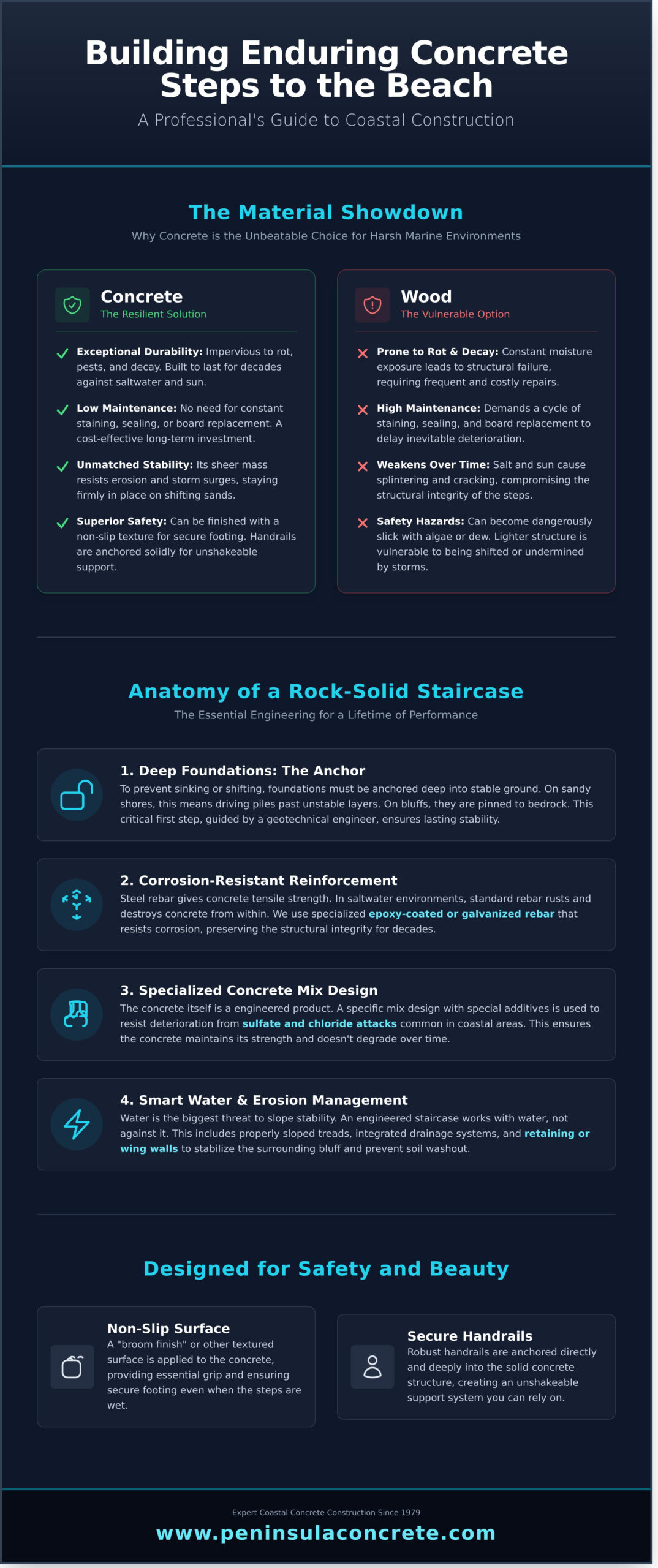
When building on the coast, you are in a constant battle with the elements. The combination of corrosive saltwater, intense sun, abrasive sand, and shifting ground requires a material that is not just strong, but exceptionally resilient. For homeowners seeking a permanent, reliable solution for their property, concrete stands alone as the premier choice. Its inherent mass and durability make it uniquely suited to withstand the harshest conditions the shoreline can deliver, providing a safe and lasting investment.
Concrete vs. Wood in a Marine Environment
While wood has a traditional appeal, it is highly vulnerable in a coastal setting. Constant exposure to moisture invites rot and decay, while the sun and salt cause it to dry out, splinter, and weaken. This leads to a demanding cycle of expensive and time-consuming maintenance-staining, sealing, and eventually replacing boards. Over time, the cost and effort required to maintain wooden steps become a significant burden.
Concrete, by contrast, offers a long-term, low-maintenance solution. As an inorganic material, it is impervious to rot and pests. While any structure requires proper engineering to prevent issues like concrete degradation in marine environments, a professionally installed concrete staircase is built to last for decades. This superior durability makes concrete the most cost-effective choice over the life of your property.
Safety and Stability on Shifting Sands
A safe path to the water is the primary goal of any beach access project. Concrete provides a solid, stable walking surface that can be finished with a non-slip texture, such as a broom finish, ensuring secure footing even when wet. This is a critical safety advantage over wood, which can become slick with algae or morning dew.
The sheer weight of a properly engineered set of concrete steps to the beach gives it an unmatched ability to resist the powerful forces of erosion and wave action. Unlike lighter structures that can be undermined or shifted by a single storm, a heavy concrete installation stays firmly in place. Furthermore, robust handrails can be anchored directly into the concrete, creating a secure and unshakeable support system you can depend on for years to come.
Critical Engineering: Building Steps That Last a Lifetime
Building durable concrete steps to the beach is far more than a simple landscaping project; it is a serious structural undertaking. The coastal environment-with its shifting sands, corrosive salt spray, and powerful storm surges-demands a level of engineering that goes well beyond a standard walkway. Without a professional approach, a new staircase can quickly become a costly and dangerous failure. A comprehensive site assessment by a qualified engineer is the first step. These professionals understand not only the unique geological challenges but also the complex web of California’s coastal construction regulations that govern these projects, ensuring your investment is both safe and compliant.
Foundations: The Anchor for Your Steps
The longevity of any coastal structure begins beneath the surface. To prevent steps from sinking, shifting, or being undermined by erosion, they must be anchored to stable ground with deep footings or piles. On sandy shorelines, this often means driving piles deep enough to bypass unstable sand layers. For rocky bluffs, foundations may be pinned directly to bedrock. A geotechnical engineer can analyze soil reports to determine the precise foundation design required for your specific location, providing the essential anchor for a lasting structure.
Reinforcement and Concrete Mix Design
Concrete is incredibly strong under compression but needs help to resist the pulling and bending forces common in a coastal setting. This is where steel reinforcement (rebar) is critical, acting as a skeleton to give the concrete tensile strength and prevent cracking. In a saltwater environment, standard rebar will rust and expand, destroying the concrete from within. That’s why we use corrosion-resistant options like epoxy-coated or galvanized rebar. Furthermore, the concrete mix itself is specially designed with additives to resist deterioration from sulfate and chloride attacks, ensuring a high-quality, durable finish that withstands the elements.
Managing Water and Erosion
Water is the primary force of erosion on any coastal slope. Properly engineered concrete steps to the beach must manage water, not fight it. This includes designing treads that direct rainwater away from the foundation and incorporating effective drainage systems. In many cases, integrated retaining walls or wing walls are necessary to stabilize the surrounding bluff and prevent soil from washing out from under the staircase. Proper site grading around the steps is the final piece, ensuring surface runoff is channeled safely away from the structure.
The Permitting Maze: Navigating Coastal Construction Regulations
Building on or near a coastline is fundamentally different from any other type of residential construction. Before the first bag of concrete is mixed, you must navigate a complex web of local, state, and sometimes federal regulations. The dream of having durable, high-quality concrete steps to the beach begins not with a shovel, but with paperwork. Attempting to bypass this critical stage is a recipe for costly fines, project delays, and mandated removal of any unapproved work.
Understanding the Key Agencies and Rules
Coastal projects fall under the jurisdiction of multiple governing bodies, each with its own set of rules designed to protect sensitive ecosystems and public access. An experienced contractor will be familiar with the key players, which often include:
- Local City or County Planning Departments: The first stop for basic building permits.
- State Coastal Commissions: Agencies like the California Coastal Commission have final say on most coastal development to ensure it doesn’t harm the environment or restrict public shoreline access.
- Federal Agencies: In some cases, the U.S. Army Corps of Engineers may be involved if the project impacts navigable waters.
You will likely be required to submit environmental impact reports, geological surveys, and detailed engineering plans. Starting work without full approval is a serious violation that can halt your project indefinitely.
What Inspectors Look For
Once your plans are approved, on-site inspections ensure the work is built to last and meets stringent safety and environmental standards. Inspectors will meticulously check critical elements like footing depth to prevent erosion, proper rebar placement for structural integrity, and required setbacks from property lines or the high-tide line. Every plan for concrete steps to the beach must be reviewed and stamped by a licensed structural engineer, confirming the design can withstand coastal weather and shifting sands. They also enforce regulations that protect local plant life, animal habitats, and natural water drainage patterns.
How a Professional Contractor Simplifies the Process
This is where proven experience becomes your most valuable asset. A reputable, local contractor has established relationships with officials in municipal building departments and understands their specific requirements. They act as your expert guide, managing the entire permitting process from application to final inspection. By handling the complex paperwork and ensuring your plans are fully compliant from day one, a professional saves you immense time, stress, and the risk of expensive errors. It is the surest way to take your project from a plan to a successful, lasting reality.
Design and Aesthetics: Creating Beautiful Beach Access
While durability and safety are paramount, your concrete steps to the beach should also enhance the natural beauty of your property. At Peninsula Concrete Contractors, we believe that function and form go hand-in-hand. A well-designed staircase is more than just a path; it’s a high-quality landscape feature that adds significant value and appeal. With thoughtful planning, your beach access can become a stunning architectural element that blends seamlessly with the coastal environment.
Finishes for Non-Slip Safety and Visual Appeal
The surface finish of your concrete steps is critical for both safety and style. We recommend finishes that provide excellent traction in wet, sandy conditions while complementing your home’s aesthetic. Our most reputable options include:
- Broom Finish: A simple, cost-effective, and highly reliable method that creates fine, stiff lines in the concrete for a classic non-slip surface.
- Stamped Concrete: For a more decorative look, stamping can mimic the appearance of natural stone, wood planks, or custom patterns, adding texture and character.
- Exposed Aggregate: This durable finish reveals the natural stones within the concrete mix, resulting in a rugged, highly slip-resistant surface that is perfect for coastal settings.
Custom Features: Landings, Curves, and Seating
Customization transforms a standard staircase into a unique and inviting journey. Incorporating landings can break up a long descent, offering a place to rest and admire the view. Gentle, sweeping curves can follow the natural contours of a dune or bluff, creating a more organic flow. For the ultimate viewpoint, we can integrate custom concrete benches or platforms directly into the design, creating a permanent, durable spot to watch the sunset.
Choosing the Right Handrails
Handrails are a non-negotiable safety feature that also plays a key role in the overall design. Given the harsh, corrosive salt air of a beach environment, material choice is crucial. We recommend materials engineered for longevity and minimal maintenance:
- Marine-Grade Stainless Steel: Offers superior resistance to rust and corrosion, maintaining its integrity and appearance for years.
- Powder-Coated Aluminum: A lightweight, durable, and rust-proof option available in various colors to match your design.
- Cable Railings: A modern choice that provides exceptional safety without obstructing the view, making them ideal for waterfront properties.
Choosing the right combination of design elements ensures your concrete steps to the beach are safe, long-lasting, and beautiful. For expert guidance on designing your project, contact our team of experienced professionals today.
Hiring the Right Bay Area Contractor for Your Coastal Project
Building durable, safe access to the water’s edge is far more than a standard concrete job. Coastal projects face unique challenges, from corrosive salt spray and shifting bluff soil to complex local environmental regulations. Your investment requires a contractor with proven expertise in navigating this demanding environment to ensure your steps are both beautiful and built to last.
Choosing the right team is the single most important decision you will make. A general-purpose contractor may not understand the specific engineering, specialized materials, and permitting required for long-lasting concrete steps to the beach. It is crucial to partner with a local expert who has a verifiable track record of success on the Bay Area coastline.
Essential Questions to Ask Potential Contractors
Before you commit, be sure to ask any potential contractor these critical questions:
- Do you have specific experience with coastal or marine concrete projects in the Bay Area?
- Can you provide a portfolio of similar steps, seawalls, or retaining walls you’ve built?
- How do you manage the structural engineering and complex permitting process with local agencies?
- Are you fully licensed, insured, and bonded for this specialized type of work?
A reputable contractor will welcome these questions and provide clear, verifiable answers. Their portfolio should demonstrate a history of success in environments just like yours.
Why Peninsula Concrete is the Right Choice
Since 1979, Peninsula Concrete has been the trusted name for complex structural concrete projects throughout the Bay Area. As a 2nd-generation, family-owned business, we have built our reputation on honesty, integrity, and uncompromising quality. Our extensive experience with engineered retaining walls and challenging terrain makes us uniquely qualified to design and construct durable, high-quality concrete steps to the beach that will stand the test of time.
We understand the nuances of coastal construction and manage every detail, from initial design and engineering to final inspection. Let our heritage of quality work for you. Start your project today with a free, no-obligation estimate.
Your Path to the Shore, Built to Last
Building durable concrete steps to the beach is a significant investment that goes far beyond a simple weekend project. As we’ve detailed, success demands robust engineering to withstand the coastal elements, a clear understanding of the complex permitting process, and a thoughtful design that enhances both access and aesthetics. Getting these elements right is the key to creating a structure that is both beautiful and permanent.
This is not a task for a general contractor; it requires a specialist with proven coastal experience. At Peninsula Concrete, we bring a heritage of quality to every Bay Area project. As a 2nd-generation, family-owned business specializing in complex hardscaping and structural concrete since 1979, we have the expertise to manage every detail from planning to completion. Trust your coastal project to an expert. Contact us today for a consultation.
Let us help you build a safe, beautiful, and lasting connection to the water’s edge.
Frequently Asked Questions
How much does it cost to build concrete steps to a beach?
The cost to build high-quality concrete steps to the beach varies significantly based on project complexity. Key factors include the slope of the terrain, the total length and width of the staircase, soil stability, and local permitting requirements. On average, you can expect a range from $150 to over $300 per linear foot. A professional consultation is necessary to provide an accurate estimate that accounts for site-specific challenges and ensures a durable, long-lasting installation.
How long do concrete beach stairs last?
Properly designed and constructed concrete steps to the beach are incredibly durable, built to withstand harsh coastal conditions. With high-quality materials and expert installation, they can easily last 30 to 50 years or more. The key to longevity is ensuring proper reinforcement to prevent rust from saltwater exposure and a mix design suited for marine environments. Regular inspections and minor maintenance, like sealing cracks, will help maximize the lifespan of your investment and ensure decades of safe access.
What is the construction timeline for a project like this?
A typical project timeline, from start to finish, can range from 4 to 8 weeks. This includes several key phases: initial design and engineering, securing necessary permits (which can sometimes be the longest part), site preparation and excavation, forming the stairs, and finally, pouring and curing the concrete. The curing process itself requires at least 7 days before the steps can handle light foot traffic and 28 days to reach full strength, ensuring a safe and lasting structure.
Can you repair existing concrete steps that are cracking or damaged?
Yes, repairs are often possible, depending on the extent of the damage. Minor surface cracks can typically be sealed to prevent water intrusion and further deterioration. However, significant structural damage, such as large cracks, spalling (flaking), or issues caused by foundation erosion, may require more extensive work or partial replacement. A thorough inspection by an experienced professional is essential to determine the most effective and safest solution for your existing stairs.
Are concrete steps slippery when wet?
While any smooth surface can become slippery, concrete steps can be finished to provide excellent traction. The most common technique is a “broom finish,” which creates a textured, non-slip surface. Other options include using an exposed aggregate finish or applying specialized non-slip sealants after the concrete has cured. We ensure every project includes a safe, high-traction surface appropriate for a coastal environment where steps will frequently be wet from rain or foot traffic.
Do I need an engineer and an architect in addition to a contractor?
For most beach access projects, a structural engineer is highly recommended and often required by local building codes. An engineer will assess soil stability, design the proper footings, and ensure the staircase is structurally sound and safe for the specific terrain. While an architect may be involved for complex aesthetic designs, the engineer’s role is critical for safety and compliance. As experienced contractors, we work closely with reputable engineers to ensure your project is built correctly and to code.