
Could your steep Bay Area backyard be more than just a landslide risk waiting for the next atmospheric river? You likely see that vertical slope as wasted space or a structural worry during heavy California winters. After the 700 landslides reported across the state in early 2023, it’s natural to feel uneasy about hillside integrity. At Peninsula Concrete, we’ve provided quality work since 1979, and we know that the right tiered retaining wall ideas don’t just hold back dirt. They create usable, multi-level retreats that add real property value while securing your land.
We’ll show you how to transform your terrain into a safe, durable masterpiece that manages drainage and stops erosion in its tracks. You’ll discover 15 design inspirations that range from $40 to $120 per square foot, covering everything from sleek concrete to natural stone masonry. As a second-generation, family-owned business, we also preview the latest 2026 permit standards, including the critical four-foot height threshold, to ensure your new structure stands for decades. Let’s look at how to turn your hillside from a liability into your favorite part of the home.
Key Takeaways
- Discover why tiered systems provide superior soil pressure distribution and erosion control compared to standard single walls.
- Browse 15 creative tiered retaining wall ideas that blend durable materials like interlocking pavers and natural stone with your home’s unique style.
- Learn how to address Bay Area seismic standards and expansive clay soil to build a structure that remains stable for decades.
- Find out how to incorporate integrated steps and safety lighting to transform vertical yard space into accessible outdoor zones.
- Understand the benefits of working with an established, second-generation family business that has specialized in Bay Area hardscapes since 1979.
The Structural Advantages: Why Tiered Walls Outperform Single Retaining Walls
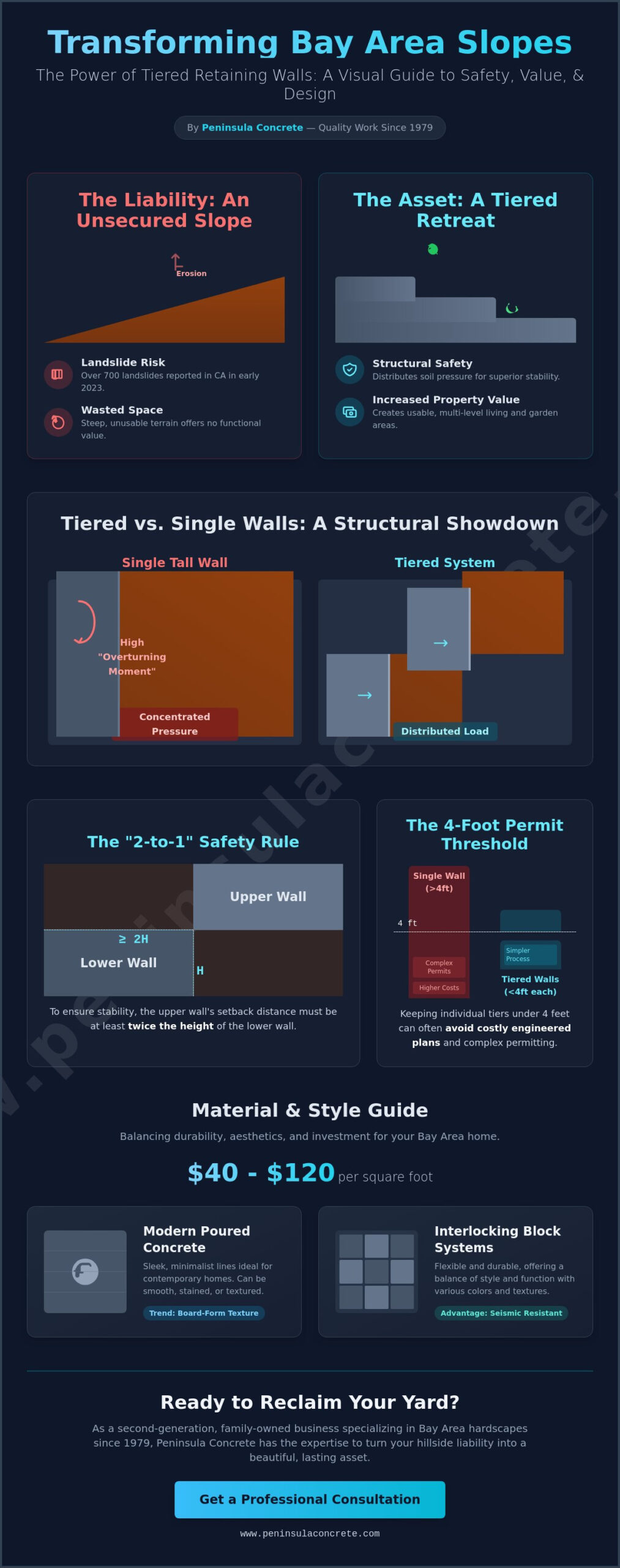
Retaining walls are structures designed to restrain soil to unnatural slopes, but a single, massive barrier isn’t always the best approach for the steep terrain of the San Francisco Peninsula. Tiered designs distribute the load across multiple footings. This significantly reduces the “overturning moment,” which is the physical force trying to tip the wall over from the top. By breaking one large incline into smaller steps, we ensure each structure handles a manageable amount of pressure. Peninsula Concrete has used these principles to build a reputation for honesty and high-quality work since 1979.
Erosion control is another critical benefit. During the atmospheric river events of early 2023, California saw over 10,000 landslides. A long, uninterrupted slope allows rainwater to gain velocity, stripping away topsoil and destabilizing the hill. Tiered walls act like speed bumps for water. They catch runoff and allow it to soak into the ground or move through integrated drainage systems safely. This protects your property from the soil washout common during wet Bay Area winters.
Homeowners exploring tiered retaining wall ideas often find that this multi-level approach is more cost-effective than a single tall wall. Building a structure over 4 feet tall in cities like San Jose or Oakland usually requires engineered plans and intensive permitting. Two smaller walls under this 4-foot threshold can often avoid these complex requirements. You save on high fees for stamped structural drawings while achieving a more beautiful, integrated look for your landscape.
The “Two-to-One” Rule for Tiered Safety
Structural independence is the key to a lasting hillside project. To ensure the top wall doesn’t add a surcharge load to the bottom one, we follow specific engineering ratios. The 2:1 setback rule requires the upper wall to be placed back at a horizontal distance equal to twice the height of the lower wall to prevent structural overlap. This ensures each tier stands on its own merit. Local slope gradients will ultimately dictate the exact distance between tiers to maintain this safety margin.
Maximizing Usable Yard Space
Tiering turns “dead zones” into functional assets. Instead of a steep hill you can’t walk on, you get flat shelves perfect for garden beds or seating areas. We recently completed a project in Redwood City where we reclaimed 400 square feet of hillside by replacing a failing 45-degree slope with three stone tiers. This created a level patio area that didn’t exist before. Vertical tiering provides the maximum square footage of flat land compared to sloped tiering. This allows you to get the most out of a small or difficult Bay Area lot.
Top Tiered Retaining Wall Ideas by Material and Style
Selecting the right materials for tiered retaining wall ideas requires balancing aesthetics with the engineering realities of 2026. Since August 2025, structural steel and raw material costs in the Bay Area have increased by 15% to 30%. This makes choosing a durable, low-maintenance material essential for your long-term investment. Whether you prefer the sleek look of modern concrete or the timeless texture of stone, the goal is a cohesive landscape that looks intentional. The average cost for these projects ranges from $40 to $120 per square foot, depending on the complexity and materials selected.
Modern Poured Concrete Tiers
Contemporary homes in neighborhoods like Menlo Park often benefit from the minimalist lines of poured concrete. Board-form concrete is a popular 2026 trend. It uses timber forms to create a high-end wood-grain texture on the wall surface. This provides the strength of concrete with a softer, organic appearance. We can also provide smooth finishes or custom stains to color-match the concrete to your existing patio or driveway for a seamless transition across your property.
Interlocking Paver and Segmental Block Systems
For many homeowners, interlocking concrete pavers and segmental blocks offer the best balance of style and function. These systems are technically “flexible” structures. This means they can withstand the Bay Area’s frequent seismic activity better than rigid, mortared walls that might crack under tectonic stress. Proper structural planning for tiered walls is easier with these modular blocks. They come in textures ranging from tumbled “old world” stone to smooth, sharp-edged modern profiles. If you’re looking for a safe, reputable choice, Peninsula Concrete can help you select a system that matches your property’s specific soil needs.
Natural Stone and Masonry Tiers
Natural stone remains a premium choice for creating a “built-into-nature” aesthetic. Local fieldstone or flagstone tiers blend beautifully into the wooded hillsides of Woodside or Portola Valley. We often recommend a hybrid approach for taller slopes. This involves using a reinforced concrete core for ultimate structural strength, faced with a natural stone veneer. This gives you the beauty of dry-stack masonry with the engineering reliability required for California’s steep slopes. These materials are unsurpassed in strength and flexibility, ensuring your garden lasts for decades.
Critical Structural Planning for Bay Area Hillside Tiers
Building on the steep hillsides of the San Francisco Peninsula requires more than just an eye for design. You have to account for the region’s unique geological hazards. Most Bay Area soil consists of expansive clay that swells significantly when wet and shrinks during our dry summers. This constant movement puts immense pressure on any structure. When you’re researching tiered retaining wall ideas, you must prioritize engineering that accounts for this soil behavior and California’s frequent seismic activity. At Peninsula Concrete, we’ve built a reputation for honesty and high-quality work since 1979 by designing walls that don’t just look good but stay standing during tectonic shifts.
Permit requirements are another hurdle for local homeowners. In cities like San Francisco, San Jose, and Oakland, any wall over 4 feet tall typically requires a building permit and stamped plans from a licensed civil engineer. Even shorter walls need approval if they support a “surcharge,” such as a driveway or a steep slope above the wall. As of February 2026, San Francisco has moved to the “PermitSF” digital portal to streamline these applications. Navigating these city-specific codes is why it’s vital to work with an experienced retaining wall contractor who understands the local regulatory landscape. We use “Concrete Thinking” to ensure every tier meets safety standards while maximizing your yard’s potential.
The Foundation of Success: Footings and Backfill
Deep footings are non-negotiable for tiered systems because they provide the anchor that prevents the entire hillside from sliding. For taller or more complex tiered retaining wall ideas, we often use geogrid. This high-strength polymer mesh reaches back into the hillside to reinforce the soil mass behind the blocks. Native soil should never be used as backfill because its high clay content retains water and expands, which can lead to wall failure. Instead, we use clean, crushed stone that allows for proper compaction and stability.
Advanced Drainage Systems for Tiered Walls
Water pressure, or hydrostatic pressure, is the leading cause of retaining wall failure in the Bay Area. During the heavy storms of early 2023, the state saw over 10,000 landslides, many caused by saturated soil. Our tiered designs include integrated French drains and perforated pipes behind every level to move water away from the structure. We also install weep holes in the wall face to provide an exit point for trapped moisture. Managing surface runoff between tiers is equally important to prevent the lower levels from becoming overwhelmed during a downpour.
Functional Enhancements: Lighting, Steps, and Greenery
Once the structural engineering is settled, you can focus on the features that make your yard truly livable. Integrated stairways are essential for creating a natural flow between different levels. Without them, your tiers are just beautiful barriers rather than accessible zones. We often design wide, masonry steps that match the wall material to ensure a unified look across the property. Safety is also a priority for hillside projects. If a tier creates a drop of more than 30 inches, local Bay Area building codes typically require a railing or decorative fence. Planning these safety features early in the design phase prevents awkward, costly retrofits after the masonry is finished.
Building for the future requires more than just strong footings. You should always plan for irrigation and electrical conduit before the concrete sets or the stones are laid. This allows you to hide wires for lighting and tubes for drip systems inside the wall structure itself. It’s much harder to add these features once the hardscape is complete. Our team takes a “Concrete Thinking” approach by anticipating these needs during the initial planning phase. This ensures your tiered retaining wall ideas result in a space that’s as functional as it is beautiful. Peninsula Concrete has provided quality work since 1979, and we know that these small details make the difference between a simple wall and a professional outdoor living space.
Integrated Hardscape Lighting
Undercap lights are a top design choice for 2026. These small, discreet fixtures hide under the lip of the wall cap to illuminate paths and tiers at night without creating glare. Low-voltage wired systems are generally more reliable for the Bay Area’s foggy coastal nights than solar alternatives. Lighting also serves an aesthetic purpose by highlighting the unique textures of your masonry. Using “grazing” light techniques shows off the depth of natural stone or the clean lines of stamped concrete, creating a dramatic visual impact after sunset.
Planting Strategies for Tiered Gardens
Softening the hardscape is vital for a balanced, inviting look. We recommend drought-tolerant California native plants like Manzanita or Ceanothus to keep maintenance low while supporting local biodiversity. Cascading plants like rosemary or creeping thyme work wonders when they spill over the edges of masonry tiers, masking the sharp transitions between levels. These terraced planters offer better soil health than a single slope. The flat surface prevents water from running off, which allows for deeper root growth and better hydration for your greenery.
If you’re ready to transform your steep hillside into a functional masterpiece, start your project today with Peninsula Concrete for expert design and installation.
Quality Work Since 1979: The Peninsula Concrete Advantage
Building a multi-level landscape on the San Francisco Peninsula is a significant investment that requires a contractor with deep local roots. At Peninsula Concrete, we’ve built a reputation for honesty and high-quality work since 1979. We aren’t a faceless corporation. We’re a second-generation, family-owned business with a personal stake in every project we complete. Our “Concrete Thinking” philosophy means we look beyond the surface to solve the underlying engineering challenges of your hillside. We handle the heavy lifting, from the initial site preparation and complex drainage installation to the final masonry finish.
When you’re evaluating different tiered retaining wall ideas, the experience of your installer is the most important factor. Our team understands how to manage the expansive clay and seismic loads unique to Redwood City and the surrounding communities. We don’t just build walls. We create durable, safe structures that stand the test of time. Our commitment to quality work since 1979 ensures that your new outdoor living space will be a source of pride for decades. We take great pride in our heritage and the long-term relationships we’ve built with homeowners across the SF Peninsula.
A Legacy of Durability
Our heritage began in 1979, and that longevity is a mark of proven Bay Area expertise. We focus on unsurpassed strength in every hardscape project we undertake. Whether we’re installing interlocking pavers or natural stone masonry, we use the highest-quality materials and industry best practices. Our local reputation is our most valuable asset. We know that our neighbors in the Peninsula expect reliability and craftsmanship. We deliver on that promise with every tier we build, ensuring your property remains stable and beautiful through every California season.
Start Your Project Today
You don’t have to settle for a steep, unusable backyard. We invite you to view our gallery of local Peninsula projects to see how we’ve helped other homeowners reclaim their land with creative tiered retaining wall ideas. A professional estimate is the first step toward a safe and functional tiered system. Our team will evaluate your specific slope, soil conditions, and drainage needs to provide a clear, honest path forward. Contact Peninsula Concrete Contractors for a free estimate to begin your transformation. Let us help take your project from planning to success.
Secure Your Property and Reclaim Your Land Today
Turning a steep Bay Area slope into a multi-level garden requires a blend of precise engineering and creative vision. We’ve explored how a tiered approach manages soil pressure more effectively than a single high wall, especially in our region’s expansive clay. By following the 2:1 setback rule and integrating professional drainage systems, you protect your home from the erosion risks seen during the 10,000 landslides reported across California since early 2023. These tiered retaining wall ideas provide the structural foundation needed to turn wasted vertical space into beautiful, usable zones for dining or gardening.
Peninsula Concrete is a 2nd-generation, family-owned business that has specialized in SF Peninsula hardscaping and drainage since 1979. We use “Concrete Thinking” to ensure every masonry project is as durable as it is attractive. Our team is ready to help you navigate local seismic requirements and city-specific permits to create a structure that lasts for decades. Start your tiered wall project with a free estimate from Peninsula Concrete Contractors. We look forward to helping you take your hillside project from a plan to a lasting success.
Frequently Asked Questions
Do I need a permit for a tiered retaining wall in the Bay Area?
Yes, you typically need a permit if any individual wall in the system exceeds 4 feet in height or if a wall supports a surcharge like a driveway or a steep slope. In cities like San Francisco, San Jose, and Oakland, the 4-foot threshold is the standard for requiring a building permit. Shorter walls in Berkeley may require a permit at just 3 feet if they support a surcharge, so checking local codes is essential.
How much distance should be between tiered retaining walls?
The horizontal distance between tiers should be at least twice the height of the lower wall to ensure structural independence. This 2:1 setback ratio prevents the upper wall from loading the lower one with extra soil pressure. If your property’s gradient is too steep to allow for this distance, a licensed civil engineer must design the system to handle the overlapping loads safely.
What is the best material for a tiered retaining wall on a steep slope?
Interlocking concrete pavers and segmental blocks are the superior choice for steep slopes because they create a flexible structure. These systems handle the Bay Area’s seismic activity better than rigid masonry because they can shift slightly without cracking. For homeowners exploring tiered retaining wall ideas that prioritize longevity, these modular systems offer the best balance of drainage, strength, and ease of repair.
Can I build a tiered retaining wall myself or should I hire a professional?
You should hire a professional for hillside projects because of the high risk of structural failure and landslides. California saw over 10,000 landslides during the storms of early 2023, proving that hillside stability is a serious concern. A professional contractor handles the complex excavation, soil compaction, and drainage requirements that are difficult for DIYers to execute correctly on a steep incline.
How do tiered retaining walls help with drainage and erosion?
Tiered walls act as speed bumps for rainwater, breaking up a long slope to prevent surface water from gaining the velocity that causes erosion. Each level provides a flat “shelf” that allows water to soak into the ground or enter a controlled drainage system. By using tiered retaining wall ideas that include French drains behind every level, you prevent hydrostatic pressure from destabilizing your hillside.
What is the maximum height for a tiered retaining wall without an engineer?
The maximum height is generally 4 feet measured from the bottom of the footing to the top of the wall. If any wall in your tiered system is taller than this, or if a wall of any height supports a surcharge like a fence or a slope, an engineer is required. Most Bay Area jurisdictions require stamped plans for these complex scenarios to ensure the structure meets seismic safety standards.
How long does it take to install a tiered retaining wall system?
A typical residential project takes between one and three weeks to complete from excavation to the final finish. The timeline depends on the number of tiers, the total square footage, and the ease of access for heavy equipment. Projects that require extensive site preparation or the installation of complex drainage systems may take longer, especially during the rainy winter months.
Will a tiered retaining wall increase my property value?
Yes, a professionally installed tiered wall increases property value by transforming unusable slopes into functional outdoor living space. In land-scarce regions like the SF Peninsula, adding level areas for gardens or patios provides a significant return on investment. It also acts as a vital structural improvement that protects the rest of the property from soil movement and erosion damage.