
A walkway does more than connect two points; it sets the first impression for your entire home. While you may envision a path with timeless elegance, the practical questions can be daunting. Will it fit my home’s style? Is the investment worth it compared to pavers? And how can I be sure it won’t become a cracked, weed-filled headache in a few years? For Bay Area homeowners seeking lasting value and unmatched curb appeal, professionally installed natural stone walkways offer a premier solution that is both beautiful and exceptionally durable.
This complete guide is designed to provide clear, straightforward answers to those very questions. Here, you will discover the best types of stone for our local climate, from classic flagstone to elegant bluestone. We’ll provide an honest comparison of costs against alternatives like brick and concrete pavers, helping you make a sound financial decision. Finally, we’ll demystify the professional installation process from start to finish, so you can move forward with confidence. Our goal is to equip you to choose a high-quality walkway that will be a source of pride for decades to come.
Key Takeaways
- Understand how different stone types like flagstone and bluestone complement various Bay Area architectural styles.
- Clearly compare natural stone to pavers and brick on key factors like long-term cost, durability, and required maintenance.
- Learn why a professionally prepared base is critical for the longevity of natural stone walkways in Bay Area soil and how it impacts your total project cost.
- Get a realistic breakdown of installation costs, from material selection and site preparation to professional labor.
The Timeless Appeal: Why Choose a Natural Stone Walkway?
When selecting a material for your home’s walkway, the choice goes far beyond simple curb appeal. It’s about creating a feature that offers architectural authenticity and a genuine connection to your landscape. While manufactured products serve a purpose, natural stone provides a timeless quality and tangible value that other materials cannot match. It’s a deliberate choice for homeowners who prioritize longevity, unique character, and a seamless integration with the natural environment.
A well-crafted natural stone walkway is more than a path; it is a permanent enhancement to your property’s heritage and a significant contributor to its long-term value.
Unmatched Beauty and Character
The most immediate advantage of natural stone is its inherent, one-of-a-kind beauty. Unlike uniform concrete pavers or bricks, no two pieces of stone are identical. Each one features unique colors, subtle veining, and rich textures shaped over millennia. Materials like Flagstone, prized for its natural, irregular shapes, bring an organic feel that complements garden designs perfectly. This individuality ensures your walkway is a truly custom feature. Furthermore, while manufactured materials fade and wear down over time, stone develops a beautiful patina, deepening in character and improving with age. This makes it a versatile choice that enhances everything from a rustic Craftsman home to a formal Colonial estate.
A Durable, Long-Term Investment
Choosing natural stone is a decision for the future. Its durability is simply in a different class compared to most other materials. While concrete pavers may last for a few decades, properly installed natural stone walkways can endure for a century or more with minimal maintenance. This material stands up to the harshest conditions, offering superior resistance to fading from UV exposure, weathering from rain and snow, and the damaging effects of freeze-thaw cycles. This resilience means you are investing in a walkway that will not only look good for years but will also perform reliably. In the rare event a stone is damaged, it can be individually lifted and replaced, a simple repair that is far more difficult with poured concrete.
Exploring Your Options: Popular Stone Types for Bay Area Walkways
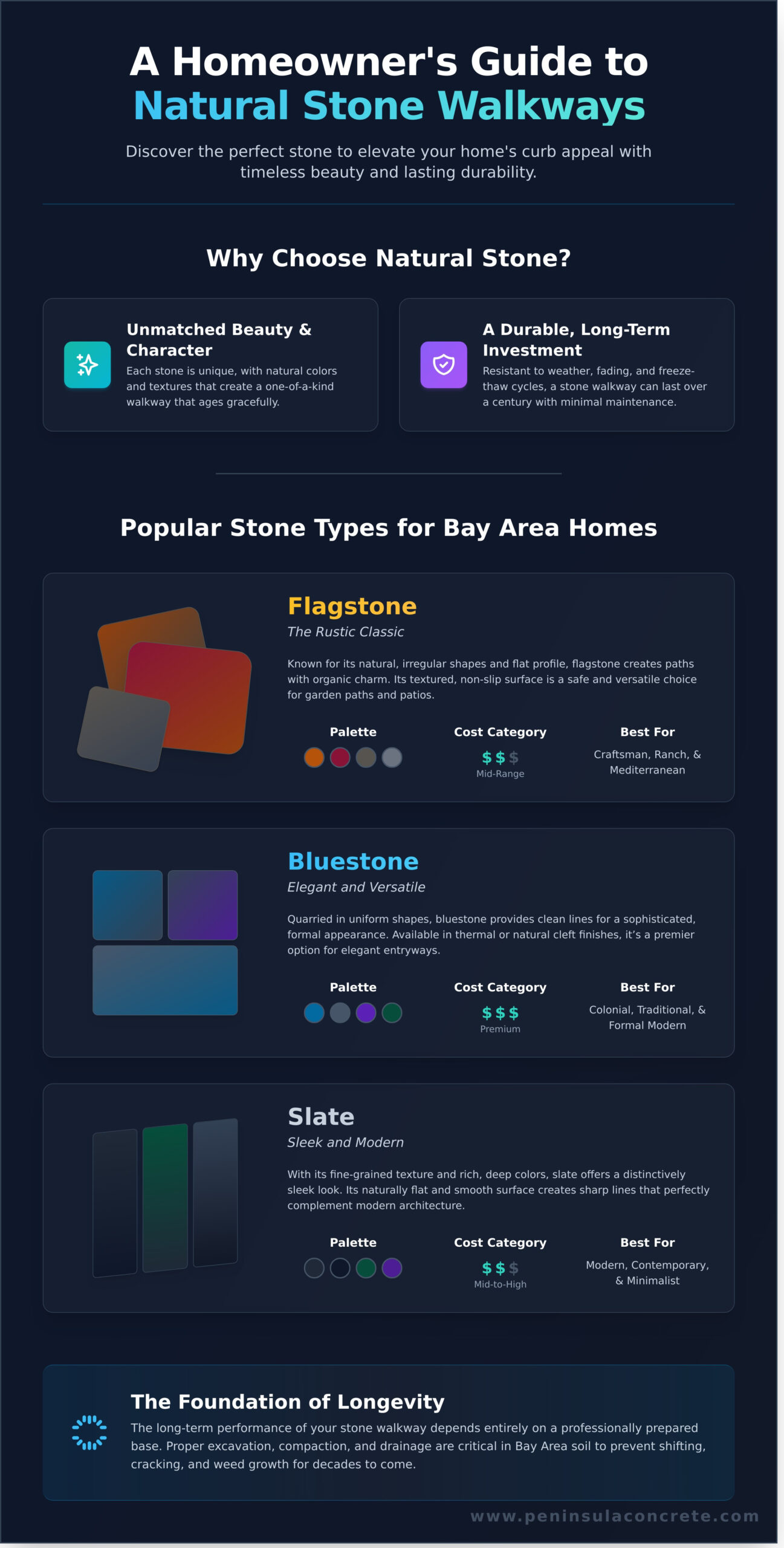
When designing high-quality natural stone walkways, the material you choose is foundational to the project’s long-term success and aesthetic appeal. In the Bay Area, we are fortunate to have access to a wide range of durable, beautiful stones sourced both locally and from reputable quarries. To ensure your selection meets proven benchmarks for performance and safety, it’s wise to consult resources like the official Natural Stone Institute standards. Let’s explore three of the most reliable and popular choices for Northern California homes.
Flagstone: The Rustic Classic
Known for its natural, irregular shapes and flat profile, flagstone is a perennial favorite for creating paths with organic, rustic charm. Its naturally textured, non-slip surface makes it an excellent, safe choice for garden paths, patios, and poolside areas. This versatility allows it to bridge both informal and structured landscape designs with ease.
- Palette & Shape: Earthy tones of buff, red, brown, and gray; naturally irregular shapes.
- Cost Category: Mid-Range
- Best For: Craftsman, Ranch, and Mediterranean-style homes.
Bluestone: Elegant and Versatile
For a more refined and formal appearance, Pennsylvania Bluestone is an exceptional choice. Quarried in uniform rectangular or square shapes, it provides clean lines and a sophisticated feel. It is available in two main finishes: a “thermal” finish with a uniform, slip-resistant texture, and a “natural cleft” finish that has a more organic, slightly uneven surface. Its durability makes it a premier option for elegant entryways.
- Palette & Shape: Blue-gray hues, often with hints of lilac, green, or brown; uniform quarried shapes.
- Cost Category: Premium
- Best For: Colonial, Traditional, and formal modern homes.
Slate: Sleek and Modern
Slate offers a distinctively sleek and contemporary look, characterized by its fine-grained texture and rich, deep colors. Its surface is naturally flat and smooth, creating sharp, clean lines that complement modern architecture perfectly. While remarkably dense and durable, some varieties of slate may benefit from a sealant to protect against staining and moisture, ensuring its deep color remains vibrant for years to come.
- Palette & Shape: Dark grays, blacks, greens, and purples; typically cut into uniform tiles.
- Cost Category: Mid-Range to Premium
- Best For: Modern, Contemporary, and Mid-Century Modern homes.
Natural Stone vs. Alternatives: A Head-to-Head Comparison
Choosing the right material for your walkway is a significant decision that impacts your home’s curb appeal, long-term durability, and overall budget. While the beauty of a natural stone path is undeniable, it’s wise to compare it directly against other high-quality options like traditional brick and modern interlocking concrete pavers. Understanding the key differences in cost, appearance, and maintenance will help you make a confident investment in your property.
Natural Stone vs. Brick Walkways
Brick provides a timeless, uniform look with its classic running bond and herringbone patterns. It’s a durable choice that has been trusted for centuries. However, its manufactured color can be susceptible to fading over years of sun exposure, and individual bricks can sometimes chip or spall in harsh freeze-thaw cycles. Natural stone, in contrast, offers an organic, one-of-a-kind elegance. Each piece has unique textures and color variations, and since the color runs through the entire stone, it will never fade.
Natural Stone vs. Interlocking Concrete Pavers
As a common, budget-friendly alternative, interlocking pavers offer impressive strength and a vast array of manufactured shapes and colors. Their uniformity makes for a clean, consistent surface. The primary trade-off is character; pavers cannot replicate the unique, natural depth and variation found in stone. While high-quality pavers hold up well, their surface color can wear or fade over time, whereas the beauty of natural stone walkways is permanent and deep-seated in the material itself.
To simplify your decision, here is a head-to-head summary of the most important factors:
| Feature | Natural Stone | Brick | Concrete Pavers |
|---|---|---|---|
| Aesthetics | Unique, organic, high-end beauty. No two paths are identical. | Classic, geometric, and traditional. A timeless, uniform look. | Versatile and uniform. Wide range of manufactured styles. |
| Durability | Extremely durable and long-lasting. Color is permanent and will not fade. | Very durable, but can be prone to chipping or spalling over time. | Strong and flexible, but surface color may fade with UV exposure. |
| Installation & Cost | Highest initial investment due to material cost and intensive labor. | Moderate to high cost; requires skilled labor for proper installation. | Lowest initial investment; efficient and straightforward installation. |
| Long-Term Value | Excellent. Adds significant, lasting value and curb appeal to a property. | Good. A classic material that holds its value well over time. | Good. A practical and cost-effective upgrade for any home. |
While alternatives may have a lower initial price tag, a well-built stone walkway delivers unmatched character and longevity. The investment up front often translates to superior performance and timeless appeal that enhances your property for decades to come. Confused about materials? Let our experts guide you.
The Installation Process: What to Expect from a Professional Crew
A beautiful natural stone walkway is an investment in your home’s value and curb appeal, but its true longevity lies beneath the surface. The installation process is far more than just laying stones; it’s a structural project that demands precision. Especially in the Bay Area, where expansive clay soils are common, a proper foundation is not just recommended-it’s essential for preventing shifting, cracking, and water damage. At Peninsula Concrete Contractors, we’ve been building durable hardscapes since 1979, and we believe in transparency throughout the construction process.
Step 1: Site Preparation and Foundation
The first and most critical step is creating an unshakeable base. Our crew excavates the area to a specified depth, removing poor soil and creating space for a multi-layered foundation. We lay a geotextile fabric to prevent soil from mixing with the base, then build up and compact several inches of aggregate. This creates a stable, load-bearing platform. Proper grading is established to ensure water always flows away from your home’s foundation, protecting your property.
Step 2: Setting the Stones
With a solid foundation in place, the artistry begins. Depending on the project, we lay a setting bed of sand, gravel, or mortar. Each stone is then carefully placed, leveled, and fitted to create tight, consistent joints. This step requires a craftsman’s eye, especially when creating elegant curves or intricate patterns with irregular flagstone. The goal is to achieve a surface that is both visually stunning and perfectly stable underfoot.
Step 3: Jointing and Finishing Touches
The final step is to lock the stones together and apply the finishing touches. The joints are filled to secure the stones and prevent weed growth. Your primary options include:
- Standard Sand: A traditional, economical choice.
- Polymeric Sand: A modern solution with binders that harden to resist weeds and erosion.
- Mortar: Provides a rigid, permanent joint for a formal look.
After jointing, we thoroughly clean the surface, discuss optional sealing to enhance color and protect against stains, and ensure the entire work site is left immaculate. This commitment to quality from start to finish is how we build natural stone walkways that last for decades. Contact us today to start your project.
Budgeting & Maintaining Your Natural Stone Walkway
A natural stone walkway is a premium investment in your home’s curb appeal and value. While the initial cost is higher than materials like brick or concrete, understanding the budget factors and the straightforward maintenance plan reveals its exceptional long-term worth. With proper planning and minimal care, your walkway will deliver timeless beauty for decades.
Factors That Influence the Cost
The final price for high-quality natural stone walkways is determined by several key variables. As a family-owned business with decades of experience, we believe in transparent pricing based on the specific requirements of your property.
- Material Cost: The type of stone you select is the largest factor. Common options like irregular flagstone are often more budget-friendly than premium, uniformly cut stones like bluestone or limestone.
- Labor & Complexity: A simple, straight path requires less cutting and fitting than a winding walkway with intricate patterns or steps. The more complex the design, the more skilled labor is involved.
- Site Access & Preparation: Proper installation starts with a solid base. Costs can increase if your site requires significant grading, excavation, or is difficult for our team and equipment to access.
- Project Size: While a larger walkway has a higher total cost, the price per square foot may decrease due to efficiencies in material purchasing and labor deployment.
Simple Maintenance for Lasting Beauty
One of the greatest advantages of natural stone is its durability and low-maintenance nature. Protecting your investment doesn’t require a demanding schedule; a few simple, seasonal tasks are all that’s needed to keep it looking its best.
- Routine Cleaning: Regularly sweep away leaves and debris to prevent staining. An occasional rinse with a garden hose is usually enough to wash away dirt and dust.
- Stains and Growth: For organic growth like moss or algae in shaded areas, a gentle scrub with a stiff-bristle brush and a mild, stone-safe cleaner is effective. Address spills like oil or grease promptly.
- To Seal or Not to Seal: Sealing is optional. It can enhance the stone’s color and provide extra protection against stains, but it requires reapplication every few years. Many homeowners prefer the natural, weathered appearance of unsealed stone.
- Check Joint Sand: Once a year, inspect the polymeric sand or mortar in the joints. If you see any gaps, simply sweep in new sand to keep the stones secure and prevent weed growth.
Understanding these factors allows you to plan confidently. To move from an idea to a concrete plan, the next step is to get a precise quote tailored to your vision and property. Get a detailed, no-obligation estimate for your project.
Your Path to Lasting Curb Appeal Starts Here
As we have explored, choosing the right material and ensuring professional installation are the key steps to creating a durable and stunning first impression. For Bay Area homeowners, natural stone walkways offer an unmatched combination of timeless elegance and long-lasting value, elevating your property in a way that manufactured alternatives simply cannot replicate.
Transforming this vision into reality requires a partner with proven expertise. At Peninsula Concrete, we are a local, 2nd-generation, family-owned business dedicated to high-quality craftsmanship. Our commitment is reflected in our A+ rating from the Better Business Bureau and our long-standing reputation for providing Quality Work Since 1979.
Ready to upgrade your entrance? Contact us for a free project estimate. Let our family help yours build a beautiful, lasting first impression you’ll be proud of for years to come.
Frequently Asked Questions About Natural Stone Walkways
Is a natural stone walkway slippery when it rains?
The slip resistance of a stone walkway depends on the stone’s finish. Stones with a natural, textured surface, such as slate or flamed granite, provide excellent traction even when wet. In contrast, highly polished surfaces like honed marble can become slippery. Selecting the right material is a critical step, ensuring your walkway is not only beautiful but also safe for your family in all weather conditions. We always recommend textured finishes for outdoor applications.
How long does a professionally installed stone walkway last?
A professionally installed stone walkway is a long-term investment in your property. When built on a proper, well-compacted base, these walkways can easily last for generations-often 50 years or more. The durability of the stone itself is unmatched. The key to this longevity is expert craftsmanship in the foundation and jointing, which prevents shifting and ensures the structure remains sound through decades of use and changing seasons. Quality installation is everything.
Will weeds grow between the stones of my walkway?
Weeds can potentially grow in the joints of any walkway if not installed correctly. However, we prevent this by using high-quality polymeric sand. This specialized sand is swept into the joints and then activated with water, hardening to form a durable yet flexible bond. This creates a powerful barrier that deters weed growth and insect infestation, keeping your walkway looking pristine with minimal maintenance. Proper jointing is a hallmark of a professional installation.
Can I install a natural stone walkway myself to save money?
While a DIY installation may seem like a way to reduce costs, it often leads to problems down the road. Installing natural stone walkways correctly requires specialized knowledge in site excavation, base compaction, and proper drainage. The stones are heavy, and an improper foundation will cause shifting and uneven surfaces. Hiring an experienced professional ensures the job is done right the first time, guaranteeing a durable, beautiful result that avoids costly future repairs.
What is the best way to clean a natural stone walkway without damaging it?
For routine cleaning, simply sweep away debris and rinse with a garden hose. To remove dirt or stains, use a pH-neutral cleaner specifically designed for natural stone and a soft-bristle brush. It is critical to avoid acid-based cleaners, like vinegar, or high-pressure power washers, as these can etch the stone’s surface and dislodge the jointing sand. Gentle, consistent care is the best way to preserve your walkway’s natural beauty for years to come.
Does a natural stone walkway require a concrete base?
Not always. While some walkways are set on a concrete slab (a wet-set method), the most common professional method is a dry-set installation. This involves building a deep, compacted base of aggregate and a leveling layer of sand. This flexible base provides excellent drainage and can adapt to minor ground movements without cracking. The best method depends on your specific soil conditions and intended use, a determination best made by an experienced contractor.