
A classic brick driveway offers a timeless curb appeal that few materials can match. But for many Bay Area homeowners, that vision comes with practical questions. Is real brick strong enough for daily vehicle traffic? What about long-term maintenance like weeds and shifting? And how do the costs compare to other options? Choosing brick pavers for your driveway is a significant investment in your home, and you deserve clear, honest answers before you commit.
A professionally installed border is the finishing touch that elevates a driveway from good to great. Using a contrasting color or a different type of paver can create a beautiful frame for the main pattern. Laying the border bricks in a “soldier course” (standing vertically) or a “sailor course” (laid lengthwise) adds a distinct, custom look. For a grander entrance, consider incorporating a flared entry or a decorative apron where the driveway meets the street. Visualizing these combinations can be difficult, which is why we recommend looking at real-world applications; for example, the portfolio from Artech Landscaping & Construction offers excellent design inspiration. See examples of our work in our project gallery to find inspiration for your own home.
As a 2nd-generation, family-owned business serving our community since 1979, we’ve helped countless homeowners navigate these decisions. In this complete guide, we share our decades of experience. We will explore the distinct advantages and potential drawbacks of brick, break down the true project costs, and showcase the beautiful design patterns available. Our goal is to provide you with the expert knowledge needed to decide if a durable, high-quality brick paver driveway is the right choice to enhance your home’s value and beauty for years to come.
Key Takeaways
- Understand the critical differences between genuine clay bricks and concrete pavers to select the material that best suits your durability and aesthetic goals.
- Weigh the upfront investment of a brick paver driveway against its long-term value, including superior strength and simple, cost-effective repairs.
- Discover how classic patterns like herringbone and basketweave can be used with brick pavers for your driveway to dramatically enhance your home’s curb appeal.
- Learn why a professionally prepared base is the most critical factor for an installation that is built to last for decades without shifting or sinking.
Understanding ‘Brick Pavers’: Genuine Clay vs. Concrete Pavers
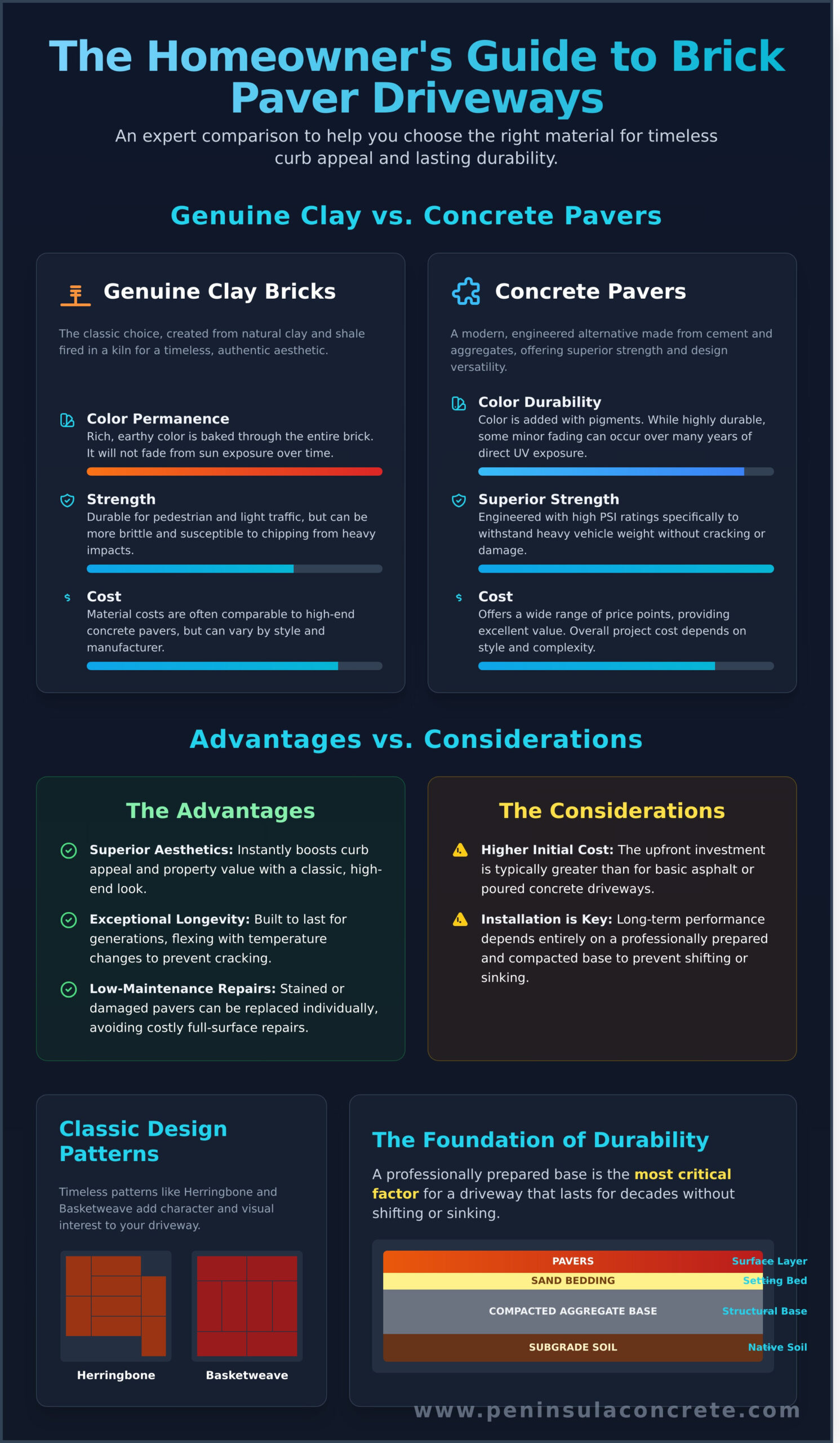
When you begin researching brick pavers for driveway projects, you’ll quickly discover two distinct categories: genuine clay bricks and modern concrete pavers. While the term ‘brick paver’ is often used interchangeably for both, their material composition is fundamentally different. This distinction is critical because it dictates long-term performance, appearance, and maintenance needs. Making an informed choice between these two options is the first and most important decision for ensuring your new driveway meets your expectations for durability and style.
Genuine Clay Brick Pavers: The Classic Choice
Authentic clay brick pavers are made from a mixture of natural clay and shale that is molded and fired in a high-temperature kiln. This process creates a classic, durable paver with a rich, earthy color that permeates the entire brick. Because the color is natural to the material itself, it will not fade over time due to UV exposure, maintaining its timeless aesthetic for decades. While beautiful, clay bricks can be more brittle than their concrete counterparts, making them susceptible to chipping under heavy impact.
Interlocking Concrete Pavers: The Modern Alternative
Interlocking concrete pavers are a highly engineered alternative, manufactured from a precise mixture of cement, aggregates, and water. They are molded and cured to achieve exceptional strength and durability, making them an ideal choice for high-traffic areas like driveways. Available in a vast array of shapes, sizes, and textures, they offer unparalleled design flexibility. Color is added with pigments during the manufacturing process, which can experience some fading over many years of direct sun exposure.
Key Differences at a Glance: Color, Strength, and Cost
Choosing the right material depends on balancing aesthetics, performance, and budget. The fundamental differences between clay vs. concrete pavers directly impact these factors. While genuine clay offers unmatched color permanence, concrete pavers provide superior strength and design versatility, which is why they are a leading choice when installing brick pavers for driveway applications. Here’s a simple breakdown:
- Color: Clay brick color is permanent and baked-in. Concrete paver color comes from added pigments and may fade slightly over a long period.
- Strength: Concrete pavers are engineered with a high PSI (pounds per square inch) rating, specifically to withstand the weight of vehicles without cracking. Clay bricks are strong but generally more brittle.
- Cost: Material costs for both can be surprisingly similar. However, the overall project cost is heavily influenced by the specific product chosen and the complexity of the installation.
Pros and Cons of a Brick Paver Driveway
Choosing the right material for your driveway is a significant decision that impacts your home’s curb appeal, budget, and long-term maintenance. While brick pavers for driveway installations offer a timeless and elegant look, it’s essential to weigh their benefits against the potential drawbacks. This balanced overview will help you make an informed choice based on factors like durability, cost, and upkeep.
The Advantages: Unmatched Curb Appeal and Durability
For many homeowners, the benefits of a brick paver driveway far outweigh the considerations. They provide a high-end finish and proven performance that few other materials can match. Here are the primary advantages:
- Superior Aesthetics: Brick pavers offer a classic, sophisticated appearance that instantly elevates your home’s exterior. The rich colors and traditional patterns create a warm, inviting entrance that significantly boosts curb appeal and property value.
- Exceptional Longevity: A properly installed brick driveway is built to last for generations. Unlike solid slabs, individual pavers can flex with seasonal temperature changes, reducing the risk of large-scale cracking.
- Low-Maintenance Repairs: Should a paver become stained by oil or damaged by a heavy impact, the solution is simple. Individual bricks can be removed and replaced without the need to resurface the entire driveway.
- Permanent Color Retention: Genuine clay bricks are fired in a kiln, which bakes their color through the entire paver. This means they will not fade from UV exposure, retaining their beautiful appearance year after year.
The Disadvantages: What to Consider Before Committing
To ensure you have a complete picture, it’s crucial to understand the potential challenges. These factors are often related to the initial investment and the critical importance of a high-quality installation.
- Higher Initial Cost: The upfront investment for brick pavers is typically greater than for asphalt or poured concrete. This is due to both the cost of the materials and the more labor-intensive installation process.
- Installation Sensitivity: The success of your driveway depends entirely on the quality of the base. A poorly prepared foundation is the number one cause of failure. The long-term stability of the surface relies on a meticulous professional installation process that ensures proper excavation, compaction, and drainage.
- Ongoing Maintenance Needs: While individual repairs are easy, the joints between pavers require attention. Over time, the joint sand can wash out and will need to be replenished to keep the pavers locked in place and to prevent weed growth. Sealing the driveway every few years is also recommended to protect against stains.
- Potential for Shifting or Settling: If the base is not expertly installed, pavers can shift or sink over time, creating an uneven surface. This is especially true in climates with heavy rainfall or freeze-thaw cycles if the foundation is not built to withstand those conditions.
Design and Pattern Ideas for Your Brick Driveway
Beyond the practical benefits of durability and low maintenance, one of the greatest advantages of choosing brick pavers for your driveway is the incredible design versatility. A well-designed brick driveway becomes a true extension of your home, enhancing its curb appeal and reflecting its architectural character. From classic patterns to custom color blends, you have the opportunity to create a stunning first impression that is uniquely yours.
Classic Laying Patterns: From Herringbone to Basket Weave
The pattern you choose for your brick pavers for driveway installation is not just an aesthetic decision; it’s a structural one. For surfaces that must handle the weight and movement of vehicles, certain patterns provide superior strength due to their interlocking nature.
- Herringbone (45° or 90°): This pattern creates a strong, interlocking surface that distributes weight effectively, preventing shifting over time. It is the gold standard for driveway durability.
- Running Bond: A simple, linear pattern that offers a clean and classic look. While popular, it provides less interlocking strength than herringbone, making it better suited for patios and walkways.
- Basket Weave: By arranging bricks in pairs to form squares, this pattern creates a charming, textured look perfect for homes with a traditional or cottage-style feel.
Choosing the Right Color and Texture
The right color and texture will tie your driveway into your home’s overall design. We recommend selecting a color that complements your home’s exterior, roof, and trim. In the Bay Area, this could mean warm, traditional reds for a Craftsman home, earthy browns for a Spanish-style residence, or sleek charcoal tones for a modern aesthetic. The unique Bay Area light-from bright sun to coastal fog-can also affect how colors appear, a factor our experienced team always considers. You can also choose between pavers with clean, sharp edges for a formal look or tumbled pavers with a weathered texture for an established, rustic feel.
Enhancing Your Design with Borders and Edging
A professionally installed border is the finishing touch that elevates a driveway from good to great. Using a contrasting color or a different type of paver can create a beautiful frame for the main pattern. Laying the border bricks in a “soldier course” (standing vertically) or a “sailor course” (laid lengthwise) adds a distinct, custom look. For a grander entrance, consider incorporating a flared entry or a decorative apron where the driveway meets the street. Visualizing these combinations can be difficult, which is why we recommend looking at real-world applications. See examples of our work in our project gallery to find inspiration for your own home.
The Professional Installation Process: Built to Last
A brick paver driveway is more than just a surface; it’s a complex, interlocking system. While the final pattern is what you see, the long-term performance and durability depend entirely on the unseen work below. A professional installation isn’t about rushing to lay bricks-it’s about building a foundation engineered to withstand decades of vehicle traffic, seasonal changes, and the elements. This meticulous process is what separates a beautiful driveway from one that fails prematurely.
Step 1: Excavation and Base Preparation
The foundation is everything. This is the most critical phase for ensuring your driveway doesn’t sink, shift, or develop ruts. We begin by excavating the area to a proper depth, typically 8 to 12 inches for a driveway that needs to support vehicles. We then build the base in layers using a high-quality aggregate, compacting each layer to achieve maximum density. This solid base provides unwavering support and is graded for proper drainage-a crucial detail for handling heavy Bay Area winters and preventing water damage.
Step 2: Bedding Sand and Paver Laying
Once the base is perfectly compacted and graded, we lay a uniform 1-inch layer of coarse bedding sand. This sand creates a firm, even cushion for the pavers to rest in. Our skilled craftsmen then meticulously lay each brick according to your chosen pattern, using string lines to guarantee perfectly straight joints and clean lines. Any pavers along the edges or curves are precisely cut to ensure a tight, professional fit throughout the entire installation.
Step 3: Edge Restraints, Compaction, and Jointing Sand
To lock the entire system together, we install durable edge restraints made of concrete or high-grade plastic. These restraints act as a permanent frame, preventing the pavers from spreading or shifting over time. Next, a heavy plate compactor is run over the entire surface, which sets the bricks firmly into the sand bed. Finally, we sweep polymeric sand into every joint. When activated with water, this specialized sand hardens to lock the brick pavers for driveway in place, forming a powerful barrier that resists weed growth and insect intrusion.
This proven, step-by-step process is how we deliver a finished product that is not only beautiful but built with the integrity to last. For quality work you can depend on, contact our team today.
Brick Paver Driveway Cost and Long-Term Maintenance
Understanding the financial commitment and upkeep is essential when choosing a new driveway. While brick pavers have a higher initial cost than some alternatives, they represent a durable, long-term investment in your property’s value and curb appeal. With straightforward maintenance, your driveway will retain its beauty and function for decades.
What Does a Brick Paver Driveway Cost in the Bay Area?
In the San Francisco Bay Area, homeowners can typically expect the professional installation of brick pavers for driveway projects to range from $20 to $40 per square foot. The final price depends on several key factors, including the total square footage, the complexity of the design pattern, site accessibility, and the amount of preparation work required, such as grading or removing an old surface. While this is more than poured concrete or asphalt upfront, pavers offer superior longevity and lower repair costs, as individual bricks can be replaced if damaged.
Routine Maintenance for a Lasting Driveway
Protecting your investment is simpler than you might think. A high-quality brick paver driveway requires minimal, routine care to stay in pristine condition. We recommend a simple maintenance schedule:
- Regular Sweeping: Keep the surface free of leaves, dirt, and debris to prevent staining and organic growth.
- Occasional Rinsing: Use a garden hose to wash away grime. For a deeper clean, a pressure washer on a low setting can be used, but be careful not to dislodge the joint sand.
- Spot Treatment: Address oil or fluid leaks immediately with a degreaser formulated for pavers to prevent deep-set stains.
- Check Joint Sand: Every 1-2 years, inspect the sand-filled joints. If they appear low, top them off with polymeric sand to keep pavers locked in place and prevent weeds.
To Seal or Not to Seal? Making the Right Choice
Sealing your brick paver driveway is an optional step, but one we often recommend. A quality sealer enhances the natural color of the bricks, provides a protective barrier against stains, and helps stabilize the joint sand. The primary drawbacks are the added cost and the need for re-application every 3-5 years. Ultimately, the decision depends on your aesthetic preference and desired level of protection.
Ready to see how a beautiful and durable brick paver driveway can transform your home’s entrance? Request a free, no-obligation estimate for your project.
Choose Lasting Quality for Your Brick Paver Driveway
Choosing brick pavers for your driveway is a decision that adds timeless elegance and significant value to your Bay Area home. As we have explored, the key to a successful project lies in understanding the material options and, most importantly, ensuring a professional installation. A properly built paver driveway is not just a surface; it is a durable, low-maintenance investment that enhances curb appeal for decades.
At Peninsula Concrete Contractors, we have been delivering that professional quality since 1979. As a 2nd-generation, family-owned business with an A+ BBB rating, we have built a reputation for expert installation and honest work on driveways, patios, and walkways across the community. We treat every project with the care and expertise it deserves.
Ready to transform your home’s entrance? Start your project today. Contact us for a free estimate. We look forward to bringing your vision to life.
Frequently Asked Questions About Brick Paver Driveways
How long does a brick paver driveway last compared to concrete?
A properly installed brick paver driveway can last for 50 years or more, significantly outliving a typical concrete driveway, which has a lifespan of 20-30 years. While concrete is susceptible to large, difficult-to-repair cracks from ground movement, the interlocking nature of pavers provides flexibility. This resilience means individual pavers can be replaced as needed, ensuring a long-lasting, high-quality surface that maintains its integrity for generations.
Can you use brick pavers on a sloped driveway?
Absolutely. Brick pavers are an excellent choice for sloped driveways when installed by experienced professionals. The key to success lies in a meticulously prepared base, robust edge restraints to prevent shifting, and often a herringbone pattern for maximum interlock. Proper installation ensures the pavers remain secure and stable, providing a durable and attractive surface that safely handles the grade of your property and prevents erosion.
How do you prevent weeds from growing between brick pavers?
Preventing weeds starts with proper installation. We use a high-quality geotextile fabric beneath the base layer to create a barrier. After laying the pavers, the joints are filled with polymeric sand. When activated with water, this sand hardens to form a strong yet flexible bond that deters both weeds and insects. Periodic cleaning and applying a quality sealer every few years also provides a long-term defense against unwanted growth.
Are brick paver driveways slippery when wet?
Brick paver driveways typically offer better traction than poured or sealed concrete when wet. The naturally textured surface of the pavers and the sand-filled joints between them help to channel water away and provide a more slip-resistant surface. For homeowners concerned about traction, especially on steeper slopes, selecting pavers with a more pronounced, non-skid texture is a reliable option for enhancing safety in all weather conditions.
Is it better to use clay brick or concrete pavers in the Bay Area climate?
Both clay bricks and concrete pavers perform exceptionally well in the Bay Area’s climate. Genuine clay bricks are renowned for their superior colorfastness, meaning they won’t fade under the California sun. High-quality concrete pavers offer a wider variety of shapes, colors, and textures and are engineered for outstanding durability against our region’s wet winters and dry summers. The best choice often depends on your desired aesthetic and budget.
Can you repair a brick paver driveway easily?
Yes, ease of repair is one of the most significant advantages of using brick pavers for a driveway. Unlike a concrete slab that requires costly and unsightly patchwork for cracks, individual pavers can be lifted out and replaced. If a paver becomes stained or damaged, or if you need to access utility lines below, the process is simple and seamless. This restores the driveway to its original condition with no evidence of the repair.