

Does your Bay Area yard feel undefined, or are you struggling with a gentle slope that complicates your landscaping plans? A well-built garden wall is more than just a boundary-it’s a foundational element that solves practical problems while adding immense character and structure. Yet, with countless materials and styles available, from classic stone to modern concrete, the process of finding the right garden wall ideas can feel overwhelming.
This guide is designed to provide clarity and inspiration. We will walk you through more than 25 stunning and practical designs perfectly suited for local landscapes. You will learn how to select durable materials that stand up to our climate, understand the different functions a wall can serve, and discover the perfect style to enhance your home’s value and curb appeal. It’s time to transform your outdoor area from a simple space into a defined, attractive, and highly usable retreat.
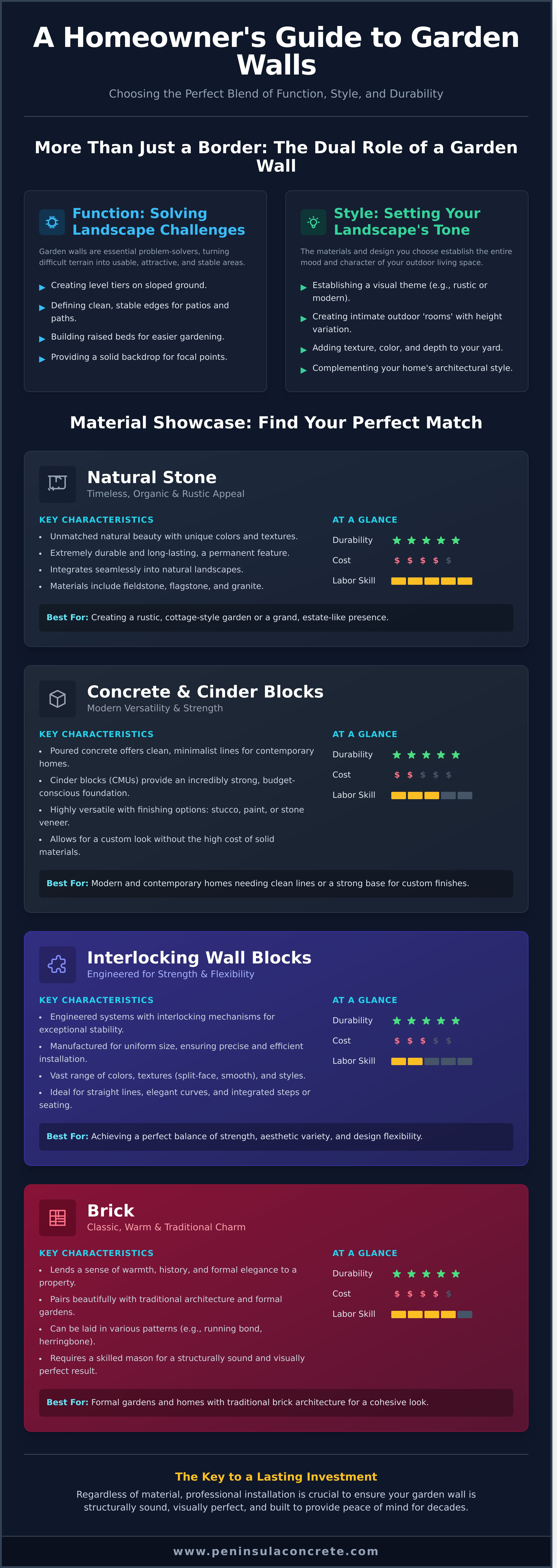
What is a Garden Wall? More Than Just a Border
In landscape design, a garden wall is a powerful tool that does far more than just mark a property line. It’s a versatile feature that provides structure, solves practical challenges, and defines the aesthetic of your entire outdoor space. For homeowners with sloped yards, exploring different garden wall ideas is the first step toward creating a beautiful, functional, and stable landscape that you can enjoy for decades.
It’s important to distinguish between a decorative garden wall and a structural one. While many garden walls on sloped properties serve a retaining function, a true structural Retaining wall is specifically engineered to withstand significant lateral pressure from soil and water. A high-quality, professionally installed wall combines this necessary strength with visual appeal, increasing both curb appeal and property value with its look of permanence and expert craftsmanship.
Beyond holding back earth, a well-designed garden wall can be a multi-functional centerpiece. It can be built to include integrated bench seating, create dedicated planter boxes for a tiered floral display, or frame a water feature, turning a simple boundary into a dynamic part of your yard.
Garden Walls for Function: Solving Landscape Challenges
Functionally, garden walls are problem-solvers that are essential for turning difficult terrain into usable, attractive areas. They are a durable and reliable solution for:
- Creating level tiers on a gentle slope for planting beds or a lawn.
- Defining clean, stable edges for patios, walkways, and driveways.
- Building raised garden beds for easier access to vegetables or flowers.
- Providing a solid backdrop for a focal point like a statue or fountain.
Garden Walls for Style: Setting Your Landscape’s Tone
Aesthetically, the materials and design you choose establish the entire mood of your outdoor space. A thoughtfully constructed wall becomes a core element of your home’s character by:
- Establishing a visual theme, from the rustic charm of stacked stone to the clean lines of modern concrete.
- Using varying heights to create intimate outdoor ‘rooms’ for dining or relaxation.
- Adding essential texture, color, and depth to an otherwise uniform yard.
- Complementing your home’s architectural style for a cohesive, polished look.
Material Showcase: Choosing the Perfect Look and Durability
The material you choose for your retaining wall is the single most important factor in defining its character, durability, and cost. The best garden wall ideas are those that harmonize with your home’s architecture and landscape while standing up to the elements. In the Bay Area, this means selecting materials that can withstand wet winters and dry, sunny summers without cracking or fading. Whether you are building purely functional and decorative retaining walls, the right material choice is critical. Regardless of the material, professional installation is the key to ensuring your wall is built to last, providing structural integrity and peace of mind for decades.
Natural Stone: Timeless and Rustic Appeal
For unmatched natural beauty, nothing compares to real stone. Materials like fieldstone, flagstone, and granite offer a timeless, organic look that integrates seamlessly into the landscape. While the material and expert labor costs are higher, the result is an extremely durable, one-of-a-kind wall. Natural stone is the premier choice for creating a rustic, cottage-style garden or a grand, estate-like presence.
Concrete & Cinder Blocks: Modern Versatility
Concrete offers a spectrum of design possibilities, from sleek to traditional. Poured concrete walls create clean, minimalist lines perfect for contemporary homes. For a more budget-conscious yet incredibly strong foundation, stacked cinder blocks (CMUs) are an excellent choice. Their true potential is unlocked with finishing options like stucco, paint, or a high-quality stone veneer, allowing you to achieve a custom look without the cost of solid stone.
Interlocking Pavers & Wall Blocks: Engineered for Strength
Engineered retaining wall systems offer the perfect balance of strength, flexibility, and aesthetic variety. These blocks are manufactured for uniform size and feature interlocking mechanisms that create an exceptionally strong, stable structure. Available in a vast range of colors, textures, and styles-from split-face to smooth-they are ideal for constructing precise straight lines, elegant curves, and integrated features like steps and seating.
Brick: Classic and Traditional Charm
A classic brick wall lends a sense of warmth, history, and formal elegance to any property. It pairs beautifully with traditional architecture and formal garden designs. Bricks can be laid in various patterns, such as a running bond or herringbone, to add visual interest. Due to the precision required, a proper brick retaining wall must be built by a skilled mason to ensure it is structurally sound and visually perfect.
Design Inspiration: Garden Wall Ideas by Style
A successful retaining wall is more than just a structural solution; it’s a key design element that should complement your home’s architecture and landscape. The material you choose-from poured concrete to natural stone-is the foundation of its style. By thoughtfully incorporating curves, corners, and changes in height, you can transform a functional necessity into a stunning focal point. Exploring different garden wall ideas helps ensure your final design is both beautiful and built to last.
Your wall’s design can also create opportunities to integrate greenery. Consider designing pockets for planting, creating a living wall, or allowing cascading plants to soften the top edge for a seamless transition between structure and garden.
Modern and Minimalist Walls
For a clean, contemporary aesthetic, focus on strong geometry and a refined material palette. Poured concrete and smooth-faced concrete blocks are excellent choices, creating uninterrupted horizontal lines and crisp right angles. This style often uses a simple, monochromatic color scheme. To elevate the design, consider integrating sleek features like a built-in water channel, subtle LED lighting, or minimalist metal accents for a high-quality, architectural finish.
Rustic and Cottage-Style Walls
To create a wall that feels like a natural extension of the landscape, embrace the charm of rustic design. Dry-stacked natural stone or fieldstone provides an organic, timeless appearance. These walls often feature gentle curves that follow the land’s contours rather than imposing rigid lines. Allowing moss and creeping plants like thyme or sedum to grow in the crevices enhances their connection to the garden, creating a durable and informal look perfect for cottage-style homes.
Formal English and Mediterranean Walls
Formal garden designs demand structure and precision. Classic brick or precisely cut and mortared stone walls create a sense of order and elegance, perfect for English-style gardens. Incorporate formal elements like decorative end caps or pillars to define entryways. For a Mediterranean feel, a stucco-finished block wall provides a clean, bright backdrop for vibrant plants. These walls are often built with perfect symmetry to frame patios, fountains, or formal walkways.
Creative & Multi-Functional Garden Wall Features
A retaining wall is a structural necessity for a sloped yard, but its purpose doesn’t have to end there. With thoughtful design, you can transform a simple border into a stunning and functional centerpiece for your landscape. These creative garden wall ideas integrate practical features that enhance your outdoor living space, adding significant value and usability. Because these advanced designs often involve structural, electrical, or plumbing components, they require the high-quality work of an experienced professional to ensure they are both beautiful and built to last.
The Sitting Wall: Built-in Seating
A sitting wall is a highly practical and space-saving addition to any yard. By designing the wall to a comfortable height of 18-24 inches, it doubles as durable, built-in seating. This is an ideal feature for walls bordering a patio or enclosing a fire pit area, eliminating the need for bulky outdoor furniture. Topping the wall with smooth, flat capstones provides a comfortable and finished surface for guests to enjoy.
Walls with Integrated Planters
Bring your stone or concrete wall to life by incorporating integrated planters. These can be designed as recessed pockets within the wall’s face or as a terraced upper level. This feature allows you to create a lush “living wall” with cascading flowers, textured greenery, or even a convenient herb garden. A professional installation ensures these built-in garden beds have proper drainage, protecting both your plants and the wall’s structural integrity while softening its appearance.
Adding Ambiance with Lighting and Water
Elevate the atmosphere of your garden after dark with integrated lighting and water features. These elements add a layer of sophistication and improve safety around your property. Consider these popular options:
- Subtle Illumination: Installing low-voltage LED strip lighting beneath the capstones casts a warm, downward glow that defines the space without being overpowering.
- Gentle Water Features: Incorporating small scuppers or spouts can create the gentle, soothing sound of trickling water, turning your garden into a tranquil retreat.
- Accent Lighting: Use strategically placed uplights to highlight specific plants or showcase the unique texture of your wall’s material.
Executing these advanced garden wall ideas requires careful planning and expert execution. At Peninsula Concrete Contractors, we have the heritage and skill to integrate these features seamlessly, ensuring your project is durable, safe, and beautiful for decades. Contact us to discuss your vision.
Planning Your Project: From Idea to Installation
Transforming your favorite garden wall ideas from a concept into a durable, beautiful feature requires careful planning. For a sloped yard, this step is non-negotiable. Before breaking ground, a clear strategy ensures your investment is built to last. The single most critical element is the foundation-a poorly built base will undermine even the best materials, leading to leaning, cracking, and eventual failure.
Budgeting for Your Garden Wall
Understanding the full scope of costs is essential for a successful project. Several factors influence the final price, and it’s important to consider more than just the visible materials. Key budget items include:
- Material Costs: Natural stone offers a premium, timeless look but comes at the highest price point. Interlocking concrete blocks are a more affordable, durable, and versatile alternative.
- Labor Costs: The complexity of the design, the height of the wall, and ease of site access will all impact labor expenses. A challenging, steep slope requires more time and expertise.
- Site Preparation: Don’t overlook the costs of excavation, a proper gravel base for the foundation, and essential drainage systems to manage water pressure behind the wall.
To avoid surprises, we always recommend getting a detailed, written quote from a reputable, experienced contractor.
Permits and Property Lines
Navigating local regulations is a critical early step. While many municipalities don’t require a permit for garden walls under three or four feet in height, you must verify the rules in your specific area. Building a taller wall almost always requires a permit and engineered plans. Equally important is confirming your property lines before any work begins to prevent costly disputes with neighbors. A professional contractor will manage the entire permitting process for you, ensuring your project is fully compliant with local codes.
DIY vs. Hiring a Professional Contractor
Deciding between a DIY project and hiring a professional comes down to the project’s scale and your personal experience. A small, simple block wall on a level surface can be a rewarding project if you have the right tools, time, and skills. However, any garden wall built on a slope, a wall over a few feet tall, or one constructed with heavy natural stone demands professional expertise. A pro ensures the foundation is correctly engineered, the drainage is sufficient to handle hydrostatic pressure, and the overall structure is safe and built to last for decades. Let our 40+ years of experience build it right. Get a free estimate.
Bring Your Garden Wall Vision to Life
As we’ve explored, a garden wall is far more than a simple boundary-it’s a powerful design element that adds structure, style, and function to your outdoor space. From selecting durable materials like concrete and stone to exploring a range of creative designs, the right wall can completely redefine your landscape and increase your property’s value for years to come.
Turning these garden wall ideas into a lasting reality requires expert craftsmanship. Since 1979, Peninsula Concrete has built a reputation for high-quality work and honesty. As a 2nd-generation, family-owned local business with an A+ rating from the Better Business Bureau, we bring decades of proven expertise to every project, ensuring your new wall is both beautiful and built to last.
Ready to transform your landscape? Contact Peninsula Concrete for a free, no-obligation estimate today. Let us help you build a durable, stunning addition to your Bay Area home.
Frequently Asked Questions About Garden Walls
What is the difference between a garden wall and a retaining wall?
A garden wall is typically decorative, freestanding, and used to define a space like a planter bed. A retaining wall, however, is a structural wall engineered to hold back soil and resist pressure on a slope. While a garden wall on a hill may retain some soil, true retaining walls require more robust construction, a proper foundation, and adequate drainage to ensure they are safe and durable for years to come.
How high can I build a garden wall without a permit in the Bay Area?
Regulations vary by city and county across the Bay Area. Generally, a permit is required for retaining walls over four feet in height, measured from the bottom of the footing. Any wall supporting a significant load, such as a driveway or building surcharge, will also require a permit regardless of its height. It is always best to consult your local building department to verify the specific codes and requirements for your project.
What is the most affordable material for building a garden wall?
Treated timber is often the least expensive material for a garden wall initially. However, for superior long-term value and durability, interlocking concrete blocks provide an excellent balance of cost and performance. They are engineered for strength and last significantly longer than wood. While poured concrete has a higher upfront cost, its unmatched strength and longevity make it a wise investment for substantial projects, reflecting our commitment to high-quality, lasting work.
How do you ensure a garden wall has proper drainage to prevent failure?
Proper drainage is absolutely critical to prevent hydrostatic pressure from building up and causing a wall to fail. A professional installation includes a column of gravel backfill directly behind the wall to allow water to percolate down freely. At the base, a perforated drain pipe or weep holes are installed to collect this water and safely channel it away from the wall’s foundation, ensuring long-term stability.
Can I build a curved garden wall with any material?
While curved walls are possible, the material choice is key. Segmental retaining wall blocks, smaller natural stones, and poured concrete are all excellent for creating smooth, stable curves. Poured concrete offers the most design flexibility, as it can be formed into nearly any shape. Materials like large timber ties or mortared CMU blocks are not well-suited for curves, as they are difficult to shape without compromising structural integrity.
How long does it take a professional to build a garden wall?
The timeline for a professional installation depends on the project’s scale and complexity. A small, straightforward garden wall might be completed in 2-4 days. A larger, engineered retaining wall that requires significant excavation, a concrete footing, and extensive backfilling could take a week or more. Factors such as site accessibility and weather can also influence the project duration. We provide a clear and reliable timeline before beginning any work.
What is the best foundation for a garden wall?
The best foundation provides a stable, level base to prevent the wall from shifting or settling over time. For most retaining walls and many structural garden wall ideas, the industry standard is a footing made of poured concrete resting on a compacted gravel base. This combination distributes the wall’s weight evenly and provides the immense strength needed to withstand soil and water pressure, ensuring a durable, high-quality result you can depend on.