
The vision for your perfect backyard patio or garden is exciting, but the process of making it a reality can feel overwhelming. You’re faced with confusing choices, you worry about hiring an unreliable company, and you struggle to compare quotes that aren’t apples-to-apples. This uncertainty can turn a dream project into a source of major stress, leaving you concerned about your investment and the final result. Choosing the right partner is the most critical decision you will make.
Finding and hiring qualified residential landscape contractors doesn’t have to be a gamble. With a clear, proven plan, you can move forward with confidence. This checklist is built on our decades of experience helping homeowners achieve their goals. We will provide you with the essential, straightforward steps to find, vet, and hire the right team for your job. You’ll gain a clear process to select a reputable professional who can transform your outdoor space into the durable, high-quality oasis you’ve always wanted.
Key Takeaways
- A detailed project plan and a clear budget are the essential first steps before you begin your search.
- Learn where to find reputable residential landscape contractors and the key questions to ask during the initial consultation.
- Understand the critical difference between a rough estimate and a detailed, itemized quote to avoid unexpected costs.
- Discover the common red flags to watch for and the positive signs that indicate you’ve found a high-quality professional.
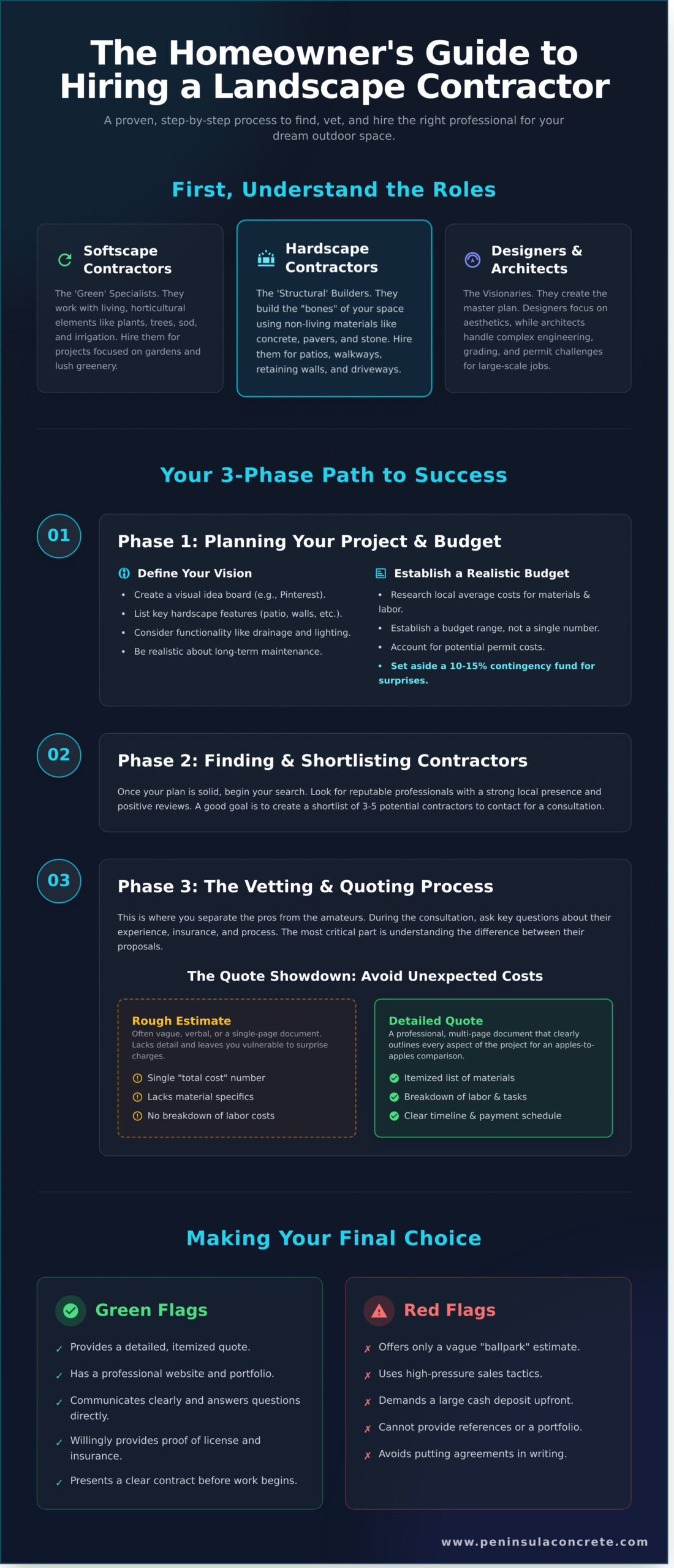
First, Understand the Roles: Landscape Contractor vs. Hardscape Specialist
Before you begin your search, it’s crucial to understand that “landscape contractor” is a broad term. The field of Landscape contracting covers a wide range of skills, and most professionals specialize in one of two key areas: softscaping or hardscaping. Choosing the right expert for your project depends entirely on your goals. For homeowners, hiring the right team from the start ensures a high-quality, durable result. Understanding this distinction is the first and most important step in finding qualified residential landscape contractors.
Softscape Contractors: The ‘Green’ Specialists
Softscape specialists work with the living, horticultural elements of your yard. Their expertise lies in soil health, plant selection, and sustainable growth. This includes designing and installing flower beds, planting trees and shrubs, laying sod for a new lawn, and setting up efficient irrigation systems. If your project’s primary focus is on bringing vibrant plant life and lush greenery to your property, a softscape contractor is the professional you need.
Hardscape Contractors: The ‘Structural’ Builders
Hardscape contractors, on the other hand, build the “bones” of your outdoor space. They work with non-living materials like concrete, stone, and pavers to create functional, long-lasting structures. Their work forms the foundation of a great landscape, including patios, walkways, retaining walls, and driveways. This requires deep expertise in critical areas like site grading, proper drainage, and structural integrity to ensure the work is not only beautiful but also safe and permanent.
Landscape Designers & Architects
These professionals are the visionaries who create the master plan. A landscape designer typically focuses on the aesthetic and horticultural aspects, helping you select plants and arrange elements for maximum visual appeal. A landscape architect handles more complex jobs that may involve engineering challenges, grading plans, and navigating local building permits. For large-scale projects, you might hire a designer or architect first to create the blueprint that your contractors will then bring to life.
For many comprehensive outdoor transformations, a successful outcome requires a partnership between these experts. A hardscape specialist may build the foundational patio and retaining walls, while a softscape contractor follows to install the gardens and lawn. By identifying the primary nature of your project-whether structural or horticultural-you can ensure you hire the right residential landscape contractors with the proven expertise to deliver quality work that stands the test of time.
Phase 1: Planning Your Project and Setting a Budget
Before you begin contacting residential landscape contractors, investing time in thorough preparation is the single most important step toward a successful outcome. A well-defined project scope and a realistic budget provide a solid foundation for your entire project. This initial clarity not only helps you communicate your vision effectively but also ensures that the quotes you receive are accurate and truly comparable. In fact, a clear plan is the first item on any comprehensive checklist for hiring a landscape professional, setting the stage for a smooth process from start to finish.
Define Your Vision and Goals
Start by asking fundamental questions about how you intend to use your new outdoor space. Is it for entertaining large groups, a quiet family retreat, or a durable, low-maintenance play area for children? We recommend creating an idea board on a platform like Pinterest to collect images that capture the style and specific features you want. This visual guide is an invaluable tool when discussing your project with a contractor.
Key elements to consider include:
- Hardscape Features: Do you envision a durable concrete patio, elegant paver walkways, a retaining wall for a sloped yard, or a built-in fire pit?
- Functionality: Think about drainage, irrigation, and outdoor lighting.
- Long-Term Maintenance: Be realistic about the upkeep you are willing to perform. Materials like interlocking pavers and concrete are known for their durability and require less maintenance than wood decks or natural lawns.
How to Establish a Realistic Budget
A common mistake is developing a grand vision without a budget to match. Your total investment will include three main components: high-quality materials, skilled labor, and potentially city or county permits. To ground your expectations, research the average costs for your desired features in the Bay Area, as prices can vary significantly by region.
Instead of a single fixed number, establish a budget range (e.g., $20,000 to $25,000) to provide flexibility. Most importantly, always include a 10-15% contingency fund within your total budget. This fund is essential for covering any unforeseen site issues that may arise during construction, protecting your project from delays and stress.
Phase 2: Finding and Shortlisting Potential Contractors
With your landscape plan and budget defined, the next critical step is finding the right professionals to bring it to life. The goal is not to contact every company you find, but to build a focused shortlist of three to five reputable residential landscape contractors. This allows you to compare bids and approaches without becoming overwhelmed.
Where to Look for Reputable Companies
Finding trustworthy contractors starts with reliable sources. A combination of trusted local knowledge and careful online research will yield the best results for your project:
- Local Referrals: Ask friends, family, and neighbors whose yards you admire. A first-hand recommendation is one of the most reliable indicators of quality work.
- Online Directories and Search Engines: While useful for initial discovery, exercise caution. Focus on detailed reviews and comprehensive project galleries rather than just top-level ratings, which can sometimes be misleading.
- Building Supply Stores: Staff at local stone yards or nurseries often know which contractors are busy, buy quality materials, and have solid reputations.
- Neighborhood Watch: Keep an eye out for company trucks and yard signs at well-maintained properties in your area. This is direct proof of their local presence and work quality.
The Initial Vetting: Your First-Pass Checklist
Before you pick up the phone, perform a quick digital background check to see if a company is a potential fit. A few minutes of research can quickly narrow your list:
- Website & Portfolio: Does their website look professional? Most importantly, does their portfolio showcase projects similar in style and scope to yours?
- Online Reviews: Look for consistent themes. A single negative review isn’t a deal-breaker, but a pattern of complaints about communication, scheduling, or quality is a major red flag.
- Service Area: Confirm that they serve your specific location, such as the San Francisco Peninsula. A truly local company will have a better understanding of regional codes and conditions.
Why Specialization Matters
It’s crucial to match the contractor to the job. A company specializing in softscaping (plants, soil, irrigation) has a different team and equipment than one focused on hardscaping (patios, retaining walls, and concrete work). A paver patio specialist will have superior knowledge of base preparation and material durability, which is critical for a long-lasting installation. For a project built on quality and durability, choosing a proven expert is the only reliable path to success.
See our 40+ years of hardscape specialization.
Phase 3: The Consultation, Quoting, and Vetting Process
After you have shortlisted potential candidates, the next phase involves direct interaction and detailed evaluation. This is your opportunity to gauge the professionalism and expertise of different residential landscape contractors and see how their process aligns with your expectations. A thorough approach here is your best defense against misunderstandings and costly surprises down the road.
Preparing for the On-Site Consultation
A productive on-site meeting starts with your own preparation. A reputable contractor will arrive ready to listen and offer expert guidance, and they will appreciate a homeowner who has a clear vision. To make the most of this time, be sure to:
- Have your project plan, inspiration photos, or idea board ready to share.
- Prepare a list of specific questions about their process, material sourcing, and experience with projects like yours.
- Pay close attention to their punctuality, communication style, and professionalism from the moment they arrive.
Analyzing the Written Quote
It is crucial to understand the difference between a vague ‘estimate’ and a formal, detailed ‘quote.’ An estimate is a ballpark figure, but a quote is a firm offer. Never accept a verbal agreement or a price scribbled on the back of a business card. A proper quote is a professional document that should be itemized and include:
- A clear breakdown of all costs: labor, materials, equipment rentals, and any necessary permits.
- A projected project timeline with an estimated start and completion date.
- A defined payment schedule outlining when payments are due.
Beware of vague, lump-sum quotes, as they can hide inflated costs or subpar materials. Insist on a detailed breakdown so you can accurately compare offers from different contractors.
Crucial Due Diligence: Licenses, Insurance, and References
A professional quote is only one piece of the puzzle. Verifying a contractor’s credentials is a non-negotiable step to protect your investment. Before signing any contract, you must confirm the following:
- Contractor’s License: Verify they hold a current, valid license in your state.
- Proof of Insurance: Ask for certificates of both general liability insurance and workers’ compensation. This protects you from liability for any accidents or property damage during the project.
- Recent References: Request contact information for 2-3 recent clients with similar projects. Call them and ask about the contractor’s timeliness, communication, budget adherence, and overall satisfaction with the finished work.
Making Your Final Choice: Red Flags and Green Lights
You have reviewed portfolios, checked references, and gathered quotes. Now, it’s time to make your final decision. Before you sign any contract, use this final checklist to distinguish between a potential headache and a true professional. The best residential landscape contractors don’t just offer a service; they provide peace of mind through their proven process and transparent practices.
Warning Signs (Red Flags) to Watch For
A reputable contractor will never make you feel pressured or uncertain. Be cautious if you encounter any of these red flags, as they often point to a lack of experience or professionalism.
- Extremely Low Bids: A price that is significantly under other estimates isn’t a bargain; it’s a warning. It often means the contractor is cutting corners on materials, insurance, or skilled labor.
- High-Pressure Sales Tactics: Demands for an immediate decision or an unusually large cash deposit are unprofessional. A confident contractor will give you the time and space to make an informed choice.
- Lack of Professionalism: Be wary of a contractor with no written contract, no physical business address, or an unprofessional email address. These signal a lack of accountability.
- Hesitation to Provide Credentials: If a contractor is reluctant to share their license number, proof of insurance, or a list of references, consider it a major red flag and walk away.
Positive Signs (Green Lights) of a Great Contractor
In contrast, trustworthy residential landscape contractors demonstrate their value through clear communication and a history of quality work. Look for these positive indicators.
- Clear and Patient Communication: A great partner takes the time to answer all your questions thoroughly and ensures you understand every step of the project.
- A Detailed, Professional Contract: The contract should clearly outline the scope of work, materials, timeline, payment schedule, and warranty information, protecting both you and the contractor.
- A Long History in the Community: A company that has been serving your local area for decades (for example, since 1979) has built a lasting reputation on reliability and high-quality results.
- Enthusiastic References: A strong portfolio backed by glowing reviews from past clients is the best proof of a contractor’s ability to deliver on their promises.
Trust Your Gut
Ultimately, hiring a landscape contractor is about forming a partnership. You should feel comfortable and confident in their ability to bring your vision to life. Good rapport and clear communication are just as essential as a strong portfolio. Choose the professional you feel best about working with. Start your project with a trusted, family-owned contractor.
Your Project’s Success Starts with the Right Partner
Choosing the right partner for your outdoor project is the most critical step. As this guide has shown, success begins with a clear plan, a realistic budget, and a thorough vetting process. By carefully evaluating potential residential landscape contractors and looking for green lights like strong communication and a proven portfolio, you set the stage for a smooth and rewarding transformation. This diligence ensures your vision is brought to life exactly as you imagined.
When it comes to the durable, foundational elements of your design, partnering with a specialist is key. At Peninsula Concrete Contractors, we’ve built our A+ rated reputation on quality hardscape work since 1979. As a 2nd-generation, family-owned business, we specialize in creating stunning and durable concrete patios, pavers, and retaining walls. Ready to build the foundation of your dream yard? Get a free estimate from our hardscape experts. Your beautiful, lasting outdoor space is just a conversation away.
Frequently Asked Questions
What’s the difference between a landscape contractor’s estimate and a quote?
An estimate is a general approximation of project costs, useful for initial budgeting, but it can change as details are finalized. A quote, however, is a formal, fixed-price offer that details the exact scope of work, materials, and labor costs. A reputable contractor provides a comprehensive quote after a thorough site visit. We believe in transparent, fixed-price quotes so you know the exact investment before work begins, ensuring no surprises for our clients.
Do I need a permit for my residential landscape or hardscape project?
Whether you need a permit depends on your project’s scale and local municipal codes. Minor work like planting or small patios often does not. However, larger structures like tall retaining walls, decks, or projects involving significant grading or electrical work typically do. An experienced contractor will be knowledgeable about local requirements and can manage the permitting process for you, ensuring your project is fully compliant and built to last.
How much should I expect to pay as a deposit for a landscaping project?
A standard deposit for a professional landscaping project is typically between 10% and 30% of the total contract price. This initial payment secures your place on the contractor’s schedule and covers the procurement of materials. Be cautious of any contractor demanding more than 50% upfront. A fair deposit demonstrates a commitment from both parties and is a standard practice for established, professional companies. The complete payment schedule should always be clearly outlined in your contract.
What kind of warranty should a reputable landscape contractor offer?
A reputable contractor should offer a clear warranty on their workmanship, typically for one to two years. Most professional residential landscape contractors will cover issues related to the installation, like settling pavers or a failing wall joint. Materials, such as interlocking pavers or wall blocks, often carry a separate, longer-term manufacturer’s warranty against defects. We stand behind our high-quality work and ensure you understand both warranties before we start your project.
How long does a typical paver patio or retaining wall installation take?
The installation time for a hardscape project varies with its size and complexity. A standard paver patio of around 300-400 square feet can often be completed in 3 to 5 days. A small-to-medium-sized retaining wall might take a similar amount of time. Factors like site access, adverse weather conditions, and intricate designs can extend this timeline. We provide a clear project schedule in our proposal so you know exactly what to expect from start to finish.
Can a hardscape contractor also help with drainage problems in my yard?
Absolutely. Managing water is a critical component of durable hardscape installation. Experienced residential landscape contractors are skilled at solving yard drainage issues. This can involve grading the land to direct water flow, installing French drains, or using permeable pavers that allow water to soak into the ground naturally. Addressing drainage is fundamental to protecting your home’s foundation and ensuring the longevity of your new patio or walkway. It’s a problem we solve for clients every day.